We are in the middle of a special summer podcast series at BEYOND THE CRUCIBLE we’re calling Lights, Cameras, Crucibles: What Our Favorite Movie Heroes Can Teach Us About Overcoming Setbacks and Failure. It’s been fun for me, both as cohost of the show and as a movie and hero fan since childhood, to dive into these insightful and practical discussions with Warwick for what will wind up being eight weeks in duration.
It occurs to me, though, that some friends of Crucible Leadership might be wondering why we’d spend so much time – two months – talking about fictional characters and the therefore fictional crucibles they’ve faced. With so many real-life men and women who’ve had all-too-real traumas and tragedies, isn’t it more important to focus on their stories?
Of course, there is great inspiration that comes from hearing the journeys of those who are navigating beyond their crucibles to live lives of significance. Those are the individuals, after all, whose stories we usually bring to listeners of the podcast. But as an article a few years ago in Psychology Today pointed out, there are surprising ways fictional heroes improve our lives. And in addition to unpacking the lessons these characters can teach us about moving beyond setbacks and failures, we also wanted to offer the truths discussed in that article.
So, as you continue diving into Lights, Camera, Crucibles, keep these points in mind from Psychology Today.
Heroes produce an emotion called “elevation”
As the article by Scott T. Allison from April 6, 2014, notes, research suggests heroes and heroic action may evoke a unique emotional response that scientists have labeled “elevation.” The term and the concept undergirding it come from Thomas Jefferson, who used the phrase “moral elevation” to describe the euphoric feeling we get when reading great literature.
When we experience elevation, Allison wrote, we feel a mix of awe, reverence and admiration elicited by a morally beautiful act. Think about it: When Spider-Man rescues Mary Jane and defeats the Green Goblin, or Batman saves Gotham City from the Joker’s latest scheme to terrorize innocent civilians, or John McClane defeats the terrorists who’ve laid siege to Nakatomi Plaza on Christmas Eve in Die Hard, don’t you experience the climactic moment(s) with a sense of elevation, satisfaction and euphoria that the white hats have triumphed over the black hats?
Heroes heal our psychic wounds
In ancient cultures, tribe members huddled around a communal fire at the end of each day, gathering together for warmth, yes, but also for protection. These acts of coming together also included another key activity—storytelling. And these initial stories were quite likely tales of heroes and heroic action, related in part to add to the sense of protection. Those listening felt safer knowing that forces of good were out there preserving their safety. That’s why so many modern hero stories exist in multiple iterations. Robin Hood has been a film staple since the silent-movie era because we are comforted when we imagine there’s someone dedicated to battling the forces of oppression to make life more livable, more enjoyable, more safe, for the marginalized and maligned.
Heroes nourish our connections with other people
Storytelling is a community-building activity, Allison writes. The sense of connectivity it builds is critical to human emotional well-being. Hero stories create a strong sense of social identity, especially if the hero is a winning one – not just in outcome but in character and personality. The best, most resonant heroes reflect and reinforce the community’s most cherished values. Captain America’s character, Coach Norman Dale’s humble redemption in Hoosiers and Spider-Man’s sacrificial love for those closest to him give us something to aim for in our relationships.
Heroes show us how to transform our lives, turning us into heroes ourselves.
Comparative mythologist Joseph Campbell said in 1988 that all of us undergo a hero-like journey throughout our lives. It’s only by having the courage and faith to risk change and growth in our own lives that we reach our own potential. It is nearly impossible to watch any of the movies we are discussing in our series and not feel the pull to a similar brand of heroism – not saving the world though superpowers, maybe, but dedicating our lives and gifts to serving others in ways similar to how a superhero, or action hero, or sports hero lives a life on purpose dedicated to serving others.
Psychologist Eric Erikson’s stages of human development, as discussed by Allison, posits that adults grow in significant ways as they gain age and experience, then in mid-life reach a stage of generativity, which Erikson defines as pouring something meaningful back into the society that has given them so much.
That sounds like living a life of significance, doesn’t it?
Reflection
What movie hero – superhero, action hero or sports hero – is your favorite? In what ways does he or she inspire “elevation” in you as described above?
What hero movies built more meaningful connections for you with others? What specifically about the hero(es) made that happen?
Have you ever been so moved by a hero in a movie that it prompted you to act heroically yourself as explained above? How so? Why do you think it affected you that way?
Get The Whole Story
To listen to our summer podcast series Lights, Camera, Crucibles – Click here
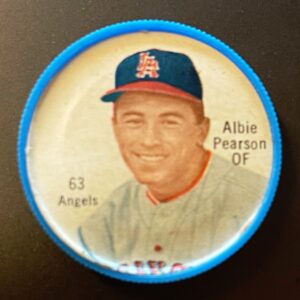
As a baseball-mad boy growing up in Southern California in the 1940s, Albie Pearson dreamed of being a big-leaguer. At 6, he snatched his mother’s blue satin pillows from the house and made a makeshift diamond in the backyard.
Each “game” featured the same ending. Swinging a bat all alone, he’d mime hitting a home run against the New York Yankees to win the World Series. He rounded the bases to the imagined roar of the crowd, joyous over what he hoped would be the crowning achievement of the baseball career he longed to have.
As he crossed “home plate,” though, he heard something else. A voice in his head saying, “Join my team.” He wasn’t entirely sure what it meant and forgot about it as quickly as it came to him.
Pearson went on to get his shot at the majors, playing for a few teams before coming back to Southern California to join the Los Angeles Angels. Just 5’ 5” tall, he was what sportswriters call a “scrappy” ballplayer, one who would win the 1958 American League Rookie of the Year Award and hit just 28 home runs in his 10-year career.
One of them came against the Yankees, off six-time World Series champ and eventual Hall of Famer Whitey Ford. As soon as he deposited Ford’s curveball over the right-field fence, Pearson didn’t celebrate, though. He recalled that voice in his head three decades earlier and realized what he had just achieved would not be his life’s most significant moment.
I was close to Pearson in the late ‘90s. He’s the father-in-law of my pastor at the time in Palm Springs, Calif. When he told that story to me, a fellow baseball fanatic, he said the thought that struck him as he traversed the bases was, “Is this all there is?” His boyhood dream had come true – and he realized it wasn’t his dream at all. Serving others as a pastor – joining God’s team, as the voice he heard at 6 had implored him – was where he would find his life’s true purpose and calling over the next 50-plus years.
I’ve thought of Albie a lot during the last several weeks, as our BEYOND THE CRUCIBLE podcast series Second-Act Significance has unspooled. The beats of what he went through – discovering that there was a richer life on the other side of what occupied years of his attention and effort – has echoed in the stories our guests have shared.
Their experiences have highlighted three truths that stretch throughout their journeys – whose details are as different as their demographic profiles. They offer a roadmap for how to scratch that “Is this all there is?” itch Albie Pearson felt in the 1960s.
1. It’s never too late, or too early, to pursue a next act in life that brings you more significance
Robert Miller wanted to make music his career from the first time he picked up an instrument in high school. But his dreams were deferred by the usual beats of life – a successful career that took him in another direction, family joys and responsibilities, and a crucible in his 40s when he broke his neck in an accident.
But in his 60s, he grabbed his guitar and launched his band Project Grand Slam — and finally felt the rush of playing original songs at festivals and concerts around the world. The group has released 11 albums of its unique brand of rock-Latin-jazz fusion.
Miller didn’t just think about his longing to make his dream come true. He had to act on it. Even if his 60th birthday had just passed.
“I said to myself, ‘If I don’t do it now, when the heck am I going to do it?’ ,” Miller explained on the podcast. “I decided if I’m going to do something, if there’s really something left that I want to do, when am I going to do it if I don’t do it now?”
Yvette Bodden, a young mother going through a heart-rending divorce, faced that same decision. As the life she knew unraveled, she slowly found blessing and purpose she would not have discovered without going through that crucible. Bodden stepped into her calling as a thought leader who inspires women – through her Web platform Awakened Woman — to dream big as they pursue their own passions by exercising their giftings.
“You can fall 100 times, but you can rise up,” she said on the podcast to describe Awakened Woman’s counsel to readers. “I know it sounds simple, but I want to inspire that fight in other women. And I feel my writing is doing that.”
2. When you set out on a journey to new significance, follow your heart and lean into your talents
Melissa Reaves wasn’t sure how her life was going to be OK again after she was fired from her well-paying advertising job. But the assurance of her inner voice gave her the courage and inspiration to embark on a new career that has become a mission – helping professionals use the power of story to write happy endings for their businesses.
She coaches clients to make what she calls mind movies that add depth and meaning to their communications. Doing so has allowed her to tap into her youthful affinity and talent for acting – reviving a part of her she had allowed to atrophy a bit in her initial career choice.
“I deep down always thought I would be an entrepreneur,” she said on the podcast. “When I was 25 years old, I thought, ‘I have taken Toastmasters. I am an excellent speaker. I am going to teach people Toastmasters.’ But I was only 25. I then went, ‘I’m not ready for it.’
“But that entrepreneurial Melissa was born inside me. So, when I was stepping out of the smoldering flames (of being fired) and I started to listen to my higher self — all of a sudden, my second half now is on my terms. It’s my life.”
3. Starting small is OK because it’s starting
Erik Orton’s dream job as a playwright and theatrical producer came to a crashing halt when his off-Broadway show was closed after only a few performances. The failure left him fearful and rudderless – until his curiosity about sailing became his family’s passion for it and they steered their boat’s rudder on a 5,000-mile journey from New York to the Caribbean.
What Erik and his wife Emily learned on the trip, with their five kids sharing the adventure with them, was how to turn worry into wonder and the importance of building confidence, credibility and calm. Those are truths they now teach others through their speaking, writing and coaching.
And it could not have started any smaller.
“I’d go down to this high rise in the financial districts every afternoon and I’d work 3 till midnight,” Erik said on the podcast of the job he took to make ends meet. “I would take a dinner break right around sunset, and I would walk along the Hudson River. I would see these sailboats that just carve their way up and down, silhouetted against the sky.
“During my dinner break, Emily and I would get on the phone, and we would talk as we try to figure out how to dig ourselves out of this hole we found ourselves in. She was happy that I would see these boats and that they gave me a sense of peace. As I described it often enough, I realized that there was a sailing school right downstairs, and that’s where these boats were coming from. She said, ‘You should go check it out. Maybe you’d want to learn how to sail.’ ”
Second-act significance looks different for each of us. But the steps to get there, to scratch the “Is this all there is?” itch, can be followed by any of us.
Reflection
Do you have an “Is this all there is?” itch you’ve been wanting to scratch? What’s holding you back?
What are the skills and passions you have that can serve you if you start on the journey to a life of greater significance?
What would significance look like for you if you grab hold of that next act in your life? Why would that be more rewarding and fulfilling than what you’re doing now?
Like any good Christmas movie, Die Hard ends on a festive musical note – the yuletide favorite “Let it Snow! Let It Snow! Let It Snow!” Along the way, cinematic flourishes associated with The Most Wonderful Time of the Year abound: a big holiday office party, family traveling to join each other to celebrate, characters wearing Santa hats and other clothing that spotlights the season, plastic explosives blowing off the top of a newly built skyscraper.
OK, that last one is a little out of the ordinary for a Christmas film. So is all the gunplay, the terrorists-turned-thieves looking to swipe $640 million in negotiable bearer bonds, the greatest splash of red coming not from wrapped presents but from the protagonist’s wrapped foot after he is forced to run barefoot through glass shattered by machine-gun fire. Those points explain why there are sharp divisions on social media and around the dinner table this time of year about whether Die Hard is really a Christmas movie at all.
In fact, a 2020 poll by YouGuv (not exactly Gallup, but this is not exactly electing the next president) found that only 34 percent of Americans surveyed believe the 1988 action thriller that made Bruce Willis a movie star is also a Christmas film, compared to 44 percent who aren’t buying it. No matter which side you find yourself on regarding that question, though, there is no disputing that Die Hard spotlights insights into moving beyond setbacks and failures in pursuit of a life of significance.
Christmas movie? Up for debate. Crucible movie? Without a doubt.
Consider these key Crucible Leadership teachings and how you might apply them to your life the next time you watch Die Hard (even if it’s after Dec.25):
1. Crucibles often come in bunches, and even though weariness can set in, keep taking one small step toward making your vision a reality
Willis’ character, John McClane, is a New York cop visiting Los Angeles to see his estranged wife Holly (Bonnie Bedelia) and their two young children for the holidays. That’s crucible No. 1 – a troubled family life. But McClane hasn’t even dipped his toe into the snowbank of trials he will face.
He arrives at Nakatomi Plaza on Christmas Eve for the Nakatomi Corp.’s company party, dropped off by his chatty limo driver Argyle (De’voreaux White), who agrees to hang around in case the family reunion doesn’t go so well. It doesn’t. Seeing Holly again is not hugs and kisses and “I’ve missed yous”; they squabble about why she’s now using her maiden name, Gennero – and that’s the last time they’ll talk to each other until the end of the picture because of the cavalcade of crucibles that come.
The unraveling begins when Hans Gruber (Alan Rickman) and his henchman arrive at Nakatomi Plaza, kill the security guards and cut all communications, then kidnap and terrorize the party guests – all while John is still in the bathroom cleaning up after his flight. When he hears the gunshots, he’s barefoot (his cabin neighbor on the plane gave him the tip that to relax after air travel anxiety, he should “make fists with his toes” after landing), but he grabs his holster and weapon and runs out to see what’s going on and how he might help.
The crucibles come fast and furious after that, all rooted in McClane trying to stay alive and free the hostages Gruber and his men have taken to make it appear they want something other than all that money in the vault. As the terrorists hunt him down, every little victory runs headlong into another defeat, and our hero can’t seem to fully extricate himself from the corners he gets backed into and the tight spaces he winds up in as he tries to escape.
But here’s the relevant point to apply to our own, likely less chaotic and life-threatening crucibles: Don’t give up. And don’t try to jump to the end. Take one small step, followed by another small step, tackling the challenge right in front of you before moving on to the one behind that. String together enough of these little victories and you wind up with the big win you’re aiming at.
2. Keep your sense of humor
John McClane does not take himself too seriously – and he certainly doesn’t meet his crucibles with somber depression. He finds the humor in his plight, as deadly serious as it is. Like the gag he pulls after killing the first henchman: Sending him a down in the elevator to where Hans and Co. are holding their hostages, having plopped a Santa hat on the dead man’s head and written on his sweatshirt: “Now I have a machine gun. Ho-Ho-Ho.” It’s his way of letting the black hats know there’s a white hat on the job – and it’s done with panache.
Similar dashes of humor come from his running dialogue with himself. Alone in the building, capture or death lurking around every corner, he keeps his spirits up by keeping his mood as light as possible. After realizing the first terrorist he kills will not be able to help him solve his footwear problem, he monologues incredulously, “Nine million terrorists in the world and I gotta kill one with feet smaller than my sister.” Later, while crawling through the building’s air ducts to evade his pursuers, he flips on a Zippo lighter he took from one of the other terrorists he neutralized and quips as he tries to navigate his way forward, channeling Holly: “Come out to the coast. We’ll get together, have a few laughs.”
Lines and actions like these give Die Hard a joie de vivre that helped redefine action films in the ’80s, but in the context of the plot they serve to cushion the blow of the crucibles McClane keeps suffering. We’ve all heard the phrase “laughter is the best medicine”; this is true even/especially when the sickness we’re fighting is moving beyond a crucible. The most tragic circumstances can be met with an attitude of hopeful optimism. We don’t laugh because what we’re going through is funny, but because it helps stabilize our spirits to meet the challenges – emotional and otherwise – we’ll encounter on our path to significance.
3. You need a team of fellow travelers
McClane is often painted as the lone-wolf everyman hero, but that perspective overlooks two relationships critical to his saving the day. Without Al Powell (Reginald VelJohnson, the Twinkie-eating cop) and Argyle, he wouldn’t achieve his goals.
Powell’s chief role is to be his confidante and cheerleader. After a rough start to their relationship (McClane prevents him from leaving Nakatomi Plaza before becoming aware of the hostage crisis by throwing one of the terrorists he killed out a 32nd floor window and onto Powell’s police cruiser), Powell offers a sympathetic ear and actionable intelligence. They bond over their disdain for law-enforcement bureaucracy and love for their families. And when fatigue and discouragement turn McClane fatalistic, he turns to Powell to carry a message to Holly when it’s all over: “She’s heard me say ‘I love you’ a thousand times. She’s never heard me say ‘I’m sorry.’ I want you to tell her that John said he was sorry.” Powell refuses to let his new friend give in to the grief of his crucible. “You can tell her that yourself,” he replies.
Later, when McClane kills Hans during the film’s climax, we learn it’s not really the climax at all: that comes when John and Holly (have we mentioned her name is a word strongly associated with Christmas?), reunited and having rekindled their love, are heading away as the exploded building drops bearer bonds all around them. On their slow walk to happily ever after (remember, this was before the sequels when we didn’t know the full arc of their five-film romantic journey), a terrorist it seemed John had killed leaps up and points a machine gun at them, only to be stopped by Powell – who draws his revolver for the first time since he accidentally shot a kid.
And Argyle? After spending most of the movie listening to music and chatting up women on the car phone in the parking garage (which he is not even aware has been locked down), he hears a news report of the Nakatomi takeover and drives into a better position to act if given the opportunity. He finally gets that chance when the terrorists’ electronics whiz fetches the getaway car (an ambulance, actually) and Argyle stops him by ramming his vehicle with the limo.
The lessons here for us are clear. Don’t go it alone when fighting through crucibles. Confide in others. Lean on them. Take their counsel and encouragement to heart. Let them apply their abilities and expertise to help us achieve our vision. Powell saves McClane’s life. Argyle saves his significance. Which leads us to …
4. Success is great, but significance is greater
The big payoff in Die Hard is not that McClane saves the day from greedy, nattily dressed terrorists. It’s that he reunites with his wife and children, and they become a family again. Yes, as we’ve hinted at, more familial crucibles come in the sequels (John and Holly are estranged again in No. 3, he and his daughter Lucy are at loggerheads in No. 4, and he and his son Jack have some issues to work through in No. 5). But based on what we see in Die Hard II, when John has left New York to join the LAPD and support Holly in her career with the Nakatomi Corp., he was living a life on purpose in service to others – his family.
You might even say that Christmas is saved by the reconciliation of the McClanes at the end of Die Hard – just as it is saved by Scrooge’s change of heart in A Christmas Carol, by the residents of Bedford Falls bailing George Bailey out of his jam in It’s a Wonderful Life or by Rudolph with this nose so bright guiding Santa’s sleigh in Rudolph The Red-Nosed Reindeer.
But, if you do come to and express that Christmas conclusion, be prepared for some dissenting opinions as you pass around the coffee and the pumpkin pie.
Reflection
If you’re facing a crucible at the moment, what’s the first small step you can take to move beyond it? Remember: Don’t try to accomplish too much too fast. Small and steady will win the race.
How can you use humor to help you move beyond your crucible?
Do you have a team of fellow travelers to help you as you pursue a life of significance? How can you lean into their care and expertise to help you achieve your vision? If you don’t have a team, identify who you can ask to join yours.
No template or checklist exists for moving beyond a crucible experience. The mixture of emotions, actions and mindset perspectives needed to overcome setbacks and failures is as unique from person to person as the nature of the setbacks and failures themselves.
That’s not to say, though, there isn’t a common throughline in the stories of men and women who have been knocked down by life, or by their own decisions and behaviors, and gotten back up to continue their journeys toward lives of significance.
Emerging on the other side of traumas and tragedies is not a one-size-fits-all proposition, but there is something common to all of our journeys down that road: resilience.
It’s so critical, in fact, that we’ve been examining this trait since the last week of August (and will continue until the last week of this month) on our podcast, BEYOND THE CRUCIBLE, in a series called Harnessing Resilience. Warwick and I (I’m his co-host) have interviewed guests who found the resilience to overcome their crucibles, as well as experts whose studies of resilience offer practical insights and action steps to strengthen our ability to rise above those crucibles when they come.
We’ve collected the most meaningful bits of wisdom each guest has shared to help you find the hope and healing that comes from harnessing resilience.
“Resilience is a skill that can be learned just like building muscle in the gym.”
A diving accident at 12 left our guest Stacey Copas a quadriplegic. What followed, she told us, was not pretty – aimlessness and hopelessness fueled by drug use and depression. The “what ifs” and “why mes” were hard for Stacey to sidestep throughout her teens.
Over time, though, she decided she couldn’t feel bad about something she was grateful for. So she began to view her accident as a gift. Not because it left her paralyzed, but because it presented her with opportunities she almost certainly would not have had without her injury.
She continually exercises her resilience muscle by embracing the opportunities adversity has brought. She has built a life of significance born from her accident, inspiring and equipping others as a resilience coach, author and speaker. One of the greatest truths she has learned, she says, is that crucibles are like a trampoline: the lower down you go, the higher up you can launch yourself. That’s great counsel for harnessing resilience.
“If you have access to the resources you need to meet the challenges you’re facing, you’ll be more resilient.”
Our guest Katie Foulkes endured a crucible with effects so lasting that after she emerged on the other side, she began to conduct research into the building blocks of resilience.
Foulkes was the cox for Australia’s 2004 Olympic rowing team, which was engulfed in controversy when one of its members quit rowing in the midst of a race. So intense was the firestorm that followed that Foulkes and her teammates, in addition to being the subject of derisive global news coverage, were called “Un-Australian” by their nation’s prime minister.
Foulkes emerged stronger after the emotional ordeal by drawing on what she later confirmed through study is an often-overlooked truth about resilience: It’s not found just by digging deeper within for personal fortitude, but also by reaching widely outside ourselves to gather relational resources. Foulkes discovered harnessing resilience, like Olympic rowing, is a team sport.
“You never know when your greatest obstacle will become your greatest opportunity.”
We usually talk about a crucible experience as a setback or failure, but we could also describe it as a “fall.” Sometimes literally. That’s what our guest Heather Kampf discovered in 2008 when she tripped and landed flat-out on the track during a 600m race at the Big Ten championships while competing for the University of Minnesota.
But Kampf is not known for her fall. She is known for what happened after she rose. As documented in a viral video seen by tens of millions, she sprinted the last 200 meters of the race to win her heat in you-have-to-see-it-to-believe-it fashion.
The internet is full of copies of the video, many of which title its message as “Never give up.” But Kampf, who went on to a successful career as a professional middle-distance runner, sees her improbable triumph as much more than giving it a gritty go. To her, it’s evidence that resilience is built before it’s needed. The key to picking herself up, dusting herself off and starting all over again was having a plan for the race – to finish, no matter what. That way, she would tally at least one point for her team in the standings, critical to their pursuit of the title. When she tumbled to the track, having that plan propelled her to harness the resilience to turn that obstacle into a great opportunity.
“Failure is inevitable. How you react to it is what matters.”
Our guest Lucy Westlake is 17 and already holds a world record. She’s the youngest female to ever scale the highest peaks in every U.S. state. A feat like that – climbing mountains that sometimes stretch more than 20,000 feet into the sky – is a breeding ground for falling short. For needing to regather your strength, refocus your mind and craft a new strategy for achieving your goal.
Westlake has learned, inch by inch, that resilience is built from the lessons every failure teaches us. Being mindful especially of those small failures that can teach big lessons is critical when the larger, weightier failures come. For her, the failure that laid her particularly low was her first attempt to scale Denali, at age 13. A combination of nasty weather and emergency circumstances outside her control left her short of ascending her 50th peak. It would be four years before she tried again.
But she did try again. And this time, she succeeded. That satisfaction would not have been possible, she told us, without the disappointment that preceded it. You’ve heard the phrase “snatching victory from the jaws of defeat”? Lucy Westlake harnessed resilience from her refusal to allow a devastating outcome to be her final outcome.
“Avoidance is a roadblock to resilience.”
Our final guest in the series is Dr. Craig Dowden, who describes his coaching practice as bridging the gap between what science knows and what leaders do. He ties an eye-opening bow on the package of our discussion of harnessing resilience, noting that it is, at its core, a two-part process: first, finding our way back to baseline – i.e., where we were before the crucible hit; and second, charting a course to move beyond that point. Not to merely bounce back, but bounce forward.
Dr. Dowden did not specifically say the words at the top of this section, but he did stress the necessity of facing the emotional and circumstantial fallout of our crucibles if we hope to find the life of significance that lives beyond them. It was from his astute observations that Warwick and I were inspired to compose the pithy statement about avoidance.
It is our hope you will be similarly inspired, by what all our guests share, in your own efforts to move beyond your crucibles by harnessing resilience.
Reflection
What does “harnessing resilience” look like to you?
When has an obstacle turned into an opportunity for you?
Have you ever avoided facing the aftermath of a crucible experience? Why? How did you eventually harness resilience in order to face it?
Maybe you think of your favorite Christmas TV specials as inspiring, celebratory fare that set the tone for the season. That’s certainly true – but so is the fact that just about every Yuletide classic we tune in to this time of year features about as many crucible moments as it does presents under the tree.
Frosty the Snowman? Well, the sun was hot that day and he melted. Santa Claus is Comin’ to Town? The Winter Warlock almost does Kris Kringle in. Even The Little Drummer Boy found himself without a gift that was fit to give a king – before he happened upon the idea of pa-rum-pa-pum-pumming for him.
But no Christmas special that has delighted us since our youth features quite the number of crucibles affecting quite so many characters as Rudolph The Red-Nosed Reindeer. The animated treat that premiered in 1964 is built around what would have been a monumental global crucible: the cancellation of Christmas. Santa thinks it might be necessary because the “storm of storms” – as our narrator, Sam the Snowman, tells us — hits the North Pole, aka Christmastown, just as Christmas Eve arrives. Santa fears the wind and snow (and the fog!) will make his annual round-the-world mission to give toys to all the good little girls and boys impossible.
But then … Rudolph’s “beak that blinks like a blinkin’ beacon” restores the hope and happiness of the world.
Getting there, though, proves anything but a bump-free ride. Not just for Rudolph, but for most of the other beloved characters who make the special so special. Each faces their own crucible moment or moments – and only after they learn the lessons of those crucibles are they able to ensure a holly, jolly Christmas.
Put the eggnog down for a moment and drink in these five principles of Crucible Leadership that help save the day – and the season – in Rudolph the Red-Nosed Reindeer. Applied to your crucibles, they’ll help you in ways that some might even say make you glow.
1. You can’t inherit a vision.
Rudolph’s dad, Donner, wants his son to follow in the family hoofsteps – hitch up like all the other reindeer and fly Santa’s sleigh. But the young buck’s shiny nose, which Donner tries to hide with a nosepiece and which prompts teasing and taunting from his schoolmates, leads him to a much different destiny. Similarly, Hermey, the misfit elf, is brow-beaten by his boss because he dreams of being a dentist. “You’re an elf!” the pointy-eared supervisor screams. “And elves make toys!” But Hermey refuses to let his vision die.
2. Authenticity is key to making your vision a reality.
Hermey and Rudolph both learn they can’t thrive if they hide who they truly are – whether it’s covering up their gift of a neon proboscis or their fascination with molars. Their passions and values can’t be squelched as summarily as Rudolph was banned from joining in any reindeer games.
3. It takes a team to get where you want to go.
Rudolph and Hermey run away independently, but fortuitously meet each other as they’re fleeing Christmastown. They form an alliance first with each other because they’re fellow misfits, then with the plucky adventurer Yukon Cornelius, whose mentorship helps them survive the perils of the Abominable Snow Monster, aka, the Bumble, hot on their tails. They stood no chance, and neither did Christmas, if they didn’t join forces
4. Success alone is not a successful pursuit. You must pursue significance.
Yukon Cornelius spends his entire life prospecting for a bounty he never finds (Sam the Snowman thinks it’s silver and gold, but it turns out to be peppermint). Only after he achieves significance by helping Hermey and Rudolph and taming the Bumble does he “strike it rich.” And Hermey? He is allowed to open the North Pole’s first dental office.
5. Perseverance is the only way through your crucible.
The Misfit Toys – a choo-choo with square wheels on its caboose, a water pistol that shoots jelly, a cowboy who rides an ostrich — spend years isolated on the island named after them. But because of the shared vision of significance Rudolph and Hermey hatch, they are at show’s end distributed by Santa to children … so they can fulfill their destiny to be played with and Burl Ives can sing the title song for the rest of us.
What does this all add up to for Rudolph? As we often say at Crucible Leadership, living a life of significance leads to a legacy you can be proud to leave behind. And our red-nosed friend, as we all know by the song’s end, wound up going down in his-tor-eey.
Reflection
Have you ever struggled with authenticity? What are the things you have a hard time revealing about yourself – and how has that impacted you?
Who’s on your team to help you move beyond your crucible? If you don’t have a team yet, who can you enlist to encourage and guide you on your journey?
How would you rate yourself when it comes to perseverance? What one step can you take today to demonstrate your commitment to keep moving forward?
To explore Beyond the Crucible resources, including our free Trials-to-Triumphs Self-Assessment, visit beyondthecrucible.com.
Enjoy the show? Leave a review on your favorite podcast app and leave a comment at our YouTube channel. And be sure subscribe and tell your friends and family about us.
👉 Take the free Trials-to-Triumphs Self-Assessment to discover where you are on your journey of moving beyond your crucible and how to chart your personal course to a life of significance: https://beyondthecrucible.com/assessment/
The Christmas classic It’s a Wonderful Life ends on an upbeat, inspirational note fitting for the season it celebrates. George Bailey, the reluctant head of the small building and loan founded by his father and uncle, is saved from ruin by the generosity of the citizens of Bedford Falls. They show up at his house on Christmas Eve to give generously from their modest means to help George make right an accidental and potentially catastrophic $8,000 shortfall.
As George’s brother, Harry, toasts him as “the richest man in town” and the townsfolk sing a rousing rendition of “Auld Lang Syne,” George opens the copy of The Adventures of Tom Sawyer left by his guardian angel, Clarence, to read this inscription: “No man is a failure who has friends.”
That message could have read, “No failure is the end of your story if you learn from your crucible experiences and press on to lead a life of significance dedicated to helping others.” That’s right: This beloved holiday movie is a textbook example of the principles of Crucible Leadership in action. George Bailey discovers he is living a wonderful life only after he moves beyond living a crucible life. And there is much we all can learn about moving beyond our own crucibles by studying how George struggles with, and ultimately overcomes, his.
Crucible experiences are rarely one-time events
It’s a Wonderful Life tracks George’s life from 1919 to 1945, from age 12 to roughly 38. Over those nearly three decades, he is hit with five crucible moments:
He loses the hearing in his left ear while rescuing Harry, who breaks through the ice while the boys and their friends are sledding down a hill next to a river.
On the eve of George setting off on a European vacation before entering college, his father suffers a stroke and dies.
Harry, who George gave his college money to when he stayed on to run the building and loan, returns home after graduation with a new wife and a new job offer from his father-in-law. The job offer means Harry won’t assume oversight of the building and loan from George as planned.
The stock market crashes just as George and his new bride, Mary, are about to embark on their honeymoon. It costs them not only the honeymoon trip but also all but $2 of $2,000 they saved for it. They distribute the other $1,998 to their nervous and needy customers to keep the building and loan, and the town’s faith in it, from collapsing.
And, in the biggest crucible experience of all, forgetful Uncle Billy misplaces the $8,000 bank deposit, causing a crisis that could send George to prison.
What makes these such painful crucibles to George extends deeper than the surface details, devastating enough in their own right. That’s because George has, from his youngest days, dreamed of being an explorer, “shaking the dust of this crummy little town” off his feet and not just seeing, but conquering, the world. “I want to do something big and important,” he tells his dad when asked if he’d ever consider taking over the building and loan. George dismisses the family enterprise as being in the “business of nickels and dimes” – and yet, each crucible requires him to stay in Bedford Falls (his ear injury even disqualifies him from military service) and keep the building and loan afloat. George never completely stops resenting the life he is left to live or grieving the life he believes his crucibles have stolen from him.
Crucible experiences reveal our design, even when we don’t notice or embrace it at first.
Everyone in Bedford Falls, it seems, recognizes how George Bailey is wired. Like his father, who hung a sign in his office reading, “All you can take with you is what you give away,” George is committed to serving the families that live in his “crummy little town.” Yes, he still longs for the adventures he imagined in his youth, but his day-to-day existence is all about helping the working-class people of Bedford Falls avoid “crawling to Potter.”
Potter is, of course, the town’s greedy, grumpy money man: Henry F. Potter. The scowling tycoon tried to bankrupt the building and loan when George’s dad ran it, and he keeps up his onslaught after George takes the reins. Potter is incensed that the town’s cab drivers and bar owners and police officers are able to buy their own homes because of the sacrificial generosity of the building and loan – rather than pay sky-high rents for his tenement apartments. When he fails to squeeze George out, Potter tries to appeal to the younger man’s well-known taste for “doing something big” – offering him a lucrative job as his personal secretary. George entertains it for a nanosecond – then realizes Potter’s motives and refuses, telling the “bitter old man” that “this town needs this measly little institution” to keep hope of a better life alive for its residents.
Through the thick of the plot of It’s a Wonderful Life, George continues to do the right thing even as he dreams of doing something different. He is living out a vision for a life of significance without realizing it, let alone understanding it. Yes, it’s clear he finds real joy in his family life and doing good deeds for the community. But in his heart there remains a gnawing feeling that he is not doing what he was created to do. It takes the searing fire of his final crucible, caused by Uncle Billy’s mistake, for him to see that he’s already living a wonderful life – even without the exotic vacations to faraway lands. More importantly, he sees that he is living precisely the life he was intended to live, and that he is doing something plenty big.
Crucible experiences point us to a life of significance, especially when others help us see our passions and values in the midst of them.
When Uncle Billy absentmindedly hands the $8,000 daily deposit to Potter, who pockets it in an attempt to force the building and loan out of business and permanently remove George as a rival, George reaches the end of his rope. He behaves like far too many of us do in the most trying times of our lives: He gets mad at his family, berates strangers, drowns his sorrow in self-pity and a few drinks too many. He even contemplates ending it all, reasoning he’s worth more dead than alive. In his last desperate act, acknowledging he is not a praying man, he nonetheless prays to God to send him a sign.
Enter Clarence Odbody, George’s guardian angel, an answer not only to George’s hail-Mary prayer, but also the prayers of friends and family heard as the film opens. One of those initial entreaties to God seeks divine help for George because “He never thinks about himself, Lord. That’s why he’s in trouble.”
George makes an offhand comment to Clarence that everyone would be better off if he had never been born. Clarence seizes on that hastily spoken wish to grant it: showing George what life would be like in Bedford Falls if George Bailey had never been born. With the man “who never thinks about himself” erased, life is bitter and bleak. Bedford Falls isn’t even Bedford Falls anymore, but Pottersville, its quaint town square replaced by sordid characters and sketchy businesses. Harry is dead – having drowned when he fell through the ice in 1919 because his big brother wasn’t there to save him. And Mary is living a scared and lonely life – no husband, no children, no joy. It is, most assuredly, not a wonderful life.
This is George’s epiphany. He sees for the first time that the life he has led has made his community a much better, richer place. He has offered hope and healing to his friends and family. His passion for adventure has not been denied – just realized in a quieter, more meaningful manner. Keeping the building and loan not merely solvent but strong all those years has allowed dozens of his neighbors to pursue grand adventures of their own as homeowners. He has not, as Potter barks, been “trapped into frittering his life away.” He has put the needs of others ahead of his own to achieve life-altering impact. He has learned, in both his head and his heart, the truth that every life lived has the potential to be significant. As Clarence puts it in one of the movie’s most memorable lines: “Strange, isn’t it? Each man’s life touches so many other lives, and when he isn’t around he leaves an awful hole, doesn’t he?”
The story of what happens to George Bailey after Clarence arrives casts in different, revelatory light what happened to George before Clarence arrived. He learns that the life he wished he’d lived wasn’t the life he was created to live. He understands that taking care of others’ needs rather than chasing his own wants has led to robust reward. He finally sees the same value in himself others have always seen in him.
Such is the power of embracing our crucible experiences and allowing them to lead us into a refining cycle in which we discover our design, craft our vision, and make that vision a reality. When that reality leads us to live a significant life, it is indeed a wonderful life.
Reflection
Have you ever felt like a crucible experience has kept you from your life’s purpose?
As you look at the lessons of your crucible moment and what you learned about yourself in its aftermath, what does it reveal about your gifts and passions?
What are the qualities others see in you that you have a hard time seeing in yourself?
Take the free Trials-to-Triumphs Self-Assessment to discover where you are on your journey of moving beyond your crucible and how to chart your personal course to a life of significance: https://beyondthecrucible.com/assessment/