It’s the essential, sometimes heart-wrenching, often-life-changing question pondered by those who move from one act of their lives to another: “Is this all there is?”
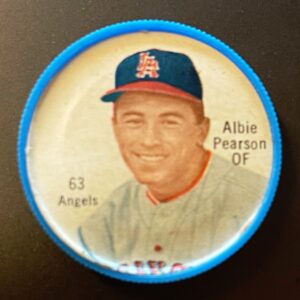
In this wrap-up of the eight episode series, SECOND-ACT SIGNIFICANCE, host Warwick Fairfax and cohost Gary Schneeberger extract from the stories shared by guests four key steps you can take to pivot from Act 1 to Act 2 in your own life. And they discuss what all of those guests have in common with a former Major League Baseball player – an All-Star and onetime rookie of the year — who used his own “Is this all there is?” moment to craft a second act going on 50 years that has given him more significance than any home run he ever hit.
Highlights
Former Major League Baseball All-Star Albie Pearson’s “Is this all there is?” moment (3:29)
Truth No. 1: It’s never too late, or too early, to pursue a next act in life that brings you more significance (14:38)
Robert Miller’s rock star dreams (15:04)
Yvette Bodden’s launch of a platform to encourage and equip women (19:50)
Nancy Volpe Beringer’s couture calling (27:37)
Truth No. 2: When you set out on a journey to new significance, follow your heart and lean into your talents (33:27)
Melissa Reaves’ love of story (33:46)
John Busacker’s priority realignment (42:35)
Truth No. 3: Starting small is OK because it’s starting (47:37)
Erik and Emily Orton’s not-so-smooth sailing (47:59)
Chris Schembra’s appetizing first step (53:08)
Truth No. 4: Listen to Churchill. Never give in. Never, never, never, never. (59:56)
Kari Schwear’s gray-area dream (1:01:58)
Warwick’s “cubicle moment” (1:09:54)
Three questions to reflect on as you consider second-act significance (1:20:04)
Transcript
Warwick Fairfax:

Welcome to Beyond the Crucible. I'm Warwick Fairfax, the founder of Crucible Leadership.


Warwick Fairfax:

Often in some of the stories we're going to be talking about, we'll be talking about folks who are in cubicles. They feel like they're stuck, maybe depressed, maybe unfulfilled, and they're thinking, "Is this all there is? I'm an accountant, I'm an assistant. I mean, there's got to be more to life."


Gary Schneeberger:

Is this all there is? That's the essential, sometimes heart-wrenching, often life-changing question we ponder today as we wrap up our series, Second-Act Significance. Hi, I'm Gary Schneeberger, co-host of the show. This week, Warwick and I tie a bow on the package of the eight episodes on which we interviewed men and women from all walks of life who have one thing in common, pursuing and achieving a second act in life that is bringing them more satisfaction and significance than their first act ever did. How did they do it? That's the meat and potatoes of this episode. We have extracted from the stories our guests shared four key steps you can take to pivot from act one, to act two in your own life and we'll reveal along the way, what all of them have in common with a former major league baseball player and all star, and one-time rookie of the year who used his own "is this all there is" moment to craft a second act going on 50 years that has given him more significance than any home run he ever hit.


Gary Schneeberger:

This is the wrap up episode of the previous eight weeks, listener. And that's two months of time. That's one sixth of the year, we have dedicated to this subject because we believe and we think it's been born out in this series that this is extremely important to talk about. So how we're going to do this is you'll be hearing from the guests who shared their stories during this series who offer all kinds of inspiration, hope, practical stories about moving into the life you were born to live, on purpose and in service to others.


Gary Schneeberger:

And to get us going as it's often the case, when it's just me and Warwick talking without a guest, we call them dialogue episodes. If you want to hear the inside baseball term. We're going to use as our discussion template for this, the newest blog at crucibleleadership.com actually written by me, which summarizes some key learnings and some key takeaways.


Gary Schneeberger:

And most importantly, some steps you yourself can take as you look to navigate that journey from first act to second act. And as a bonus, because we like to add bonuses when we do the podcast, we're going to add a fourth tip. So we've got three tips in the blog about how you can move from first act to second act smoothly and with success and significance. And then we've added a fourth one here for our discussion. So it's going to be really, I hope quite an emboldening conversation, a buoyant conversation, an important conversation.


Gary Schneeberger:

We're going to begin here as we do it. This is fun for me to begin here personally because the story that we're going to begin with and I'm going to tell is actually the story of someone I had the pleasure to know closely in the mid to late '90s when I lived in Palm Springs, California. His son-in-law is my spiritual father, the man whose church I became a Christian in.


Gary Schneeberger:

I got to know this individual very well in the mid to late '90s when I lived in Palm Springs. And his name is Albie Pearson. Probably you've never heard of Albie Pearson. A couple things about Albie Pearson that make him interesting is that he was, and you can look it up on Wikipedia, it's true, he was the 1958 American League Rookie of the Year in Major League Baseball.


Gary Schneeberger:

Okay? So that just level sets who Albie Pearson was. But before that, long before that, when he was just six years old, he was just a baseball loving boy living in Southern California. He didn't have a lot of friends around that he could play ball with, so he did what any enterprising, young wannabe ball player would do. He snatched his mother's decorative pillows, silk pillows off the couch, built a diamond in his backyard and did what I didn't do it with my mom's pillows, but I did the same thing.


Gary Schneeberger:

I would create baseball games. Just me and my bat and my mind. I would have the play by play and do the whole thing. What Albie's constant game, the game he always played out, minding it with a bat in his hand and nobody else around, just his mom's silk pillows, Albie would always have the game end the same. It was the world series. The bases were loaded. He was up... Mind you, he's six years old when this is all happening. He was at the plate. The ball would come across the plate and Albie would hit a home run, a grand slam to win the World Series, this is a fun part, against the Yankees. Because he's from Southern California. Even back then, right after the era of Gehrig and Babe Ruth, people who didn't live in New York didn't like the Yankees then either.


Gary Schneeberger:

So he would hit the home run that beat the Yankees. And as he rounded the bases, he would hear the roar of the crowd, and it was a beautiful thing. He was basking in the glory of what he felt was going to be his stamp on life, a major league baseball player. But in one of those games that happened in his single digits, something occurred that hadn't occurred before. As he was crossing home plate on this mythical home run as he's running the bases in his backyard, stepping all over his mom's good pillows, Albie heard a voice in his head, say this to him, "Join my team."


Gary Schneeberger:

He didn't know exactly what that meant, so as any six, seven-year-old would do, he was like, "Okay," put it out of his head, went on, kept playing his games. But here's where the story gets really interesting because Albie Pearson would move on to make his major league dreams come true. As I said, he was the 1958 American League Rookie of the Year. He bounced from to the Baltimore Orioles. He ended up with the California Angels at the time where the Los Angeles Angels.


Gary Schneeberger:

They'd been California, Los Angeles, Anaheim, and Los Angeles, again, now I think, but they were an expansion team as the Los Angeles Angels in 1960. He was in fact, the first batter to ever appear at the plate for the Los Angeles Angels in 1960. What makes the story about six year old Albie beating the Yankees in the World Series with a home run is that he actually did hit a home run against the Yankees. No, it wasn't the World Series, but he was at the plate against a pitcher named Whitey Ford.


Gary Schneeberger:

That's the name you probably heard if you're a baseball fan. Whitey Ford was a six-time all star. He's in the Major League Baseball hall of fame. He is he's well known as a Yankee legend. He's lefthanded. Albie happened to be left handed, which if you know baseball, hard for a lefty to hit a home run off a lefty, but Whitey Ford threw in a curve ball. Albie parked it over the right field fence and he got to not step, not round the bases on his mom's pillows, but on actual bases in a Major League Baseball stadium.


Gary Schneeberger:

And as he got to home plate, as he crossed home plate, he was amazed that his mind went right back to that moment at age six, that he hadn't really thought about when he heard that voice say, "Join my team." And in that moment, Albie realized as much as he loved baseball, as much as his career was going pretty well, he hit 128 home runs, I think in a 10-year career. One of them was off Whitey Ford, fulfilling in many ways that dream he had when he was six. As much as he loved that life, he realized when he remembered that moment, "Join my team," that there was something bigger, better for him, more significant for him.


Gary Schneeberger:

And what Albie has done from that moment on after his career ended, and it wasn't too long after that, until this day, I just talked with his son-in-law who's my spiritual father, just today, Albie is still pastoring more than 50 years as a pastor to churches. And in the late '90s when I knew him well lived in the same city, he opened a nonprofit called Fathers Heart Ranch to teach to at risk male youth God's principles and help them navigate life.


Gary Schneeberger:

And that was the life of significance that Albie discovered was his destiny, not just playing baseball. Warwick it's a lot of talking by me, what's your reaction? I know when I first wrote that story in the blog, it kind of hit you like, "Wow, that's a pretty cool story," because the thing that Albie... And here's the big part of the story that I almost left off because I got so excited. As he crossed home plate, when he hit that home run off Whitey Fort, the first thing that flew in his head when he remembered that story of, "Join my team," he thought, "Is this all there is? Is this all there is?"


Gary Schneeberger:

The dream he had since age six had come true mostly. And as he crossed home plate in front of fans, he could only think is this all there is? Is baseball success, this success what I wanted for myself, is that all there is? He discovered when he did this and he became a pastor and he helped underprivileged kids, and he's done that for 50 years. He realized there was more to his life, more to his calling than hitting and catching baseballs. So how did that story hit you, Warwick, when I first dropped it on you?


Warwick Fairfax:

It's an amazing story, Gary, because often in some of the stories we're going to be talking about, we'll be talking about folks who are in cubicles. They feel like they're stuck, maybe depressed, maybe unfulfilled, and they're thinking, "Is this all there is? I'm an accountant. I'm an assistant. I mean, there's got to be more to life." But in this case, for all the world, Albie Pearson was living the dream. He's in Southern California playing for the Los Angeles Angels. Maybe it wasn't the World Series, but he hits a home run off the dreaded, the infamous, New York Yankees.


Warwick Fairfax:

Maybe some people think they're like Darth Vader's team. I don't know. Maybe that's cruel if you're a Yankee's fan, but anybody that's not a Yankee, it's a wonderful thing to beat them. So at the height of his success, it's like, "Is this all there is?"


Warwick Fairfax:

I don't know if he was thinking, "Gosh, this was really my dream and I was focused on myself." I don't quite know why Albie said that, but clearly it was a wonderful journey, a wonderful dream, but yet he pivoted to another dream in which I'm sure he would say as wonderful as being a major league baseball player was he would probably say his second act was even more fulfilling, was even another level of joy. And here he gets to help at-risk male youth and become a pastor.


Warwick Fairfax:

So it's a classic case of that first act wasn't so bad. It was pretty amazing, but yet there was a second act coming up that was even more amazing, even more fulfilling from his perspective.


Gary Schneeberger:

Right. The reason that he popped immediately to mind as we were going through the series because every guest in some way or another had as part of their story whether they articulated it or not, is this all there is? They were doing something that in many cases was fulfilling in its own way. Some of them felt stuck. Some of them had really bad crucibles, but whether they articulated the question or not, there was a moment in time where they were wondering, "Is this all there is for my life? Or could there be something better? Could there be something different? Could there be something that gives me a greater sense of purpose and significance?"


Gary Schneeberger:

And the guests then that we're going to review here and the practical tips they give us about how to find that out and how to find that life and significance is how we're going to spend the balance of our time here. Is there anything you want to set listeners up to as we sort of go into these four tips of how you can scratch that, "is this all there is" itch in your own life?


Warwick Fairfax:

Yeah. I think what you said, Gary, is very profound, is it? How do you know when you're ready for a second act, the significance? And often it's because you're in a cubicle, maybe you're in a traumatic experience. Maybe life is just feeling boring, you're feeling stuck. So when you begin to say day after day, going to the cubicle, going to the office, whatever it is, is this all there is? That is a question you need to listen at the depths of your soul, because that might mean that whether you believe in God or some universal power that it's not all there is, that maybe somebody up there intends something better, something greater for you from your perspective and his perspective.


Warwick Fairfax:

That question, is this all there is? If you ever think that, you may well be at the cusp of a turning point in your life, a pivot to a second act of significance that is probably the single most powerful question and huge sign that you may be about to transition to a wonderful new time of your life.


Gary Schneeberger:

And here's what we're going to talk about, listener. We've got four tips, like I said, of how you can navigate that journey once that question that, is this all there is feeling hits you. There are four ways, four hopes, inspirations, and then practical steps that you can take. So here's the first one. And the first truth is, it's never too late or too early to pursue a next act in life that brings you more significance.


Gary Schneeberger:

And this was a theme, Warwick, with a number of our guests, perhaps most resoundingly with Robert Miller. Robert Miller was like a lot of guys like Albie. A lot of guys who grow up wanting to play baseball. Robert Miller wanted to play music. He came of age during The Beatles and he wanted to be a rockstar. From the first time he picked up an instrument, that's what he wanted to pursue.


Gary Schneeberger:

But then his dreams got deferred as often happens, right? There's beats in life, there's responsibilities, there's other jobs to pay the bills that maybe paying him more than playing music. There's relationships, and marriage, and kids, and those things. They were all great. He enjoyed them all. He ended up in a career as a lawyer, which lasted for decades. But in his 40s, he had a crucible, got in an accident, broke his neck that got him thinking even more about that dream that he sort of left on the cutting room floor. And that's when in his 60s, he's done as a lawyer, he's retiring, and he picked up his guitar and he launched his band Project Grand Slam.


Gary Schneeberger:

Finally, he got to feel the rush of playing original songs on a stage for an audience. And he's done it at festivals and concerts around the world. The group has released 11 albums with its unique brand of rock, Latin, jazz fusion. One of them has been certified gold. He's got millions of downloads on video and on audio. And the key to all that story, is that he didn't just think about, "Boy, this was my dream." He finally decided, I've got to act on this dream. That's a pretty powerful first step to take, isn't it?


Warwick Fairfax:

Yeah. I mean, Robert Miller is such a fascinating story. Grew up with a love of music and mentioning his dad was a jazz trumpeter. It's sort of an amazing story. When you think about it and briefly, we tried to get in that maybe, I think he was working at PBS in Boston, but I think his parents, dads, be practical as parents often do. And he, for the next umpteen decades becomes a lawyer.


Warwick Fairfax:

He's living in New York City and he's doing well. But you mentioned the accident in his 40s. Even then, years went by and he's approaching 60. He finally just says, "I'm just not going to let this go. I'm going to start pursuing my dream." Now, most people, when they get in their late 50s, early 60s, they say, "Well, I had my shot. I had a good career. I've got a good life, married family."


Warwick Fairfax:

But the fact that he made the pivot to Project Grand Slam and later his podcast, Follow Your Dream Podcast. I mean, it's stunning. He just had the courage, he just hit a point where he's like, "Is this all there is?" I'm just going to go for my dream. It's just incredible. Really the lesson there is it's never too late. No matter how old you are, it is never too late and it wasn't for Robert Miller.


Gary Schneeberger:

No. And in fact, listener, here's a clip from our original interview with Robert in which he, in his own words talks about that moment when he decided, "If I'm going to do it, I better do it soon."


Robert Miller:

You have a dream, you have a path, you have a burning desire, life gets in the way. We don't plan for it. It just happens. And it happens to most of us. Most people don't wind up doing exactly what they dreamt they would be doing when they were younger. Either it wasn't practical or it wasn't in the cards where their uncle offered them a job, and they went into this, that, or the other thing. Stuff happens. That's the usual case. It's the unusual case of somebody that knows at an early age, this is what I want to do and they actually do it.


Robert Miller:

So the question then becomes, "All right, do you let that dream go? Was it just a youthful, fancy of some sort? Or do you pursue it?" And frankly, when I decided to jump into the deep end of the pool, I had just passed my 60th birthday and I said to myself, "If I don't do it now, when the heck am I going to do it?"


Gary Schneeberger:

So when am I going to do it, if I don't do it now. What a great question that is, right? If you've suppressed a dream, say, he was a teenager, he was in his 60s. So you're talking 40, 45 years. That's a pretty amazing thing to do to come to the place where you can say, "I'm going to do it. I don't know how it's all going to turn out, but I'm going to do it."


Gary Schneeberger:

He's not the only one though, because if you remember, our first point is it's never too late or too early. You're never too old or too young to move into a life of Second-Act Significance. And on the opposite end of Robert Miller is a guest we've had on just in the last couple of weeks, Yvette Bodden who was a young mother going through a very, very, very difficult divorce, and she faced the same decision. If there was more to life than what she was doing, she had an office job. It was enough to get by day to day, week to week.


Gary Schneeberger:

But as her life began to unravel through the divorce, she used that unraveling as a way to sort of explore what she really wanted to do and whether she was doing it. She slowly found blessing and purpose as she described it, that she says she wouldn't have ever discovered if she hadn't gone through the crucible that she went through.


Gary Schneeberger:

She was able through that to step into what she really felt like her heart was calling her to, and what her giftings allowed her to do and that was to become a thought leader and writer and create a web platform called Awakened Woman, which encourages women to dream big as they pursue their own passions by exercising their giftings.


Gary Schneeberger:

That was one of my favorite episodes of this series with Yvette. Maybe because I'm a journalist by training too, that's what she's doing now and I felt a certain chemistry there with that. But what stands out for you about our conversation with Yvette?


Warwick Fairfax:

Yvette is so authentic, vulnerable in the best sense of that word. She has a real compassion and heart. Hers is an amazing story growing up in New York City. The daughter of Dominican parents. And often with the immigrant experience, there's this great desire to obviously make it, but to be practical. And so here she was just working in sort of administrative event planning role and some probably office in New York City and being all very practical, but kind of losing herself in a way. She was married.


Warwick Fairfax:

It's this sad thing of, as she described to us, the more that she began to get in touch with herself as she was journaling and beginning to write, the more she was becoming her, the real Yvette as she put it, it caused distance in the marriage with her husband, which is unbelievably sad and they had a daughter.


Warwick Fairfax:

So as she was finding herself, this sheer act of finding herself somehow contributed to the breakup of her marriage. I mean, she wasn't doing anything wrong. She was being herself, but for whatever reason, and this is part of it, it broke up the marriage, which was sort of devastating, but yet she didn't let that loss define her nor did she say, "I'm just going to still live my cubicle administration event planning life."


Warwick Fairfax:

She kind of bounced forward, if you will, with Awakened Woman as she's shared, I think maybe like 500 articles. She wrote a book, The Journey to Becoming Your Best Self, which is, I guess, part inspiration, self-help, biography, some fictional stuff in there. Really a mix of genres. And she really has this passion to help women rise up. I mean, she's just this role model of not giving up and just inspiring so many people.


Warwick Fairfax:

I mean, she talks about people from all around the world write to her from Africa, from everywhere. And just saying "it's inspiring that I can rise up too." There's was a wonderful moment in the podcast where times were tough with the depth of the breakup of her marriage and she probably had some moments where she was thinking, "Can I really get myself out of bed this morning?" Because life is very grim. Her daughter came to her and said, "Mom greatness takes time."


Warwick Fairfax:

It felt like that was part of her inspiration. She wanted to rise up, not just for herself, but for her daughter. She is so inspirational. She didn't let tragedy define her. And her second act of just helping women rise up with Awakened Woman, it's stunning, it's empowering. She's helped so many women all around the globe and she's an incredible story.


Gary Schneeberger:

Yeah. And that story about her daughter, you've heard X doesn't fall far from the tree, right? The apple doesn't fall far from the tree. The encouragement apple did not fall far from the tree if that's what Yvette Bodden's daughter was able to do to encourage her mom, because what we'll hear right now in this clip from the show is a Yvette talking about the way she tries to encourage women through awakened-woman.com.


Yvette Bodden:

You can fall a hundred times, but you can rise up. I know it sounds simple, but I wanted to inspire that fight in other women. I feel that my writing is doing that. When I get messages from women in Africa and other parts of the world saying, "You planted a seed. Thank you for sharing your story. The same thing happened to me and I feel like I can get past it," I know I'm doing something right.


Gary Schneeberger:

The thing that stands out for me about that clip and about the whole show with Yvette was her heart. You can tell, as you listen to her, that she feels what she's doing to help women is significant, but you can also tell that she feels significantly honored and blessed to be in the position to do it. When we talk about significance being living a life on purpose, dedicated to serving others, yes, that transfers significance to others, but it fills the person with an enormous sense of gratitude and significance from where she came to just in that clip that we just played, the emotion in her voice. So she talks about what she tries to inspire women with is itself inspirational. I hope is practical for listeners to tap into that own root in themselves.


Warwick Fairfax:

Yeah. Gary, I love the phrase that she has. You can fall a hundred times, but you can rise up. I mean, just her desire to fight for women, to help them rise up all around the globe by sharing their story, she loves interviewing and you're right. She doesn't see it as about her so much as sharing the stories of these other amazing women. If you had to say, "What is the theme of her life?," it's you can rise up. In our words, we say, "You're not defined by your worst day."


Warwick Fairfax:

Well, Yvette Bodden wasn't. She rose up, her daughter has risen up, and she's helped women all around the globe rise up. Her story is powerful. I mean, it's an inspiration to all of us.


Gary Schneeberger:

And here's some of the bonus content that's not in the blog that we're adding in here. Yvette and Robert aren't the only two folks who talked about, who touched a little bit on the fact that it's not too late ever or it's not too early ever to get moving toward a second act of significance if for whatever reason, the first act did not feel as significant as your heart tells you it should. And another guest who touched on this in really powerful ways was Nancy Volpe-Beringer, who was in her late 50s when she let herself not just dream of a career in fashion design, but pursue it.


Gary Schneeberger:

She had success and security with a great job, but there was something, again. She didn't put it in these words, but there was something there that said, "Is this all there is?" As a young girl, she'd liked to sew and she never pursued that, and she remembered that and it led her into saying, "Okay, I'm in my 50s. I'm about to turn 60, but it's not too late for me." How did that story hit you? And then we'll play her clip when that moment hit her.


Warwick Fairfax:

Yeah. I mean, she is an inspiration. She had a good job in, I think, like a National Teachers Organization in New Jersey and she was doing well, set for life. But it's like she had, "Is this all there is" moment? And began to think of it as a fashion design. I mean, it's just stunning. Typically in your late fifties, you don't think of doing that. When you go to fashion school, so to speak, all the other people are in their 20s, maybe 30s. They're all young. She didn't give up on her dream. It's just she had is this all there is moment and she didn't let her age define her or stop her courage about pursuing her dream. It's an amazing story.


Gary Schneeberger:

I will never forget her unlikely and powerful story about the moment when she decided to press into that second act of significance. And here's Nancy Volpe-Beringer talking about it in the podcast.


Nancy Volpe-Beringer:

It was 3:00 AM. I know exactly because I wasn't sleeping. It's 3:00 AM and I'm thinking of my sons. The one is in finance, president of a company, very successful. The other, the musician, had graduated, had a recording studio, but he wasn't making money. So he's teaching himself additional skills, photography, videography, all online. And believe it or not, I start thinking about what he was doing, it sounded so exciting and I got jealous. I got jealous of my own son. This is the moment my life changed.


Nancy Volpe-Beringer:

I dared to ask myself if I was young again, what would I want to be learning? Hypothetical question. The amazing thing was the answer came immediately to me, immediately, and it was fashion design. Don't ask me where it came... It came immediately. So I'm still not sleeping and I start researching programs. I'm going to see what schools what's available, and then I see interior design.


Nancy Volpe-Beringer:

I'm like, "Well, maybe I should do that at my age." And then I went, "No, Nancy. You're just dreaming." This is practical stay where you're at. This isn't about being impractical, this is about a fantasy if you were young.


Nancy Volpe-Beringer:

Well, I start researching it. By the next week, I was in New York touring two of the top fashion schools and I signed up for a drawing class because I did not know how to illustrate, but I started taking it the day of the one tour. And the last one I took happened to be in my backyard in Philadelphia. But it was always there. And once I answered it, there was no going back.


Gary Schneeberger:

The thing Warwick that sticks out most for me about that episode with Nancy Volpe-Beringer was later on, she talks about where she found her true calling in fashion design. And that was when, on the television show Project Runway, which she finished runner up in her 60s, just a couple years ago, there was a challenge for all the designers to create a clothing look for Paralympians. She tells this remarkable story about how she so wanted to help those folks, but she could tell that the other 10, 15 contestants around her didn't really have a lot of interest and they were kind of like praying like, "Please, no, I don't want to have to do it."


Gary Schneeberger:

She was just chomping at the bit to go do it in almost 120 episodes of the show. I've never gotten the chills, listening to a guest tell a story until Nancy told that story. How did you feel about the whole Nancy Volpe-Beringer episode and that story where her calling came clear in particular?


Warwick Fairfax:

So she has this notion with her fashion. It's not just about building an empire or building the greatest fashion brand on the planet or what have you, it's about serving others. I mean, she truly is living a life of significance. I mean, it's not easy I'm sure to create fashions that are beautiful and practical for those with challenges and those who are different. But she embraces the challenge because it's not about her, it's about serving others. And really, it's in serving others that we get true joy and fulfillment. And Nancy Volpe-Beringer absolutely models that.


Gary Schneeberger:

All right. That was point one of the journey, the road to charting the course to Second-Act Significance. Point two, when you set out on a journey to new significance, follow your heart and lean into your talents. The guest that perhaps best exemplified that to us, I think was Melissa Reaves who was in a really bad spot. She wasn't sure how her life was going to be okay after she got fired from a very well paying job in advertising. But then what she called her inner voice, assured her that she could muster the courage and inspiration to embark on a new career that has become a mission for her.


Gary Schneeberger:

And that career is helping professionals use the power of story to write happy endings for their businesses. She coaches clients in what she calls, making mind movies that add depth and meaning to their communications. And doing so - here's the point lean into your talents, follow your heart - doing so has allowed her to tap into her youthful affinity and excellence in acting, reviving a part of her that she'd allowed to atrophy for a bit in her career choices up until then. Talk a little bit about how you felt listening to Melissa Reaves. I found her incredibly inspiring and she was just so full of life. It was great.


Warwick Fairfax:

Absolutely. I mean, I love the fact that Melissa Reaves has this whole thing called story fruition and she just leans into telling stories, but she's just a funny person, an amusing person. She's amazing. I mean, she's always had this desire to act in musical theater in college and she was in Orange County working for a paper there doing, I think, amongst others, digital advertising.


Warwick Fairfax:

She was doing well. But I don't know, maybe she just wasn't the typical boys club as she puts it the typical guys, the Erics and the what have you of this world. She gets fired and yet she's doing well. And yet it seemed like while that was tough, I mean, she had a daughter who I think had so much OCD she was almost bedridden.


Gary Schneeberger:

Right.


Warwick Fairfax:

But yet in that instance, she felt like almost like voices in her head, maybe some powers above that were like, "Don't worry you're going to be. You're going to be okay." That pink slip is like yay. And she's like, "No, yay. What do you mean, yay? How can this be a good thing?" But yet, it was. She's very good at selling and stories. One of the key pivot points is she's standing in the hall of Seattle University's business plan competition and they're there in business class, pitching their ideas. It's all very analytical, left brain, numbers and charts and people are falling asleep.


Warwick Fairfax:

She's like, "I can help these students." It was like the angels from heaven were singing. The light bulb goes off above her. This is like a cartoon. "I can do this." And so she-


Gary Schneeberger:

Almost that voice in Albie Pearson's head saying, "Join my team."


Warwick Fairfax:

Exactly.


Gary Schneeberger:

Like there was this otherworldly thing.


Warwick Fairfax:

Yeah. And she felt like, "I can help them tell stories." So now she helps investors and other business people tell the story of their business, but by telling compelling stories, personal stories. When you're appealing even for investors, you got to have the numbers and you got to have the stuff that appeals to the mind. But if you don't appeal to the heart, it's going to be a no. People are going to say, "No, you got to do both."


Warwick Fairfax:

She's found her niche with Story Fruition and mind movies in helping business professionals tell their stories. And she's able to lead a good life for herself and a daughter and it was just so inspiring. Just that aha moment in Seattle University. It changed her life. So getting fired ended up being a blessing in some weird way.


Gary Schneeberger:

Yeah. I've heard that expressed in another way, but we'll get to that later about how having a life upending crucible can in fact be a gift. But what I love about Melissa, she was a fun guest. I mean, she told a lot of stories. She has a grand love of life. The stories she tells she's got all kinds of... She would do voices and play different characters. It was fascinating. But in being able to use that acting ability that she teaches her clients, that was when she was able to finally wrap a vision around her giftings, and that she'd long let lie dormant. Here's how she explained it on the show.


Melissa Reaves:

I deep down always thought I would be an entrepreneur. When I was 25 years old I thought, "I have taken Toastmasters. I am an excellent speaker. I am going to teach people Toastmasters, And that's what I'm going to do." I started my little company and I had cards that said, "Speakeasy. That's what I was going to call it." I didn't really realize that it would probably have like a sexual connotation and that wasn't the best branding tick." But I was only 25 and I was going to do this. And I then went, "I am too young and dumb to do this. No, I'm not ready for it."


Melissa Reaves:

But she, that entrepreneurial Melissa was born inside me. So when I was stepping out of the smoldering flames and I started to listen to my higher self, all of a sudden, my second half now is on my terms. It's my life. And if I need to be a little bit selfish to find my joy, then that's what I'm going to do because I want to be the best mom I can be. I don't want to deal with Ryan, Brians and Erics again that are going to make me feel like I'm not smart, because I am smart.


Melissa Reaves:

I am going to attract the clients that I want and I'm going to be bringing them something that they didn't even know that they needed, but now that they do, they are so excited about the work we're doing. I'd walk through most of the day with goosebumps. When I tap a story in one of my clients and we go, "Ooh, there it is." It is so much joy. And even though with being an entrepreneur, you're on a boat ride or a roller coaster. It's going to go up, it's going down. It's going to swirl. You're going to have good months. You're going to have thin months. But it doesn't matter because if you're still believing in what you're doing. Or I'll just talk for myself, when I started believing in what I was doing with joy and with value, how could this not be the best time in my life? I'm 56 years old. I am just starting.


Gary Schneeberger:

I think the joy at the end of that clip, she says, "It's my life. I'm living my life." I think that comes from living a life on purpose dedicated to serving others, but also using those skills. What are those talents? This point too you'll remember is to lean into your talents. Follow your heart and lean into your talents. And that is a textbook case what Melissa did in starting Story Fruition and the success that she's having now that goes beyond success, but to significance for herself and for clients. Right?


Warwick Fairfax:

Absolutely. Yeah, in that moment, when she was fired, which she talks about stepping out of the smoldering flames, it was painful. But she talks about how the entrepreneurial Melissa was born in that moment. She listened to her higher self and really all of her story was leading up to this moment, speaking of Story Fruition.


Gary Schneeberger:

Right.


Warwick Fairfax:

She loved telling stories and acting, but she could sell. And so just listening deep down, "How can I use everything that I am, my ability to tell stories, my ability to sell?" And because she was focused on that,and this is very important for listeners to understand when you know who you are and your gifting and your talents, and almost a glimmer of your calling, when she was in Seattle university and saw those business school students try to sell with a very left brain approach, she said, "Aha, this is it. I can do this. I know how to sell, but I know how to tell stories." And so because she'd done that soul work, she was set up to take advantage of that opportunity.


Warwick Fairfax:

So by leaning into your talents, following your heart, when opportunities come, you will be able to seize them, seize the day and go full speed ahead. You got to do the prep work to take advantage of that opportunity, which in her case came at Seattle University.


Gary Schneeberger:

And Melissa's not the only guest who has a story that traffics in some of those beats of follow your heart and follow what you've already come to understand are your talents.


Gary Schneeberger:

John Busacker is another one who falls into that case, carved out a great career in the financial services and leadership development industry, but then had a crucible that was... And I'll let you speak to the crucible since that's your term. I'll let you have that. But he comes out on the other side of that crucible, little bit of a shift to his life, he'll talk about it a bit in the clip, a little bit of a shift to that life and he brings to bear what he was already gifted at and puts it in place for something a little bit different. But what was John's crucible work?


Warwick Fairfax:

Yeah. I think he was driving along and he felt like he was having a heart attack. I think he lives in Minnesota at the local Cub Foods, I think it was, and going in there to get his blood pressure measured. He goes home and talks to his wife who happens to be a... Maybe even a cardiac nurse like a emergency room nurse or something and says, "Honey, I think I'm not feeling too well." She tried to say it calmly, but didn't work. His wife-


Gary Schneeberger:

Yeah. She wasn't buying it. She wasn't buying it.


Warwick Fairfax:

It was like, "Uh-oh, hold the fun. There's a problem here." And it turns out it wasn't a heart attack, he was just maybe having a heart moment. It just somehow what he was doing, which he was doing fine, but he felt like, "Yeah, this is fine, finance and leadership development." But he felt like there's something more. And for him, it was, he found his calling by helping his clients find their true calling and finish well.


Warwick Fairfax:

He's still using his talents, but in something that he feels like is more in line with his high self and that heart attack was a divine tap on your shoulder saying, "John, I need you to do something else here. You have a different mission."


Gary Schneeberger:

And it's really important. I want listeners to make sure they hear this, what we've just talked about Melissa and John, and we'll play John's clip in a minute because I think it's relevant to end the point I'm going to make is that you don't have to, as you move from first act to second act, you don't abandon everything from the first act, right? There are all kinds of things you can gather up, gifts and talents and abilities and those things in your heart that maybe they've been unexpressed and untapped, but they're there.


Gary Schneeberger:

So it's not like you throw out the life with the bath water, you can pivot. Pivot is a good word and Warwick's used it a couple times. Pivot, it's not a complete erasure and rewrite. It's a pivot into something that brings you a little bit more satisfaction and brings others and yourself more significance. But it's interesting what John talks about in this clip here is this idea of finding your way and surviving the uncertainties of life.


Gary Schneeberger:

It's a very important point as you look to navigate from act one to act two. It's important to know that there's going to be some uncertainties in there. Stick with it. You'll do okay. Here's John Busacker.


John Busacker:

We're forced often to let go of the illusion of certainty. We thought we had the answer. We thought we knew. We thought we were so certain about this. And it's like, "Oops. It actually isn't that." In my own experiences of making career changes, for example, or different life experiences, things that I thought I was clear about, maybe I was at the time, but they became less clear in that space. And then I grew into a new understanding, a new learning. And hopefully I say this with a certain amount of trepidation, hopefully that continues. Right? Even though again, that in between space is uncomfortable.


Gary Schneeberger:

What stood out for me in that clip about John in our whole conversation was his emphasis on the importance of transition moments. Great food for thought for anyone who's looking to build significance out of uncertainty, right?


Warwick Fairfax:

Yeah. I mean, when you have those pivot points, as we said for John it was that heart attack he thought he had which is more of an anxiety attack is just to understand what is that? And yes, he was using his talents before, but it was more finance and leadership development. So he's using his talents as he puts it to build hearts.


Gary Schneeberger:

Point three in our discussion of how you move from first act to second act based on the insights and the experience of the guests that we've had on our series, Second-Act Significance is point three is starting small is okay because it's starting. That's the key, starting. I think the guests who stand out the most on this one Warwick are Erik and Emily Orton. I mean, their story starts in a crucible. Erik's dream job of being a playwright and theatrical producer comes to a crashing halt.


Gary Schneeberger:

I'm not laughing at him for it, but it's just like, he's had this dream, had this dream and then it comes to this halt because his show closed after only a few performances. It was closed by his co-producer. And the failure left him fearful and rudderless, but then his curiosity about sailing became his family's passion for sailing.


Gary Schneeberger:

They steered their boat's rudder on a 5,000 mile journey from New York to the Caribbean. And what Erik and Emily discovered on the trip with their five kids sharing the adventure with them was how to turn worry into wonder and the importance of building confidence, credibility, and calm. I loved talking to these two because every time they opened their mouths, things you had to take notes on came out. They're just very, very erudite and quite impactful and practical about how you move from one act to the other.


Gary Schneeberger:

And those are truths that they now teach through their speaking, writing, and coaching. The Ortons were our second guests. What was it about them that struck you?


Warwick Fairfax:

Erik and Emily Orton, they're just amazing people. I love their hearts and their curiosity, and they are a solid team. I remember in the depths of what Erik was going through, as you mentioned... Well, actually, just to unpack it a little bit more, he was part of the Broadway play musical, Wicked. In Broadway, it's hard to be kind of set for life he was. This is going to go on for years, forever maybe and he's part of the touring program. But then to have the courage to do, I think, an off Broadway play and that kind of launches, and while his wife was in labor, his co-producer closes. It had middling reviews, not terrible, but he's out of a job, wiped out.


Gary Schneeberger:

And here is from Erik's own lips and own experience is that pivotal moment. As Warwick said, as we've said, it could not, as this point makes clear, it could not have started smaller.


Erik Orton:

During my dinner break, that's when Emily and I would get on the phone, we would talk as we tried to figure out how to dig ourselves out of this hole that we found ourselves in, and I would describe this to her. She was happy that I would see these boats and that they gave me a sense of peace. And as I described it often enough, I realized that there was a sailing school right downstairs from where I worked and that's where these boats were coming from. She said, "You should go check it out. Maybe you'd want to learn how to sail."


Gary Schneeberger:

The thing about the Ortons, Warwick, that really struck me the most is that the legacy that they're building into their children. We talk a lot at, Beyond The Crucible and in Crucible Leadership about the importance of legacy and bringing their five kids along on that 5,000 mile journey that they took and the lessons that they taught about attacking your fears, trusting in their ability to figure it out, to step forward toward a worthy goal even if you don't have all the boxes checked, right?


Gary Schneeberger:

Go and feel the wind in your hair, even if you don't have all the answers in your head just yet. That's what the Ortons taught their kids. And that's going to pay legacy dividends to their children, to their grandchildren, to their great grandchildren. That's a pivotal important moment about why Second-Act Significance can have such a long tail.


Warwick Fairfax:

Absolutely, Gary. I mean, one of the things that he said to his wife, Emily, to try and sell this whole... Because she's a very practical person, this whole spend a year going sailing is he said, "Our kids are going to have me 24/7." And for a lot of guys in the working world that doesn't happen, especially at a young age. It's like, "Wow, have my husband 24/7 with my kids? That sounds pretty cool. Have us together? A lot of working women these days obviously have both of us 24/7 with our kids? In this day and age, that never happens."


Warwick Fairfax:

So that was inspiring. And just the life lessons with these kids. One of his kids said is, "Mom and dad, I learned to be comfortable with being uncomfortable." I mean, that is stunning. So the life lessons and now the lessons he's able to help he and Emily teach others is just incredible. But it just started with that small step, looking out the window at those sailboats. It's just an inspiring story.


Gary Schneeberger:

Yeah. And again, makes the point, as we said earlier, you're never too old or too young, and your first step is never too minor, never too small. It's never too baby. It's never too infant. It's important. It can get you along the way. And another guest that we had on this show might have been... He was one of my favorite ones because he makes pasta sauce that I got and it was really, really, really good. But that's Chris Schembra. And Chris Schembra, again, speaking of plays, of the theater, he had returned home to New York City in 2015 after producing a successful Broadway play in Italy only to find himself, and these were his words, he found himself when he got home feeling insecure, lonely, disconnected, and unfulfilled.


Gary Schneeberger:

His antidote for that crucible was food and friendship. But before we unpack that a little bit, I want to get to... Because I want Chris to describe just how small and how non-visionary that all started. And here's Chris talking about it when we talked to him on the show.


Chris Schembra:

He said, "How do I recreate the magic that I felt over in Italy? What was it about Italy that La Dolce Vita? Was it how they walked, how they talked, how they dressed, how they honored history, how they loved art?" No, it's how they ate food specifically. It's how they ate food amongst community. So I got to do that.


Chris Schembra:

So here in my kitchen, in New York City, I started playing around with all these different recipes and accidentally created a pasta sauce recipe I thought was a decent recipe. Gary thinks it's pretty, pretty good.


Gary Schneeberger:

Yes, I have to say I ate it a couple days ago when my stepdaughter's boyfriend came over for dinner and it was a huge hit with everyone. We're buying more.


Chris Schembra:

Heck, yeah. I figured I should probably feed it to people and maybe host a dinner party. So July 15th, 2015, two months after we got back from Rome, Italy, I called up my buddy, Tripp Derrick Barnes and I said, "Can I use your backyard? I want to host a dinner party." At the time, it was just 15 friends coming over dinner at 6:30 PM. Each of them brought a bottle of wine. We worked together to create the meal. We served each other. We had great conversations, decent pasta sauce. And you know what, the rest is history.


Gary Schneeberger:

Chris was a very entertaining, very enlivening guest. Was he not?


Warwick Fairfax:

Absolutely. I love how he talks about talented American guy, goes to Italy, is doing some stuff with plays, and like many of us who've been to Italy, he loves the whole Dolce Vita. I think it means the sweet life, the beautiful life. It just conjures movies of Italian movies of the '60s and the beautiful life, the beautiful people. So he comes back and he's not feeling the La Dolce Vita back in the US, back in New York where he's from.


Warwick Fairfax:

So just that idea of, "Well, let me just have a few friends over at the dinner. It's probably what you do in Italy all the time. We'll talk, we'll have fun." He's got this pasta sauce and out of that, he has this notion of having a meal where you'll have real conversation and just something simple as what one person do you want to tell how grateful you are for them? It's just a simple thing.


Gary Schneeberger:

Right. And not just grateful because of something great they did, maybe grateful because of something that they let you down on. That's an important point. And some of his best answers he said came out of that second half of that question.


Warwick Fairfax:

Yeah. Amazing. He was an amazing guest and just that idea, well, I kind of enjoy being with people and pasta sauce and all, and real conversations and just being grateful for the things good or bad that have happened in your life. But it all came out somewhat of a small step. Let's invite a few friends over for dinner and I've got this pasta sauce. I like to try out. It wasn't this mega vision.


Gary Schneeberger:

No. And it grew, right? It grew into 500,000 relationships have been helped through what he does through what he calls the 747 because that's the time of the dinner start gratitude experience. He was named USA today's gratitude guru. Rolling Stone gave him a big award. I mean it really, really, really took off for him and all it was, it started out as almost self-therapy because he was feeling so lost when he got back from Italy, back to New York, he was feeling lost. So he launched this thing first to help himself and lo and behold, he's helped all these other people.


Gary Schneeberger:

But there's a significant part as we're talking about significance of Chris's story because it shines a light on something that we can't make clear enough and that we called this series Second-Act Significance for a reason, because it's not last act significance. Your second act, as significant as it can become, isn't necessarily, probably in most cases, your last act. Because like your crucible, it does not have to be the end of your story.


Gary Schneeberger:

Second acts change, morph, grow. And sometimes as in Chris's case lead to a third act. And for him, that third act came out when his vision, right, what he started with this simple step grew into this big thing. And as he described it, went from his vision to being his exact, not words, his exact letters, a J-O-B. And that's when things got difficult for him again. He had to launch into a third act where he sort of reconstituted some things about the way that he was doing to get him back to what he loves about building community. And that's what he's walking out now.


Gary Schneeberger:

So that point, I don't think we can make enough. We called it Second-Act Significance because we know it's not last act significance in many, if not most cases.


Warwick Fairfax:

Yeah, no, that's true. I mean, it's easy for your vision to begin to own you and is making all these corporate partnerships and deals. As you're building your second act, you always want to make sure that it's your vision and your dream is serving you and you don't end up getting kind of all good things if you're not careful can almost control you, what have you. So that was a good realization that he needed to get balanced and just make sure that he just recovers the joy of just those initial dinner parties with friends. So that's a good one.


Gary Schneeberger:

Right. Three points down, one to go. Here's the last point, the bonus point that's not in our blog. And I'd be lying if I said that this wasn't in part inspired by a historical figure whom I know our host loves. And the fourth point is listen to Churchill who said, "Never give in. Never, never, never, never." Warwick, help us with the context of where that came from.


Warwick Fairfax:

Indeed. Obviously, love Winston Churchill was so many of us do. So really, as listeners might know, he was prime minister in World War II became prime minister, I think in May 1940 when Britain was almost at its lowest ebb. Hitler and Nazi Germany has swept through Europe. They'd just conquered France and the battle of Britain was about to start. And it sure seemed like Britain was going to be next with the onslaught of Nazi Germany.


Warwick Fairfax:

So he gave this speech in parliament and basically, we'll fight them on the beaches, in the villages and the towns, but we are never going to give in. We are never, never, never going to give up. So the point of that story is if you were living in Britain in May 1940, the summer of 1940, things couldn't be possibly much worse. It was Britain against the world. US would come a year and a half later or so in December 1941.


Warwick Fairfax:

But at the time, it was pretty much Britain and its Commonwealth, I suppose, including Australia, Canada, a few other places. But life looked pretty dire, but yet it's like, "We are not giving up here. We're going to defend our island. We are not going to give up."


Warwick Fairfax:

So the fighting spirit of the British people amidst the onslaught of nightly bombings was incredible. So at your lowest ebb, you need to channel your inner Churchill of not to give up.


Gary Schneeberger:

Right. And that is relevant to this discussion of our wrap-up of the series, Second-Act Significance because some guests had to go through that. Many of you as you pursue your own second act of significance could find yourselves, very likely will find yourself hitting brick walls, hitting some doors you thought should be open that aren't open that require you to never... I'm going to make sure I get it right. Never give in. Never, never, never, never. Four nevers. Never give in. And the guest that really exemplified that for us was Kari Schwear, who had confronted and conquered the drinking she realized was causing a problem in her life.


Gary Schneeberger:

She attended Alcoholics Anonymous for a while, but felt that wasn't her story, that wasn't going to be a long-term solution for her. And then as she's going to describe in this clip right here, she heard a podcast guest talk about something that made crystal clear what her second act of significance should be. Here's Kari.


Kari Schwear:

Right around this time, I heard the term, gray area drinking via a guest that was on a podcast. And when I was walking my dog and I heard this podcast interview, I literally stopped in the middle of the street. It was a warm summer morning, like 7:30 in the morning and I was like, "Oh my gosh, that's what I was." I never identified as an alcoholic. I was a gray area drinker.


Kari Schwear:

So I came home. It was like the fire was just burning inside me. I came home and I researched everything I could on gray area drinking. And there wasn't a lot out there. I thought, "If I can share what gray area drinking is with more people, I'll get them to raise their hand before they get into a deeper addiction."


Gary Schneeberger:

Warwick, the thing I hinted at the top of the show about there's something surprising that I didn't even know, I was talking about Albie Pearson and his rounding the bases after he hit the home run off Whitey Ford and thinking, "Is this all there is?" You may not remember this, but when we interviewed Kari and she was our first guest, so it was a while ago, she recounted that at age seven, she remembers thinking about her life. And these are the exact words that she used, "Is this all there is to life?"


Gary Schneeberger:

She asked herself at age seven and thought that was kind of a weird question, but that was the kind of ennui she was going through even as a child before she then embarked on a journey of soul crushing crucibles. And even as she went through that, she found success in each of her multiple career stops. But that question, she asked herself at seven as she moved forward in life, she had to have asked herself that question over and over and over again until she pivoted into significance.


Warwick Fairfax:

Yeah. I mean, it took a while for Kari Schwear. I mean, there's always reasons why she, I guess, didn't define herself as an alcoholic, but as she terms it a gray area drinker. But she'd spend weekends saying, "Well, I'll just drink on the weekends." And weekends became Thursday to Monday and the weekends kept extending. That's what she says is there's always a why. "Well, why was I doing that?"


Warwick Fairfax:

And ultimately, she was dissatisfied with parts of her life, but really she was dissatisfied with herself. And sadly, there was an origin story of that dissatisfaction. She was physically and sexually abused, as a teenager by some older boys. And obviously and incredibly sadly, that is going to damage your self-image. She met this great guy and some of the challenges I think they had early on was because she didn't like herself. It's like, "How could this guy like me?" And that's going to be a challenge in a marriage if you go, "Well, why would somebody like me?"


Warwick Fairfax:

She was, I think, a Porsche dealer, in sales. She was doing fine. But as we just heard, when she just came upon this notion of gray area drinking, it's like, "That's me. And maybe I can help other people, not just people who were drinking, but people who had relationship issues, career issues. Maybe they're living life in the gray. Maybe they're not living their full lives. So all of that pain was leading up to that point in which, "This is my calling. This could be me."


Gary Schneeberger:

And yet, the reason that she's in the section about never, never, never, I don't know if I got enough nevers in there never give in is because when she first stepped out and you heard the enthusiasm, listener, in her voice, when she was telling the story about, "Oh, gray area drinking, that's what I am." She hit a brick wall right off the bat. She went to her church and said, "I want to have a small group in our church here and talk about this gray area drinking."


Gary Schneeberger:

She was told that they weren't going to let her do that because they already had an addiction recovery group. And that sort of set her off initially to be a little upset. But then she talked to a friend who said, "Well, wait a minute. If this is something that truly has been stamped on your heart to do, if this is..." Not her friend's words, but our words in the context of this series, "if this is what's going to lead you to Second-Act Significance, why are you going to let somebody stop you? Go do it. Go start it on your own."


Gary Schneeberger:

And that's when Kari Schwear founded GrayTonic, not just about drinking, but about, as you said, helping people through relationship issues and other things. That's when she went out on her own as a coach, and that is her life of significance now. On purpose, dedicated to serving others and her first step out of the gate, it wasn't like the curtain opened on the second act right away. No, they kept it shut for a while and she had to work hard to get it to open and it did. She started her own thing and look where she is now.


Gary Schneeberger:

So that's a telling story for folks about, "You got to have some perseverance too. You've got what you feel like God, the universe is telling you to do. You've got gifts and passions. You're taking a small step. You're going to do it. You can still hit a roadblock. You can still hit a closed curtain and you have to work to get through that." And she's an exemplary example of that, right?


Warwick Fairfax:

Yeah. So well said. I mean, sometimes your first baby step, you hit a brick wall. You get hit over the head with a sledge hammer. It's like, "Okay. Not taking any more baby steps. Not getting out of bed. Not leaving the house." Okay, clearly this was a bad idea, but yet she had a lot more guts and determination. She could have been angry at her church, which she probably was a little frustrated, I'm guessing, but she didn't give up. She could have said, "Well, who needs GrayTonic? Makes no sense. There's Alcoholics Anonymous. Maybe people don't identify with gray area drinking."


Warwick Fairfax:

She could have gone in a negative anti-dream, anti-vision spiral in which this proves how there's no market for this. There's no need. I'm just going to give up. But yet she didn't, she persevered and she said, "Look, I really believe in this. I'm going to keep going." Nothing against Alcoholics Anonymous or other recovery programs, but I feel there's a bunch of people that say, "Look, hey, I'm not an alcoholic. I just have a little drinking problem."


Warwick Fairfax:

Whether that's true or not, the point is there are some people who will come to GrayTonic that will never go to Alcoholics Anonymous or some other group. But they will self-identify, "Hey, this is me." So she didn't give up. She pursued her vision, and that's really a model for us. You don't give up when your first step gets crushed the way it did for her.


Gary Schneeberger:

Okay. That's a good lead in, co-host. That's a good lead in. I'm not a math whiz as anybody who knows me knows, but my tally says, We've just reviewed the stories of eight guests, nine counting both of the Ortons. But we're not done just yet. I think to really wrap a bow on the package that has been Second-Act Significance, we have another story to tap into just a bit because it occurs to me, it's the perfect closing note for how we persevere when the first act has been painful and or unfulfilling and press ahead to that life of significance, which you Warwick describe as a life on purpose dedicated to serving others. Anybody you know of who's been through a similar situation like that that might have a good story to end this show?


Warwick Fairfax:

Yeah, me. So we talk a lot about crucible moments, but I had a cubicle moment actually.


Gary Schneeberger:

Oh, love it. Great co-hosting again. You're killing me.


Warwick Fairfax:

So most people who've been listening to this podcast for a while know, 150-year-old family business that I grew up in, massive media company that had the newspapers, TV, radio stations, equivalent to the New York Times, Washington Post, Wall Street Journal. Did the $2.25 billion takeover after Oxford, Harvard Business School, Wall Street. A few years, three years later in 1990 too much debt. Australia got in a recession, company with bankrupt.


Warwick Fairfax:

People have heard that story and how I bounced back. What people haven't heard so much is I had a cubicle moment where eventually, I live in Maryland and got a job at a local aviation services firm doing financial, strategic planning analysis. I was doing well. I wasn't getting paid a whole lot as I've said before. I felt like I was the lowest paid Harvard Business graduate in history, which not so much about the money, which isn't that important to me a bit about it's hurt my ego.


Warwick Fairfax:

So things were okay. I was doing fine. I was literally in a cubicle, the way a lot of folks, a lot of us are. And I had this moment where I had a, "Is this all there is?" And being a person of faith, I was journaling and I felt like, again, as a person of faith, the Lord telling me, "You are playing small. You are not using all the gifts and talents I've given you for me."


Warwick Fairfax:

And it wasn't like it was beneath me. I was getting great performance reviews and I wasn't depressed or whatever, I just felt like, is this all there is? There's got to be more. And so I quit. I didn't have billions in the bank, but I had some amount that I had some wherewithal to be able to find myself, so to speak. And that led me on a quest to becoming an executive coach, to giving that speech in church, which people have heard me talk about in 2008, which people said, "Gosh, your story really helped me."


Warwick Fairfax:

That led me to writing a book that led to Crucible Leadership and this podcast Beyond the Crucible that all started with that cubicle moment, is this all there is? I'm doing financial and strategic planning analysis, but there's more I'm not using all my gifts for the Lord, for the kingdom, for a higher purpose. It wasn't terrible. But it was like, is this all there is moment. And it was, yes, my cubicle moment.


Gary Schneeberger:

And keeping in line with point four of our discussion here, listen to Churchill, "Never give in. Never, never, never, never." I know for a fact, I don't have to say I assume. I know from knowing you that there were times when roadblocks hit as you were moving toward that life of significance, you were moving toward, there's got to be more than that. Is this all there is? And you pushed through them. How did you do that? What gave you the strength, courage, wherewithal to be able to punch through those stoppages that were thrown in front of you.


Warwick Fairfax:

So as I tried to take baby steps to making my vision a reality, which originally back from 2008 on for next several years, in fact, it took 12 years to get the book published in October last year, October 2021. But some of the-


Gary Schneeberger:

And the book is called what?


Warwick Fairfax:

Crucible Leadership: Embrace Your Trials to Lead a Life of Significance.


Gary Schneeberger:

There we go.


Warwick Fairfax:

Some of those early roadblocks was I thought to myself, "Well, I can get this published in Australia." My name at least was pretty big. Fairfax Media is a big deal. Surely I can find somebody interested. And because of the name of Fairfax Media in my name, there were publishers that would talk to me, but some said, "Well, we want more of a salacious tell-all book." And I wasn't going to dis on my family. I'm happy to throw rocks at myself and my own stupidity and mistakes, but not about other people.


Warwick Fairfax:

And then another one said, "Well, this could be good, but if you're in the leadership space, you need to have a following, email following. They didn't say podcast back then, but email, social media following." I was like, "Well, good point. I don't have that." Well, it took years to... I mean, I found a team, but then build up social media email list, and finally was at a point where a major publisher in the US, Morgan James published it. But I could have said, "Oh, well, I guess if Australia is going to say no, what is the chance of the US saying yes, because nobody's heard of me here."


Warwick Fairfax:

So I could have said, "Well, that's it, I'm given up." And why didn't I give up? It's because I felt like if my story can help one other person, it is worth writing. It is worth getting published. And just listening to people after church in 2008 said, "Boy, your story really helped me." It was that vision. It's not about me. It really was a life of significance, a life on purpose dedicated to serving others.


Warwick Fairfax:

I honestly believe at the core of my gut, at the core of my heart, that my story can help people. So I was not going to give up. I was going to persevere because it's not about me, it's about something bigger than me. It's about helping others. And that's what kept me going to keep taking one more baby step, one more baby step, one more no, one more no, to eventually it became a yes from Morgan James, one of the big US publishers. It was the power of the vision and my passion for seeing how that could help others that kept me persevering, kept me moving through the no's.


Gary Schneeberger:

And would you say to the listener directly, do you believe that where you've landed now, and speaking of landed, getting close to where you have to land a plane, would you say to the listener that you have arrived at a place where you feel as though you are leading a life of Second-Act Significance that it was worth it going through what you went through before and then pushing through those roadblocks? Are you living a life of significance today?


Warwick Fairfax:

Yeah, I mean, absolutely. I can identify with Nancy Volpe-Beringer and Robert Miller in the sense that I was sort of more towards my late 40s when that speech in church happened in 2008. I got my book published when I guess doing the math, just over 60. I mean, it's easy to feel like, "Gosh, I wish I could have published a book 20 years ago." But it is worth it and I'm just loving this second act and being able to have this podcast, and my book, and speaking where I feel like I can help people not see their worst day as something that defines him, but indeed have a vision that's beyond them that does lead to a joyful and fulfilling life, a life of significance, focused on others dedicated to a higher purpose.


Warwick Fairfax:

So absolutely. I feel so blessed with my wife. It's funny, as we are recording this, it so happens we have our anniversary's on May 20, which is sort of ironic and we're recording this on May 20.


Gary Schneeberger:

It's my anniversary too on May 20.


Warwick Fairfax:

Exactly.


Gary Schneeberger:

We're both celebrating wedding anniversaries on the day this is being recorded.


Warwick Fairfax:

So this is a day when I think I can speak for both of this, we feel incredibly blessed by our wives and families, and the work that we do. And both leading lives of significance. I mean, I think we can both say we feel blessed and joyful. I'm just so grateful. I love what I'm doing and I do feel absolutely blessed.


Gary Schneeberger:

That is the sound of the plane's landing gear, touching down and everybody's unbuckling their seat belts before they're supposed to, and we are on the ground. But there's a couple things that I have to say before we bid adieu. One is let's review what we've talked about here, folks, so that here's what we've laid out as sort of the four steps toward moving from first act to second act of significance as unpacked in the guests we've had on this eight-part series Second-Act Significance.


Gary Schneeberger:

Step one, it's never too late or too early to pursue a next act in a life that brings you more significance. Number two, when you set out on a journey to new significance, follow your heart and lean into your talents. Number three, starting small is okay because it's starting. And then number four, and this is good advice in general, I think Warwick would say, listen to Churchill, "Never give in. Never, never, never, never." And I'll add another never. I'll take it one step farther than Churchill. Never give in. Because you're always one baby step away from breakthrough. I think that is true.


Gary Schneeberger:

As we wrap, I'm going to ask you to do a few things, listener. First, ponder these three questions. At the end of the blog on this subject at crucibleleadership.com as you look to chart your own course to Second-Act Significance. So these are three questions that you can ponder as you take what we've talked about here, what you've heard in eight episodes of the series as you move forward to try to latch on to that next act of significance for you.


Gary Schneeberger:

Ask yourself this question. Do you have an "is this all there is?" itch you've been wanting to scratch? What's holding you back? Ponder that. Do you have it? And if you have it and you're not acting on it, what's holding you back from doing so? Number two, what are the skills and passions you have that can serve you if you start on the journey to a life of greater significance? What are the skills and passions you have that can serve you if you start on this journey to a life of Second-Act Significance?


Gary Schneeberger:

And then number three, ponder this, what would significance look like for you if you grab hold of it in that next act in your life? Why would that be more rewarding and fulfilling than what you are doing now? So write those things down. If you missed any of them, because I didn't tell you to get a pen in your hand before I talked or I talked too fast, they're at the end of the blog at crucibleleadership.com where you can find those reflection questions.


Gary Schneeberger:

And then the last thing I'm going to leave you with and I can't encourage you enough to re-listen or to listen for the first time to the eight episodes featuring the guests that we've just spoken about. And listen with one ear on what the guests said that applies to your situation and inspire and equip you to stepping on to the on-ramp that will take you to your life of Second-Act Significance.


Gary Schneeberger:

In other words, absorb their stories because they're interesting, hopeful, emotional, moving stories, but listen with one ear to are there things in their stories that even we didn't talk about here that you could pull out and apply to your own situation as you look to move on to your act of Second-Act Significance?


Gary Schneeberger:

We have wrapped this series up. I'm going to give you a little bit, just a teaser. I'm going to defy all of my public relations training to say, "I should tell you what's coming next." I'm just going to tease you with what's coming next and I'm only going to tease you with this. We have a summer series coming up that we think that you're going to like a lot in a couple weeks you'll know more about it. So it's on its way. We're developing it, like getting it all down. Then we're going to start recording just between me and Warwick. It's going to be good stuff. You're going to like it and I think it's going to give you some excellent, excellent takeaways for how to continue to pursue your life of significance and move beyond your crucibles.


Gary Schneeberger:

And speaking of crucibles, until the next time we're together, please remember that we do know that your crucibles are painful. We've been through them. We know that they're painful, but we also know without question, they are not the end of your story. In fact, they can be the first step, the first bits of writing in the next act of your story, which can be the best act of your story because when you learn the lessons of your crucible and you pursue something that is a life on purpose dedicated to serving others, as you pursue that, where you end up, where that journey takes you, brand new story, best story of your life, because its end place is a life of significance.
As a baseball-mad boy growing up in Southern California in the 1940s, Albie Pearson dreamed of being a big-leaguer. At 6, he snatched his mother’s blue satin pillows from the house and made a makeshift diamond in the backyard.
Each “game” featured the same ending. Swinging a bat all alone, he’d mime hitting a home run against the New York Yankees to win the World Series. He rounded the bases to the imagined roar of the crowd, joyous over what he hoped would be the crowning achievement of the baseball career he longed to have.
As he crossed “home plate,” though, he heard something else. A voice in his head saying, “Join my team.” He wasn’t entirely sure what it meant and forgot about it as quickly as it came to him.
Pearson went on to get his shot at the majors, playing for a few teams before coming back to Southern California to join the Los Angeles Angels. Just 5’ 5” tall, he was what sportswriters call a “scrappy” ballplayer, one who would win the 1958 American League Rookie of the Year Award and hit just 28 home runs in his 10-year career.
One of them came against the Yankees, off six-time World Series champ and eventual Hall of Famer Whitey Ford. As soon as he deposited Ford’s curveball over the right-field fence, Pearson didn’t celebrate, though. He recalled that voice in his head three decades earlier and realized what he had just achieved would not be his life’s most significant moment.
I was close to Pearson in the late ‘90s. He’s the father-in-law of my pastor at the time in Palm Springs, Calif. When he told that story to me, a fellow baseball fanatic, he said the thought that struck him as he traversed the bases was, “Is this all there is?” His boyhood dream had come true – and he realized it wasn’t his dream at all. Serving others as a pastor – joining God’s team, as the voice he heard at 6 had implored him – was where he would find his life’s true purpose and calling over the next 50-plus years.
I’ve thought of Albie a lot during the last several weeks, as our BEYOND THE CRUCIBLE podcast series Second-Act Significance has unspooled. The beats of what he went through – discovering that there was a richer life on the other side of what occupied years of his attention and effort – has echoed in the stories our guests have shared.
Their experiences have highlighted three truths that stretch throughout their journeys – whose details are as different as their demographic profiles. They offer a roadmap for how to scratch that “Is this all there is?” itch Albie Pearson felt in the 1960s.
1. It’s never too late, or too early, to pursue a next act in life that brings you more significance
Robert Miller wanted to make music his career from the first time he picked up an instrument in high school. But his dreams were deferred by the usual beats of life – a successful career that took him in another direction, family joys and responsibilities, and a crucible in his 40s when he broke his neck in an accident.
But in his 60s, he grabbed his guitar and launched his band Project Grand Slam — and finally felt the rush of playing original songs at festivals and concerts around the world. The group has released 11 albums of its unique brand of rock-Latin-jazz fusion.
Miller didn’t just think about his longing to make his dream come true. He had to act on it. Even if his 60th birthday had just passed.
“I said to myself, ‘If I don’t do it now, when the heck am I going to do it?’ ,” Miller explained on the podcast. “I decided if I’m going to do something, if there’s really something left that I want to do, when am I going to do it if I don’t do it now?”
Yvette Bodden, a young mother going through a heart-rending divorce, faced that same decision. As the life she knew unraveled, she slowly found blessing and purpose she would not have discovered without going through that crucible. Bodden stepped into her calling as a thought leader who inspires women – through her Web platform Awakened Woman — to dream big as they pursue their own passions by exercising their giftings.
“You can fall 100 times, but you can rise up,” she said on the podcast to describe Awakened Woman’s counsel to readers. “I know it sounds simple, but I want to inspire that fight in other women. And I feel my writing is doing that.”
2. When you set out on a journey to new significance, follow your heart and lean into your talents
Melissa Reaves wasn’t sure how her life was going to be OK again after she was fired from her well-paying advertising job. But the assurance of her inner voice gave her the courage and inspiration to embark on a new career that has become a mission – helping professionals use the power of story to write happy endings for their businesses.
She coaches clients to make what she calls mind movies that add depth and meaning to their communications. Doing so has allowed her to tap into her youthful affinity and talent for acting – reviving a part of her she had allowed to atrophy a bit in her initial career choice.
“I deep down always thought I would be an entrepreneur,” she said on the podcast. “When I was 25 years old, I thought, ‘I have taken Toastmasters. I am an excellent speaker. I am going to teach people Toastmasters.’ But I was only 25. I then went, ‘I’m not ready for it.’
“But that entrepreneurial Melissa was born inside me. So, when I was stepping out of the smoldering flames (of being fired) and I started to listen to my higher self — all of a sudden, my second half now is on my terms. It’s my life.”
3. Starting small is OK because it’s starting
Erik Orton’s dream job as a playwright and theatrical producer came to a crashing halt when his off-Broadway show was closed after only a few performances. The failure left him fearful and rudderless – until his curiosity about sailing became his family’s passion for it and they steered their boat’s rudder on a 5,000-mile journey from New York to the Caribbean.
What Erik and his wife Emily learned on the trip, with their five kids sharing the adventure with them, was how to turn worry into wonder and the importance of building confidence, credibility and calm. Those are truths they now teach others through their speaking, writing and coaching.
And it could not have started any smaller.
“I’d go down to this high rise in the financial districts every afternoon and I’d work 3 till midnight,” Erik said on the podcast of the job he took to make ends meet. “I would take a dinner break right around sunset, and I would walk along the Hudson River. I would see these sailboats that just carve their way up and down, silhouetted against the sky.
“During my dinner break, Emily and I would get on the phone, and we would talk as we try to figure out how to dig ourselves out of this hole we found ourselves in. She was happy that I would see these boats and that they gave me a sense of peace. As I described it often enough, I realized that there was a sailing school right downstairs, and that’s where these boats were coming from. She said, ‘You should go check it out. Maybe you’d want to learn how to sail.’ ”
Second-act significance looks different for each of us. But the steps to get there, to scratch the “Is this all there is?” itch, can be followed by any of us.
Reflection
Do you have an “Is this all there is?” itch you’ve been wanting to scratch? What’s holding you back?
What are the skills and passions you have that can serve you if you start on the journey to a life of greater significance?
What would significance look like for you if you grab hold of that next act in your life? Why would that be more rewarding and fulfilling than what you’re doing now?
Chris Schembra returned home to New York City in 2015 after producing a successful Broadway show in Italy, only to find himself feeling insecure, lonely, disconnected and unfulfilled. His antidote for that crucible? Food and friendship. What began as a simple gathering of a few friends to eat and share stories once a week became the 7:47 Gratitude Experience – named after the start time of each dinner — which has sparked 500,000 relationships and helped some of the nation’s top companies create cultures of gratitude among their teams.
At the height of that impact, though, Schembra — by then known as USA Today’s Gratitude Guru — hit another crucible: one whose complex emotions he’s had to battle through to embark on a third act of significance.
To learn more about Chris Schembra, visit www.747club.org
Highlights
The crucibles of his college years (3:08)
Making his mark in theater production (5:06)
Deciding to pursue his own dream — not just helping others achieve theirs (11:25)
The beginnings of the 7:47 dinners (14:16)
The importance of inviting people from different ZIP codes in life to his dinners (18:37)
How his loneliness and insecurities led to his second act (25:52)
The question around which the dinners are structured (28:03)
The grateful processing of unpleasant memories (32:53)
The crucible of his second act feeling like a J-O-B (36:03)
Injuring himself and the emotional healing that followed (39:52)
How second-act significance can come with its own crucibles (42:32)
Focusing on bringing more joy to others (49:43)
Chris’ greater sense of peace in his third act (54:31)
Transcript
Warwick Fairfax:

Welcome to Beyond the Crucible. I'm Warwick Fairfax, the founder of Crucible Leadership.


Chris Schembra:

My dinner table became a way of me giving back. For the very first year, July 15th, 2015 to July 15th, 2016, we hosted a dinner party every week once a week for free in our home. It was our way of building community, but it was also a way of giving back. We would meet people on the subway, young kids who didn't have a place to go that night other than eat in their college dorm and they'd come over for dinner and they'd tell these amazing stories.


Gary Schneeberger:

They didn't just tell amazing stories, they developed amazing relationships and helped this week's guest, Chris Schembra, build an amazing movement, all based on gratitude.


Gary Schneeberger:

Hi. I'm Gary Schneeberger, co-host of the show. In this episode of our series, Second Act Significance, Schembra explains how when he returned home to New York after producing a successful Broadway show in Italy, he found himself feeling insecure, lonely, disconnected, and unfulfilled. His antidote for that crucible, food and friendship. What began as just gathering a few friends together to eat and share stories once a week became the 7:47 gratitude experience, named after the start time of each dinner, which has sparked 500,000 relationships and helped some of the nation's top companies create cultures of gratitude among their teams. At the height of that impact, though, Schembra hit another crucible, one whose complex emotions he's had to battle through to embark on a third act of significance.


Warwick Fairfax:

Before we get into what you do now, one of the things we love doing on Beyond the Crucible is get a bit of the origin story. I mean, you obviously have a love of food and a love of theater. What are some of the origin stories that makes Chris Schembra Chris Schembra? Just some of the themes in your family, parents, grandparents, some of the elements that get to form who you are and what you love.


Chris Schembra:

We had a tight-knit family. We were lovers of life. We were, hopefully, honest people filled with integrity. Most of us have achieved luckily a tremendous amount of success in whatever our craft became. I grew up slowly beside the tides and marshes of Beaufort County. I had a shrimp boat. I was a boat captain. I was a kayak tour guide. Every day after school, I'd walk the beach with my dad and I'd meet all the tourists girls so he could talk to the parents and sell them a home. We had a good thing going. I had a great academic career and athletic achievements, philanthropic endeavors, but one day, I went away to college, got the opportunity to reinvent myself for the first time ever, and it didn't go so good.


Chris Schembra:

I turned to drink and drugs and crashing cars and spending obscene amounts of money and doing all the things one shouldn't do as a young individual. So I was shipped off to rehab at the age of 20 after my sophomore year in college, and I spent a lot of time away. I was in rehab for about 11 and a half months and left rehab, moved back to my home town, started taking tourists on these big adventures around our island via kayak, paddleboard, and boats. Eventually moved down to live on a glacier at the southern tip of the world down in Patagonia, Chile, and then made it back to Hilton Head, outgrew the island, started a few companies, made my way to New York city with $8,000, no job, no college degree, a criminal record, living on my buddy's couch in Brooklyn, and somehow made it work. So that's the long and short of it.


Warwick Fairfax:

I want to transition here. So you became a successful theater producer, and I think you did some stuff with your buddy, Tony Lo Bianco. So talk a bit about your theater time. You went to Italy. I love that whole phrase, dolce vita, which is you would understand more than I do. I don't know if it's the good life, the sweet life. I mean, I think in the '60s they did all these dolce vita movies. It was massive. So talk a bit about the whole-


Chris Schembra:

Spaghetti Western, all those-


Warwick Fairfax:

Well, that, too.


Chris Schembra:

Well, that's when Rome was the place to be. You had Gianni Bozzacchi, and Gina Lollobrigida, and Elizabeth Taylor, and Richard Burton. They were in Rome seemed like every day, Sophia Loren, Tony Lo Bianco. Anyways, I met Tony. I moved to New York City with, as I said, no job, no college degree, one suitcase, living on my buddy's couch in Brooklyn, $8,000 in my pocket. I started roaming around the streets of New York City. I figured I'd figure something out at some point.


Chris Schembra:

I called up my dad. I said, "Dad, I want to be an actor."


Chris Schembra:

Dad was like, "All right. I don't know what that means, but here, talk to my friend Tony. He'll help you out. He'll let you ask him some questions about the business." Tony had come to a charity dinner that my dad had started in honor of the late Thurman Munson, the late great Yankees captain catcher.


Gary Schneeberger:

Yankees catcher.


Chris Schembra:

Yeah. When Thurman Munson passed away in August 2nd, 1979, a bunch of Thurman's teammates and his wife, Diana, and my dad got together and started a dinner raising money for some wonderful organizations. He's met a lot of good people through that dinner through the years. They interview all the top folks in the New York world of sports and entertainment, et cetera. Well, this actor guy, Tony Lo Bianco, kept coming to the dinners. So Tony gave me his phone number.


Chris Schembra:

It's funny. I was supposed to go up and meet him on Friday, September 28th, 2011, and I almost didn't make it. See, I'm a man of my word. Now, don't get me wrong, but as I was biking through the city on my friend Julian's single-speed bike, all sweaty and everything, fresh off the boat from Hilton Head Island, South Carolina, I rolled into a store at 14th Street and 6th Avenue called Urban Outfitters, and for those listeners who are listening to this, Urban Outfitters is quite a swell and swaggy joint, a lot of really popular clothing and furniture, et cetera, and I walked in with my pink polo and my rainbow sandals and my khaki shorts.


Chris Schembra:

I said, "Hey, I'd like to apply for a job."


Chris Schembra:

They said, "Well, there's an onboarding training going on right now. Do you want to step into the onboarding training to see if you like it?"


Chris Schembra:

I'm sitting there and it's eight to 10 people around me and everybody's looking popular as hell and I've got my double pink popped collar. All of a sudden, I see there was a door right here and it had a little glass insert and I saw a woman essentially just poke her head in, opened up the door and hold a piece of paper and asked for me to come out. She gave me my resume back and said, "I think you're a little too overqualified. I wish you all the best of luck. Find your search elsewhere." She fired me before I could even attempt to apply.


Warwick Fairfax:

Jeez!


Chris Schembra:

If I had gotten the job there, I wouldn't have made it up to Tony's. I was on my way to Tony's. So anyways, we met Tony. We talked for eight hours just about life. I mean, he asked me about my tattoos. He asked me about my rehab. He asked me about my depression, my insecurities, my stage fright, whatever. The first thing he did was he gave me a rock and he said, "Look," not this rock, but this isn't even a rock, but he said, "Look at this rock. How do you think this rock got to my apartment? How old do you think this rock is? What do you think this rock has seen in its life? Where do you think it's traveled? Where do you think it's been? What do you think it's made out of?" A lot of these curious questions, those kind of things.


Chris Schembra:

By the end of it, he said, "What are you doing for money?"


Chris Schembra:

I said, "Nothing."


Chris Schembra:

He said, "What are you doing next week?"


Chris Schembra:

I said, "Nothing."


Chris Schembra:

He said, "Why don't you come hang out?"


Chris Schembra:

So we just started hanging out. I started cleaning out his drawers and driving him to charity galas and calling people in his phone book to get their email addresses, and all of a sudden, five years had gone by and we ended up doing a lot of really neat things together. We would spend probably 10 to 12 hours a day, six days a week, five years straight. You get to know someone pretty damn well. We had, still have, a lot of love, a lot of empathy, a lot of wisdom. He taught me how to walk, talk, negotiate, and think like a Brooklyn, New Yorker. I learned the language of life from that man. I was raised a Schembra, but I was molded for five years how to get what I want from the most powerful people on earth. I learned it from him.


Gary Schneeberger:

It's interesting to note, Chris, that Tony Lo Bianco and you are not the same age or even in the same generation, right?


Chris Schembra:

Yeah, for all the listeners. Yeah.


Gary Schneeberger:

Yeah. I mean, for people who don't know who Tony Lo Bianco, one of his first movies was the French Connection in 1971. He starred as a mob boss with Stallone in the '70s in a movie called Fist. So he's somewhat older than you. So that relationship is unique in that sense, right?


Chris Schembra:

He was 74. I was 24. He had never had a son. I was in the market for a new best friend and second father. Boy, we met some really neat people through the years. We put on some really neat productions. We had some great fights. We had some great arguments. We were in competition every night to see who could get the most business cards. I was the token young kid who would go dance with all his friends' wives at the charity galas every night because his friends were just occupied by Tony. It was an amazing relationship.


Warwick Fairfax:

So you did theater productions, you went to Italy and produced some plays there. That must have been fun. I mean, that must have been a lot.


Chris Schembra:

Yeah, that was amazing. What happened was we were going over to Italy to put on this one-man show we used to do about Fiorello La Guardia. Tony was the actor, director, writer, producer. I was the other producer. So my role was to just make all the pieces move. We get to Italy. I'm staying in one place. He's staying in another place. I've got a driver for the week, and the driver was the father, the driver is the normal driver of the great Gianni Bozzacchi, and the driver's daughter was the assistant of Gianni Bozzacchi.


Chris Schembra:

I said, "Oh, how does Vanessa," or Alessandra, I forget her name now, "how does she like working for Gianni? She's worked there for a long time."


Chris Schembra:

He said, "Well, she loves the work that they do, but at the end of the day, she's just spending a lot of time helping someone else live out their dream."


Chris Schembra:

I said, "Well, that's an interesting thing to say about your daughter." By the way, we were speaking in Italian at the time because I made sure to become fluent in Italian so I didn't get screwed over by the Italian unions by the time I got over there and the stage workers. So anyways, it was wonderful. I believe it was on May 17th, 2015 and it just woke me up, man. I just sat there and I was like, "My God, I love Tony, but am I just spending all day helping him live out his dream? What's my dream?," Right?


Chris Schembra:

I got back to New York City, and it really threw me for a loop. I mean, I was miserable, overwhelmed, insecure, cautious, anxious, nervous. I just broken up with a girlfriend. I was lonely as frick. Then Tony got married to Elise, which is the best thing that ever happened, but I was sitting there and I was like, "What do I do now?" I said, "How do I recreate the magic that I felt over in Italy? What was it about Italy that la dolce vita? Was it that how they walked, how they talked, how they dressed, how they honored history, how they loved art? No. It's how they ate food, specifically. It's how they ate food amongst community.


Chris Schembra:

I said, "I got to do that." So here in my kitchen in New York City, I started playing around with all these different recipes and accidentally created a pasta sauce recipe. I thought it was a decent recipe. Gary thinks it's pretty, pretty good.


Gary Schneeberger:

Yes. I have to say I ate it a couple days ago when my stepdaughter's boyfriend came over for dinner and it was a huge hit with everyone. We're buying more.


Chris Schembra:

Heck yeah, heck yeah. I figured I should probably feed it to people and maybe host a dinner party. So July 15th, 2015, two months after we got back from Rome, Italy, I called up my buddy Tripp Derek Barnes, and I said, "Can I use your backyard? I want to host a dinner party." At the time, it was just 15 friends coming over for dinner at 6:30 PM. Each of them brought a bottle of wine. We worked together to create the meal. We served each other. We had great conversations, decent pasta sauce. You know what? The rest is history. It took me about six months of doing these dinners for then by December of 2015 to call up Tony and say, "You know what? We've had a good run. I think it's time to part ways," and off we went. That was it.


Warwick Fairfax:

I mean, that's amazing. I mean, I want listeners to hear what you're saying is that you and Tony were having a good life doing theater, but just that one comment over in Italy is that somebody's daughter is just helping somebody else live their dream. You never want to be that person. I mean, I in my own way can relate in that my whole family were helping my great, great grandfather, John Fairfax, live his dream. The thing about dreams is sometimes they're wonderful dreams. Not all dreams are bad. In my case, having a newspaper that would be independent, it's original masthead back in the 1830s, 1840s was, "May whigs call me tori, tories call me whig," which means, "May liberals call me conservative, conservatives call me liberal."


Warwick Fairfax:

Having an independent paper, I mean, we need that probably now more than ever when everybody goes to the left or the right, everybody's polarized and hangs out with friends who agree with them. We need a little bit more community and diversity rather than polarizations.


Warwick Fairfax:

So that's a great vision, but that wasn't my vision. I didn't want to run a big paper. I'm more a reflective advisor, writer. So all that to say is I'm sure Tony's vision, what he does is not wrong. It's great, but as Chris Schembra you're thinking, "Tony's a good guy, but what do I want to do with my life? Don't I have a God-given right, if you will, to chart my own path?"


Warwick Fairfax:

I think everybody listening, you can respect your parents, but respecting your parents doesn't mean that you have to live their dreams or your friends' dreams or your teacher's or your mentor's. So I think that's so important. So here you love la dolce vita, and part of the 10 in life, you love food, but yet, as you're thinking about the whole sense of community, I mean, as you look back, do you feel like that was part of living the Schembra heritage, family, charitable works? Maybe you did it knowingly, but that's part of being what it means to be a Schembra, right? Just that sense of community.


Chris Schembra:

Yeah. It's great point. I'll often credit that I learned how to cook Italian food and I learned how to host a dinner party from Tony that I had watched. He fed presidents, kings, queens, politicians, actors for all the five years we were together. He served the biggest people in the world around his dinner table. They would squeeze into his massive upper West side apartment by the dozens just to line up to eat his food and sit on an armchair. It was the greatest thing in the world. They would pay tens of thousands of dollars at charity auction to come eat at his dinner table.


Chris Schembra:

I said, "My God, there's something to that," but the truth is, Warwick, what you were just talking about is I learned it growing up around the Schembra family. I mean, my mom and dad threw the best dinner parties and parties you could ever imagine. People would fly in from all over the world to come to their themed parties or their Christmas this or their dinners that, and their festival trees this.


Chris Schembra:

My dinner table became a way of me giving back. For the very first year, July 15th, 2015 to July 15th 2016, we hosted a dinner party every week once a week for free in our home. It was our way of building community, but it was also a way of giving back. We would meet people on the subway, young kids who didn't have a place to go that night other than eat in their college dorm and they'd come over for dinner and they'd tell these amazing stories.


Chris Schembra:

It was our way of building church, right? I grew up in the Catholic faith. My dad is a very God man. My buddy, Dave Lindsay, always said, "You built your church through community," and that's it. So it was all part of that Schembra thing.


Gary Schneeberger:

I think one of the most interesting things about the way that you built that community is you make a point of pointing out that you invited people, and you just mentioned it, right? There was someone that you saw in a subway. You invited people from different zip codes of your life, right? You didn't invite here's 15 people I know or 15 couples I know who all enjoy the same movies I do or here's ... You invited people from a wide swath and that who weren't already in community and then they built community around your table.


Chris Schembra:

Yeah. It's interesting. There was a strategy behind that. For all the listeners, we'll put in the show notes below, there's a great article in the Harvard Business Review. It came out in about 2015 written by Brian Uzzi and Shannon Dunlap titled How To Build Your Network. What they talk about, and I'll tell the story, is it's essentially the story of Paul Revere that gets back to this diversity of network. I have a question for the listeners and I have a question for the two of you. Do you know who the man William Dawes is?


Gary Schneeberger:

I do not.


Chris Schembra:

Yeah, nobody does, nobody does, but here's the truth. On the midnight ride of Paul Revere that we're all familiar with, Paul Revere wasn't alone. There were two guys, Paul Revere and William Dawes. One went one way, the other went the other way, the exact same message, "The war is coming. The British are coming." The difference was one guy knocked on, strategically knocked on doors of people who didn't know each other. So therefore, his message spread in a very diverse, non-incestuous message or way. The other guy accidentally knocked on doors of people who knew each other, and so his message was only spread in a very incestuous, non-diverse way. Can you guess whose strategy was which why we only know one of those guys' names? Paul Revere, non-incestuous, super diverse.


Chris Schembra:

So I am a fan. See, true belonging doesn't occur when you show up in a room full of people filled with other people who believe in the exact same things you believe in. That's not belonging. True belonging happens when you show up in a room full of people who believe the polar opposite of what you believe in but you can authentically show up as you are.


Chris Schembra:

I wanted to create that space. It wasn't a networking group. A networking group is filled with people who can serve each other. A group that we were putting together is a diverse group of people who can learn from each other. We had a simple rule. First time you come, you come alone. The second time you come, you bring a friend. After that, you're eligible to nominate someone.


Chris Schembra:

So people, they had to go through me to show up and everything, but someone would show up and I'd hug them at the door, and they'd cry around my dinner table, and I'd Google them the next day and I'm like, "Holy crap! That was that guy? Yes," and that meant the world to us is that people could just show up, not worried about who they were, and they just got put to work, doing the dishes, making the pasta, making the peanut butter, and then we all cried together all on one equal plane. It was perfect.


Warwick Fairfax:

What you're sharing, Chris, is so profound because you talked earlier about the polarization. You're bringing people who are diverse groups, I'm sure, race, gender, but they're also diverse in their thinking and personalities and political views. You're right. There's a tremendous sense of belonging, a sense of unity when you get together with somebody so different than you and, "Hey, we're all human. We all have joys and sorrows, tragedies, revelations." When you can have unity on that basis, that's a sense of belonging that is in this day and age is almost impossible to find. It's this fountain of youth, nirvana, heaven, whatever you want to call. It's this space that nobody's ever experienced. You're creating this incredible space, if you will.


Chris Schembra:

Well, you know what's funny is that I didn't make this shit up. This is actually what human evolution is. The original human beings, A, so I could go off on a lot of tangents, but I'm just trying to return us back to the origins of humanity, right? We're born to be tribal. We're born to find a common meaning and purpose of fighting against something together, right? If you look at the ancient humans, suffering was the norm. You needed to rely on each other or else you got eaten or you died. If you didn't know how to get along, if you didn't know how to pull your weight, you got kicked to the curb out of the tribe and you were dead within a day.


Chris Schembra:

Happiness or the pursuit of happiness, that's a new invention in the grand scheme of human history, right? So when people want to put on this fake filter, they want to pretend their life is perfect, and they want to chase this happiness, and they want to hack that metaphor, do whatever they want to do with the gurus, that's all bullshit, and that's not when you connect with people. You don't connect when life is perfect. You only connect down in the trenches.


Chris Schembra:

I mean, Sebastian Junger, the author of The Perfect Storm, War, Tribe, a friend of mine here in the New York City, he calls it trauma bonds. That's the shit you look for, shared meaning and connection and purpose, and when you can connect in that trough, that down energy, whoa, man, lifelong bonds.


Gary Schneeberger:

I'm sure Warwick's going to get into this, some of the activities that took place during the dinners, but one of the things I want to make sure listeners understand here is what you've just described about bonding over tough times, negative experiences. You were in that place, too. You said that when you got back from Italy, got back to your small apartment in New York City, you had four emotions going on in you. You were a man who was feeling insecure, lonely, disconnected, and unfulfilled.


Gary Schneeberger:

So what we find all the time on the show is as you step out to serve others, live a life of significance, a life on purpose dedicated to serving others, which is what you were doing, that brought some sunshine to you as well. Helping others is the best way to help yourself, and you discovered that. You built community for yourself as you built community for others, correct?


Chris Schembra:

Yeah. I mean, it goes back to the ancient Roman, Latin, Greek definitions of happiness came in two forms. There was hedonism, which is happiness that's derived from superficial pleasures and acquiring things and all that kind of stuff, and then there's you eudaimonic happiness, which is the happiness that's derived by being in the service of others, and that's the happiness, if I want to call it if I'm chasing happiness or whatever, that's what I want to chase is being in the service of others.


Warwick Fairfax:

Now, what you're saying is profoundly true. We call that second type of happiness, which is in incredible thought, just the origin of it that you described, Chris, is a life of significance because life on purpose dedicated to serving others. As Gary said, I want to get into a bit just so that all the listeners will know. Talk a bit about that methodology. You talk about, I think, it's the 7:47 Club named after, as far as I know, at 7:47 on that day in July 15th, 2015 when the pasta's on the pot and then 8:00 it's served.


Warwick Fairfax:

So you have people, whether they be rich or poor, in the kitchen chopping stuff and putting stuff in pots. They're actually cleaning up. They're not just being served, they're serving, but yet, you set it up with a very intentional question that's fascinating. What's that question that it says that part of the secret sauce or that secret spice that makes that meal more than a meal? What's that secret ingredient, that question that you ask people to answer and it's part of that wonderful evening?


Chris Schembra:

Yeah. The formula for that secret sauce for human connection we always thought was the pasta sauce and we always thought that's what they kept coming back for, and then over time I realized that this one question kept almost guaranteeing a certain depth, and it's a very simple question that falls and Aristotle's got something he calls the golden mean, which is the pendulum between courage and something that doesn't require courage. This question is perfect in that It's not too hard and it's not too easy, and it gives people a chance to share an amazing story. We first asked the question on July 15th, 2015, then we got away from the question, and then we came back to the question, "If you could give credit or thanks to one person in your life that you don't give enough credit or thanks to that you've never thought to thank, who would that be?"


Chris Schembra:

For all our listeners out there, I want you to think about this for a sec. I don't give a shit what you're grateful for. Put that out of your mind. I want you to go deep. Who have you never thought to thank? Now, what's popping up for you? Is it a grandmother that drove you to soccer practice? Is it a third grade teacher that gave you a ukulele? Is it your wife who's sitting next to you in the car right now? Is it an ex-bad boss? Is it a mean ex-girlfriend? Is that high school bully?


Chris Schembra:

See, that question elicits two different types of responses. You can either use this question to tell a story of a positive person who's impacted your life or you can use this question to tell a story about a negative person that's impacted your life in a positive way. Regardless of where they choose, positive or negative, the stories go deep, but the deepest is always when they choose the negative.


Chris Schembra:

We saw people sharing amazing stories of overcoming fear, regret, adversity, failure, trauma, whatever it may be by answering this question. We'd hear stories like, "I'd like to thank my mean ex-boss. They always told me I couldn't do something and it made me quit that job, find a new one, and realized that something is actually my best asset. Something that once held me back in a previous role is actually the thing that will now create significance."


Chris Schembra:

We heard those kind of stories, and the people came alive. So pretty soon we realized, "God, the dinner table is not the secret. This gratitude question is the secret. The concepts that surrounded gratitude as a whole were the secret, and that's what we should focus in on."


Chris Schembra:

If you looked at my life in 2016, 2017, 2018, 2019, all I was to people was a dinner party host. Oh, I was really good at it. I've helped people make tens of millions in net new revenue by entertaining their clients around the dinner table. That's what I did, but it was so limiting, right? It was 18 to a couple hundred people at a time, and then the pandemic hit. I had just, at the time, February of 2020, just returned home from a big trip to Italy, just like in 2015.


Chris Schembra:

Again, I found myself lonely, unfulfilled, disconnected, insecure. I was in the middle of a raging pandemic. They took the dinner table away from me. We had to start all over again. So we pivoted to virtual, and it's been the best thing that's ever happened to us. Adversity is a gift. It makes us stronger. It shows us what were made out of.


Chris Schembra:

A researcher out of Eastern Washington University, Philip Watkins, did a wonderful study of some fine folks out there and he called the study The Grateful Processing of Unpleasant Memories. He found that when bad things happen to you in life, you can do one of three things to it. You can either pretend like it never existed and just store it away in the city storehouses or, two, you could recollect that memory and talk about it or write it down and de-stigmatize the negative emotion or, three, you can do those things, you can find the positive benefit in it, you can give gratitude to it, you can make it part of your story, which literally rewires the brain. It broadens and builds the brain's thought action repertoire that's needed for hope, pride, optimism, self-confidence, self-efficacy.


Chris Schembra:

There's something that we call the perceived benefits list. If you can look at a negative autobiographical experience from your past and you can see that it teach you empathy, family closeness, material gain life, shifting, et cetera, et cetera. If you can say yes to any one of those things, well, then there was a positive benefit. Let's give gratitude to it. Tell that story.


Warwick Fairfax:

Amen, and that leads to hope and healing. So I want to pivot to your most recent thoughts because all this led to your book, Gratitude and Pasta and 7:47 Gratitude Experience. You have, I think somewhere, I think I saw maybe you have 500,000 relationships or something staggering. I mean, you're doing well, but you're doing so much good, so much healing and bonding and diverse people of opinions getting together. It would seem like how could life possibly be any better. How could anybody be as joy-filled and happy and the good version of that word happy than Chris Schembra? I mean, Chris should be the most happiest person on the planet in that sense. Look at the good he's doing, but yet, it seemed like there was a new crucible. So talk about where it felt like it was just a job. Talk about this most recent crucible how somehow some of the joy maybe eroded a bit. So what happened?


Chris Schembra:

It was ingratitude at its finest. I had all these great things going on, but as my buddy Scotty The Body once said, "I just couldn't see the clearing through the forest." See what would happen, Warwick, is that because my perspective was so wrong, I actually convinced myself that every piece of accolade or compliment that I would receive and, oh, by the way, they come in probably 50 a day, every accolade I received, if they only knew who I really was, they'd think I was a monster. They'd think I was the worst human on the planet.


Chris Schembra:

What it all stemmed down to was I just didn't actually appreciate much, and what that felt like was I had all this great things on the outside, I was screaming, "imposter, monster" on the inside. Yeah, that wasn't good. Somewhere along the way, 7:47 went from the time of night on July 15th, 2015 where I fell in love, where something saved my life to then it just became a brand. Then it just became a J-O-B, and the minute I turned my passion into profit, it lost its impact on me.


Warwick Fairfax:

One of the things I think listeners need to hear what Chris is saying because I think you're talking a lot about, which we talk a lot about is identity. Who am I? You could get accolades from everybody. I mean, here you are making people so grateful and yet somehow you felt a fraud in your words, a monster, and you could get a thousand emails today saying, "Chris, you changed my life," and it wouldn't matter. It could be a million a day. It wouldn't matter. It's like, "Yeah, but if they only knew me. I'm a fraud and are my motives pure?" I mean, none of us are pure. We all have mixed motives. None of us are perfect, but I guess from my perspective, I'm a person of faith and from my faith framework, I'm loved because God loves me unconditionally, and there's nothing I can do to change that. We're all screw ups. We're all going to do dumb things and bad things, and whether you believe in faith or some other set of values, your self-worth has to come from inside, whether it's God, faith, values, family, you've got to feel like, "I am worth something because the universe, God, my family loves me and they know who I am."


Warwick Fairfax:

I mean, obviously, if you believe in an eternal God, God knows everything that we've ever thought or did. Those of us who have families, I mean, your family knows who you are, people you've grown up with your whole life. It's not like, "Oh, you don't know who I am."


Warwick Fairfax:

They're like, "No, Chris, we know exactly who you are, the good, the bad, the ugly." You're not fooling them. You're not fooling people who know you well, but yet they love you anyway, right? So somehow we've got to get to a point where we can solve the identity equation, and whether you sell a million books or two, whether you go onto fantastic success or it all falls tomorrow, your identity is not wrapped up in what other people say. It's wrapped up in the internal. That's the big equation we've all got to solve. Does any of that make sense?


Chris Schembra:

Oh, everything. Yeah. It's one of the coolest things that happened to me in my crucible moment. So to describe my crucible moment to the listeners, I was on a call on Thursday, December 30th, 2021. I was on a call with a client at 4:00 PM. The call was supposed to run from 4:00 to 5:00 PM. At 4:30 PM, she looked at me, Lisa Penn looked at me and said, "You don't look so good. We should probably end this meeting. I've never seen you look like this. You normally have such high spirits." I, whatever, I felt a little tired, but she's a very intuitive person. She knew something was up. So we hung up the call.


Chris Schembra:

My girlfriend and I went out to dinner to celebrate buying a new home, her getting a new job. We accidentally drank too much, and I did something or said something that was misinterpreted. The intentions were misinterpreted. So it made me feel or convinced myself, "I'm a piece of shit monster. How could I end such a beautiful night by doing something so unpure?" We got home. I self-loath to the most dramatic extreme, and then I went into the kitchen, pulled out my favorite kitchen knife, and went slash. Blood everywhere. Going in for round two, she calls my mom. My mom talks me down off the ledge. We wrapped up the bandage. I get a little food in my system.


Warwick Fairfax:

You were slashing yourself.


Chris Schembra:

Yeah. Big old cut across the arm. You know the drill. We went to bed. We woke up the next morning. She hopped on a flight to Detroit to see her dad who had indirectly just had a heart attack a couple days prior, but she was gone for six days. I just sat in that room and cried and got to know myself, and it was phenomenal. I think that was the most important part of my crucible moment was that I didn't even let anybody know what I had done except Sean and Leslie and Alec and John and Scott and Caitlin and Jonathan and Cass and a few other people, but I had just sat in my stuff and gotten to know me. Why did I do this?


Chris Schembra:

The most important part was that I found I didn't want to kill myself. I just wanted to scream out and feel a little pain. Okay. That's a very important to know, am I suicidal or am I non-suicidal? Luckily, I fell in the non-suicidal self-injury path and then I just got to listen and cry and feel what came out. I just avoided getting to know myself for so long. I could put things on my calendar. I could call myself busy. I could really avoid hard conversations with myself and I'd done that so successfully, but that was my reckoning.


Warwick Fairfax:

So how did you get to know yourself? I mean, your inner soul is saying "Chris, I'm hurting, I'm frustrated, I'm angry. You need to know me. Let me out. You need to get in touch with me." How did you get through that? How did you feel like you got to know yourself and deal with that? How did you get out of that hole, so to speak? I think you used that expression off air before, that pit. How did you get through that?


Chris Schembra:

A, I made it part of my story and then, B, I got really good at saying no, and I became grateful for it. I have a way of, yeah, very quickly processing, at least on paper, very quickly processing and putting a narrative around something. That moment gave me the introduction to my new book. So it was the perfect thing I needed. So then I didn't see it as a moment of pain. I saw it as a moment of awakening and opportunity and a great gift that I could share with others.


Chris Schembra:

Part of getting out of my crucible moment was to say no to taking on other people's trauma that connected with my story. I put together a video. I was on the phone with my best friend Scotty The Body, and when he said that you couldn't see the clearing through the forest thing, you were just overwhelmed with so much opportunity, I immediately hung up and I recorded a video. This video was a 13-minute video of me telling people what I had done and some of the things that I felt why I did it. I shared it online. I don't know, we got 58,000 followers on LinkedIn. We got tons of other people on Facebook and Instagram and email. Boy, they wrote back and a lot of them asked for my time so that they could share their story.


Chris Schembra:

I said, "No. I love you, but no. I'll listen to your story at some point, but I got to create space for me." So it really involved me setting massive boundaries, and that's the only way that I could get through my crucible moment. I mean, I read Oliver Burkeman's book, Four Thousand Weeks: Time Management for Mortals. It's all about clearing space and setting priorities. For the first time in a really long time, my priority became me. That was new.


Warwick Fairfax:

Well, and setting boundaries. It's like you might have team members that say, "Hey, Chris, we could go from 500,000 to a million to two million to a billion. We could do virtual things a thousand times a day. We could reach millions. We could, we could, we could," and you're just like, "Okay. So what? Maybe I don't want to. Maybe there's a limit."


Chris Schembra:

So the craziest thing is I asked a friend of mine to introduce me to an executive coach. Well, she offered to introduce me to her ex-husband, who's a wonderful executive coach. We spent the entire onboarding call, introductory call talking about numbers and scale and how many millions we could make per year and how many events and how much we could charge. By the end of it, I got so jazzed up because he's a really good executive coach, but I got so jazzed up. That was two days before my non-suicidal self-injury. I don't see it as an accident that I was so overwhelmed with opportunity. So many people came to me saying, "We could scale this and we could do this. We could do this," and I was just like, "Shut up. When will I prove that I've done enough?"


Warwick Fairfax:

The answer is never.


Chris Schembra:

Never.


Warwick Fairfax:

Never. I asked my team this about myself. It's like, "Well, what does Warwick want?" We had a meeting recently and that was the very first question, "What do I want?" because I can get into this duty on a country thing, a US military thing, which I've never served, but it's like I can get on the treadmill of, "Okay. This is what we need to do to build the brand and get to the next level, but what do I want?" That's the starting point, which I think obviously you're grappling with. So as we begin to-


Chris Schembra:

It's so funny because, sorry.


Warwick Fairfax:

Oh, please.


Chris Schembra:

It's so funny because the line that, and I don't tell the part of the Italy story about the driver and the daughter very often at all, but the line about me living out someone else's dream. By the time I got to December 2021, I was living out other people's dreams. I was using my greatest gifts. I was monetizing the hell out of what I do best, but I was doing it at the scale of other people's dreams, what what other people wanted out of my talent.


Gary Schneeberger:

That is a great point to make as we level set what we're talking about. This is after all an episode of Beyond The Crucible baked into a series called Second Act Significance, and folks would look at your story, Chris, they'd see the book, they'd see that you went from feeling isolated and lonely to building community, to finding hope in community and they'd think, "Hey, he arrived at second act significance," and in some ways from the outside looking in, that happened. Even from yourself, there was a period of time, I think, and correct me if I'm wrong, where you felt that you had achieved second act significance, but then it fell apart as you've described. What I love about this episode being the final guest episode of our series is that the second act doesn't have to be the last act. In other words, you're on your third act now.


Chris Schembra:

I'm still only 34 years old. I can't wait to see what happens when I turn 35.


Gary Schneeberger:

You are on the road to third act significance right now because you've learned some lessons from your second act significance, right?


Chris Schembra:

Well, here's the funniest thing. Here's the funniest thing about going from second act to third act. I had the non-suicidal self-injury episode in December. I learned all the things that I needed to learn since, and here's accidentally what happened. From a business standpoint, record profit. We tripled our prices. I get to work one-third the amount of time for even more stuff, and when I say stuff, I make money so I can give it away. We have tonned it because I just finally reconnected with my myself, but what's even cooler is my third act significance looks like me bringing more joy into my life.


Chris Schembra:

Now, I had a great call in January of 2022. My girlfriend's going out to get her toenails done or haircut done. "Get it short, honey." I love it when it's short and spunky. Anyways, my third act significance, I was on the call after my non-suicidal self-injury with a guy that I should probably hire as my executive coach, Kyle from Cultivate Advisors, wonderful firm.


Chris Schembra:

He said, "What are you going to do to bring more joy into your life in 2022?" I had my list all prepared. I was like, "Meditation, exercise, surfing, yoga, reading, ding, ding, ding."


Chris Schembra:

He said, "What do all those things have in common?"


Chris Schembra:

I said, "I don't know. They bring me joy."


Chris Schembra:

He said, "Bullshit. They're all individual activities. What's the stuff that saved your life?"


Chris Schembra:

I said, "Co-creating cool, playful moments with people."


Chris Schembra:

He said, "Why isn't that on your list? Why not? What are those things?"


Chris Schembra:

I said ...


Chris Schembra:

So third act significance is a lot of me co-creating things with people, and playing around, and getting back to my roots, and playing around the dinner table, and inventing new recipes and maybe doing acting classes, I don't know, that kind of stuff, that playful, joyful, youthful stuff.


Gary Schneeberger:

That's a good time for us to, I normally say on the show the captain's turned on the fast and seat belt sign, but come on, I'm talking to a creator of food, a creator of pasta sauce, a creator of dinners that focus on pasta and author of a book called Gratitude and Pasta. So I'm just going to say the water's boiling. We got to throw the pasta in the pot soon, but not yet.


Chris Schembra:

Deal.


Gary Schneeberger:

Before we do, Chris, I would be remiss as we wind down here and get prepared for the meal as it were, I'd be remiss if I didn't give you the chance to tell listeners how they can find out more about you, about 7:47, and about your new book. When's that coming?


Chris Schembra:

Yeah. The new book launches June 21st of 2022. We've got a wonderful, wonderful team, a wonderful launch community. So if people want to be a part of the launch community, there's a variety of ways of getting involved. Just email me, chris@747club.org and I'll loop in whatever part of my team I need to loop in, depending on what you're emailing about. Look, if there was anything that I said here today that you agree with, I hope you go out and act on it. Go out there and serve others in this way, but serve them with sacrifice and significance as Warwick talks about.


Chris Schembra:

I got lucky is that I had a lot of people that served me throughout my life. So I was able to build a life in service of others. Now, the people listening, what often happens in the gratitude space is that people don't go out and show their gratitude to others because of two reasons. One, we completely underestimate the impact that it'll have on the recipient, and we completely overestimate the perceived feelings of awkwardness that it's going to feel to give it in the first place.


Chris Schembra:

So when I say this, it's that go out and give gratitude to people. Go out and be of service to people because it's going to make them feel good and it's going to make you feel good. You're going to get caught up in what that looks like or how you're going to do that, but always stay connected to the why and the intention behind the gift, the service, the connection, the community, whatever it is.


Chris Schembra:

Take care of yourself. It's a lonely world out there. Seek connection with people that you'll be able to find some genuine moments of belonging. If we can provide that, please reach out. Love to have a chat with you, but yeah, look forward to getting to know all of y'all soon. I wish I had something that I could invite you to, but I've just become such a B2B corporate whore, and I don't get to host these free things for my community anymore, but certainly reach out and we'll try to invite you for free to something that we're doing in the upcoming moment so that you can get some good benefits of the community.


Gary Schneeberger:

All right, Warwick. I've put the pasta in the colander. We're going to serve it up here, but you get the last question before we go eat. So take it away.


Warwick Fairfax:

Well, Chris, again, thank you so much for being here. I just love your story and your journey and just your authenticity and vulnerability. It's just really inspiring. I mean, as we close just with this third act and just this sense of is it just a job, I'm on this treadmill or bigger and bigger and bigger., and what does Chris Schembra want, do you feel like you have a greater sense of peace, a greater sense of, "Look, maybe I'm a screw up in some ways, but aren't we all?" Do you feel like you have a greater sense of peace and maybe self-acceptance, which I don't know that we ever get to 100% self-acceptance and peace, but do you feel like you're making progress on the journey to say, "Look, I'm not perfect, but I'm trying to do well by doing good. You know what? I'm not perfect, but that's okay"? Does that make some sense?


Chris Schembra:

I would say I have a little bit of progress, but I never don't want to be that miserable, lonely, unfulfilled, disconnected person because the minute that I stop being that is the minute other people will stop being able to authentically connect, right? You have to be going through the emotion to reciprocate the emotion with others. So I'm grateful for my dark times. I'm grateful for my imperfections and loneliness. It's what inspires the creativity. It's what inspires my curiosity. It's what drives my girlfriend crazy, but I'd rather know that as my truth than never get to know my truth or pretend like I've figured it out. So I don't know how to measure progress. I just know I never want to be that person who's got it figured out then that wouldn't be the Schembra way.


Gary Schneeberger:

I have been in the communications business long enough, listener, to know the last words have been spoken on the subject, and Chris Schembra just spoke them. So thank you, listeners, for spending this time with us on the final guest episode of our series, Second Act Significance, which ends with a bonus, right? Ends with Chris Schembra's third act of significance, which I think is a great place to land the plane as I often say.


Gary Schneeberger:

Next week, Warwick and I are going to go through all the episodes we've had, all eight episodes and pull out some key learnings about how to pursue and enjoy and really make the most of your second act significance. So until the next time we're together, please remember that your crucible experiences are indeed difficult. We know that, Chris knows that, Warwick knows that, but good news, they're not the end of your story. In fact, when you learn the lessons of them, when you recognize that they didn't happen to you but they happened for you and you move forward, where you go when you move forward, it's not the end of your story by far, it's the beginning of a new story. That can be the most rewarding story in your life because where it leads is to a life of significance.
Yvette Bodden’s unraveling began in self-exploration and ended in a painful divorce, but she found blessings and passions along the way she would not have known had she not gone through that crucible. What Bodden discovered as she walked through and emerged on the other side of the devastation was her life’s purpose: as a thought leader and writer who inspires women – through her Web platform Awakened Woman — to not just dream, but to dream big, as they pursue their passions by exercising their giftings.
To learn more about Yvette Bodden, visit www.awakened-woman.com
Highlights
How her artistic nature was encouraged in her youth (2:45)
The importance of encouraging creativity and dreams (5:06)
Corporate Americas didn’t bring her significance (7:17)
Feeling like she was in “Goundhog Day” (10:11)
How she moved beyond her crucible (11:45)
Her daughter’s inspirational words at the pit of her crucible (19:44)
The message she felt other women needed to hear (27:20)
How giving others hope has given her hope (31:24)
The insights she tried to pack into her book (33:43)
The blessing’s she’s found in her pain (36:21)
The mission of Awakened Woman (38:11)
The biggest challenges in her journey to self love (41:28)
Yvette’s message of hope to listeners (48:24)
Transcript
Warwick Fairfax:

Welcome to Beyond The Crucible. I'm Warwick Fairfax, the Founder of Crucible Leadership.


Yvette Bodden:

I was questioning myself, who am I? I know I'm a mother. I have a "career." I'm a wife. Who is Yvette? I know that sounds crazy, but I just started asking myself, is there more? Is there more to life or is this it? And it just began an unraveling.


Gary Schneeberger:

An unraveling, a painful, messy circumstance to be sure. But as we explore here every week, your life's messiest moments can reveal blessings and passions you would not have known, had you not gone through that crucible. Hi, I'm Gary Schneeberger, co-host of the show. On this episode of our series, Second-Act Significance, we talk with Yvette Bodden, whose unraveling began in self-exploration and ended in a painful divorce.


Gary Schneeberger:

But as she walked through and emerged on the other side of that devastation, she found her life's purpose as a thought leader and writer, who inspires women through her web platform, awakened-woman.com, to not just dream, but to dream big as they pursue their passions by exercising their giftings. Yvette Bodden has found Second Act Significance. And you can, too.


Warwick Fairfax:

Yvette, thank you so much for being here. I mean, it is truly an honor to have you. So thank you for being here.


Yvette Bodden:

Thank you for having me here. I'm so excited. This is just such a powerful and much needed conversation.


Warwick Fairfax:

I agree. I mean, as I was reading your website and some of the things you've written, not an elegant phrase, but I kept going like, wow, amazing, oh my gosh. It's just like gaining ... I mean, we haven't even spoken yet. Goosebumps just reading about your philosophy and who you are. I love just the concept of Awakened-Woman and your book Journey to Becoming the Best Self. I mean, something that everybody can aspire to. Before we get a bit into, obviously, you had a crucible and all. Tell us a bit about Yvette Bodden and just family, culture, how you grew up.


Warwick Fairfax:

Because often find the origin story, certainly is in my case, definitely, I'm a product of my environment and we all are to a degree. So just give us a bit of a window of some of the strands that led to who you are now, if you will.


Yvette Bodden:

Wow. Great question. So I was born and raised in New York, by Dominican parents, very strict parents. They very much nurtured the arts in our family. I've always written. I wrote a song when I was 14 years old. I studied ballet for six years. I played the piano, the guitar. It was really something just nurturing our creative side was something that was important. Part of this journey, I tapped into that part of my childhood, I think, because I didn't plan on being a writer. I didn't have a master plan to write a book. I absolutely didn't. I was raised in Manhattan. And I think I have a combination, a little bit of grit, but also some compassion. And I do hone into that when I write, so that's Yvette.


Warwick Fairfax:

Wow. It's interesting because some families are like, no, math or sports or whatever it is. But it's fascinating that your family just had a real love of the arts and encouraged that, because not every family does. But yours did.


Yvette Bodden:

Well, I don't want to give you a misconception. My mother did say you have to be a doctor or a lawyer. You can do anything else on the side, but ... So, no. When it came time to go to college, I majored in psychology. She wanted to nurture the creative side, but there was really not a lot of money to be made as writers out there.


Warwick Fairfax:

How did that form who you are? I mean, you love the arts, but there was this voice in your head from your parents, Yvette, you got to be practical. Got to pay the rent. You got to pay the bills. I mean, come on. Dreams are fine, but dreaming is for the weekend. During the week, you got to be practical.


Yvette Bodden:

I don't know. I think I've gone the opposite way. I've come to a place where I believe dreams are possible. I feel that if you work hard and you put yourself all in, I think anything is possible. How long it can take? That's another story, but I don't know. I think dreams are important. They fuel passion, they feed purpose. I think dreams are super important. I think I went the opposite way.


Warwick Fairfax:

Well, it's funny. I'm an idealist by nature, still am. And I guess I have this feeling that dreams are possible and can be practical if you think a little creatively, little out of the box. I guess, again, I'm an idealist, I think it's possible to have both. It doesn't have to be either or, if that makes sense.


Yvette Bodden:

And I think that mindset is ... It's special, because it doesn't limit you. I feel, to a certain degree, that we raise our children and put them in a box and limit their "dreams." And I don't know, part of me feels like that's a disservice. It feels like just let them go off on their path. And like you said, it has to be practical as well. I don't know. I feel as I get older, I understand the importance of dreaming big.


Warwick Fairfax:

Here you grew up in this environment where there was both arts, but be practical. But yet I can just sense that you've always had this desire to dream. The dreams can happen. That just doesn't happen overnight. But then tell us about life as you grew up and got a job. And obviously, that leads up to the crucible. But tell us about that pre-crucible Yvette. How were you living? What were you doing? Talk about that kind of life, if you will.


Yvette Bodden:

Well, the thing about dreams is they're expensive. I had to get a job and I had to support myself. I, of course, went into corporate America, and I've worked in the financial industry for many years, just planning meetings and events. I think dreams tend to take a backseat. You push them off as you evolve into being an adult. You have financial responsibilities, you have to raise children. I think they were dormant for a long time. And I went to work, 9:00 to 5:00, 9:00 to 6:00, and the dreams were dormant for a long time.


Yvette Bodden:

The rat race was ... It was something I had to do to come to the place I am today. Because I think the way I started thinking about it was that job paid for my dream. That's why I say dreams are expensive. It would have been impossible to not work.


Gary Schneeberger:

And at the same time, you said when we spoke, before we hit record, you said that you always felt a void in that job. You felt like you weren't really making a difference. And we also ask, as we ask all guests to fill out a questionnaire and say some things so we can ask informed questions. And one of the things you said about quotes, you said that you're a collector of quotes. You actually have a wall of inspiration full of them, and one that stands out speaks to what you're talking about, I think. It's a Maya Angelou quote and it is, "There is no greater agony than bearing an untold story inside you." As you were living that life, paying the bills to build the dream, did it feel like there was an untold story inside you and that caused a little agony?


Yvette Bodden:

Ooh, that's a really good question. No, cannot take credit and say that I felt there was anything special about my story or anything exceptional. I definitely did not walk around thinking I could write the story and it would make a difference or change a life. No. I didn't think that. But I also think that comes from a large chunk of my life, I felt I wasn't enough. I felt I wasn't worthy of good things. So I think that has also been a factor in not thinking bigger earlier in life. So, no, no. I definitely did not think I had a story that needed to be heard.


Warwick Fairfax:

That, in a sense, is so sad because there's many people, many women, I imagine, which I know that's your focus to probably feel that. You probably represent thousands, if not, millions of other people, other women who just go to work and they feel like, I'm nothing special. They might even think I'm less than special. I'm nowhere near that. And so just talk about what life was like for you. You go to work every day and subway, a bus. What was life like? How did you feel?


Yvette Bodden:

The only way I can describe it is being the mouse on the wheel. And I think so many people feel that way. Have you ever seen Groundhog Day?


Warwick Fairfax:

Mm-hmm.


Gary Schneeberger:

Yes.


Yvette Bodden:

You're living the same day over and over again. I really didn't feel that there was, like you said, anything special about my journey. I went to work, I paid my bills, enjoyed the nightlife now and then. But I always say, I'm the average Joe, I really am.


Warwick Fairfax:

It sounds like you accepted it. It doesn't sound like you were depressed, per se. It was like, this is life and I'm just carrying on. I mean, that's fair.


Yvette Bodden:

Exactly.


Warwick Fairfax:

It sounds like things are going ... And maybe that could have been your life for the next 30, 40, 50 years. Who knows? But then there was a big change, we call it a crucible. Sometimes it feels like hitting a brick wall at 80 miles an hour or what have you, but ...


Yvette Bodden:

Or more.


Warwick Fairfax:

Yeah. Tell us about that wall that you hit that really was very painful, but changed your life.


Yvette Bodden:

Well, I was with my ex-husband for almost 10 years. I was chugging along, I was happy or content, I guess, is the word. I think towards the last, I don't know, I'd say last year or two of our marriage, and it was post- I had a child. I started feeling ... I was questioning myself, who am I? I know I'm a mother. I have a "career." I'm a wife. Who is Yvette? I know that sounds crazy, but I just started asking myself, is there more? Is there more to life or is this it? And it just began an unraveling of sorts.


Yvette Bodden:

And the more questions I asked about myself, I think the more difficult it got for me. And towards the end of the marriage, this journey of finding myself put a lot of space between my husband and I. I was evolving and we were just going in separate ways. And we started living a separate life. And the divorce was imminent. And I started therapy to figure out why was I feeling this way. It was sort of a nagging that I couldn't let go of. And as I found out more about myself and started peeling the layers of the onion, I don't want to say it destroyed my marriage, but it deteriorated it.


Yvette Bodden:

And we got separated. And the divorce triggered serious depression. And that between the divorce and the depression, my life was turned upside down. And I felt like I was walking around, just lost. I felt lost.


Warwick Fairfax:

I mean, as you're describing this, this is so ... I can't adequately describe it. Sad does not seem to be the right word. I mean, just heart wrenching. Because here you are, you're evolving, you're trying to find yourself. It's like, who is Yvette? I mean, I think of this quote by Thoreau. It's like people live lives of quiet desperation. They're not yelling and screaming. It's just this low grade. I mean, before things got really bad, low grade depression, low grade, is this all there is? And, oh, well, time to do the laundry, time to go to work, time to cook down, time to whatever it is.


Warwick Fairfax:

Maybe I'll go to a movie with some friends and then back to the treadmill, and he just keeps going and going. But there was something amidst the rock or the crust of this is life, just almost like lava wanting to break through this. It's like, life is more than this. There was almost like this deep inner part of Yvette that's trying to break through. And that was causing some pain. Whenever we evolve, especially from the sense of, hey, it's bad analogy. But, hey, I'm living my life as a caterpillar, but maybe I could be a butterfly. I don't know what it's like to ...


Yvette Bodden:

I love that.


Warwick Fairfax:

Yeah, I don't know what it's like to go from a caterpillar to a butterfly. Maybe it's painful. I don't know. I mean, we obviously can't ask them. But maybe it is, I don't know. But for humans, it's typically painful, those changes. I mean, rarely are they not ...


Yvette Bodden:

Growing pains, right?


Warwick Fairfax:

Right, right. I mean, obviously, you're a mother. I'm blessed to have three adult kids. Children are a blessing. But the process of that happening is painful. But there's a blessing in it. And obviously, any mother would say it was agony. But I know where we had a second of it, because I wouldn't have my beautiful children, right?


Yvette Bodden:

Right.


Warwick Fairfax:

It's so sad that you'd like to think your partner, husband, wife would be supportive. And again, we don't need to get into details. But it's sad when that doesn't happen. And by you being more Yvette, that that somehow triggers the breakup of a marriage. I mean, that's just devastatingly sad. I'm not asking for more details. But do you know what I mean? That's so sad.


Yvette Bodden:

It is, but I find a lot of couples evolve in their marriage or relationship over time. And it's really hard to meet this "new person" and feel like, wow, this is not the person I married. I'm not sure you're right for me. As you evolve, you hopefully evolve together. But I think in most cases, I'm not sure that is true. I do understand it. And I appreciate him because he was the same person when I met him, and the day that ... Actually, still until today, he's the same person. I think the core of me was the same, but there was a lot of change in that evolution.


Warwick Fairfax:

You were going through all of this and you had these ideas. How did you navigate your way through that? Because we often say at Beyond the Crucible, when you go through a crucible, which is an incredibly painful moment, you have a choice. Either you can hide under the cover and say, this is awful, it's not fair, why should my marriage break up? Just because I'm being more me, that's not fair. I don't care if it's understandable. It's just flat out not fair. I've got a young child. I don't like my job anymore I'm guessing, getting depressed.


Warwick Fairfax:

I mean, some people could just get really angry at their spouse, at the universe, saying, this is just not fair. I didn't sign up for this. But yet you chose a different path, so help the listeners understand, because not everybody chooses your path. How did you get out of that? Well, it must have been an incredibly painful situation.


Yvette Bodden:

Well, there are two reasons. Thank you, my therapist, wherever she is. I do believe in therapy. And my daughter, she was the light for me. And I knew that I had to move forward and heal. Now, healing is ... It's a long process. I don't want to say that it's impossible to do it alone, but you don't have to. I did have help. And I'm grateful every day for that.


Warwick Fairfax:

I want listeners to really understand. Because sometimes, less now, but there can be a stigma about getting help. I mean, as listeners know, obviously, when growing up in 150-year-old family media business and $2.25 billion takeover and then went under, I felt like I let my family down, parents, as a person of faith. I felt like I let God down in some strange way. I didn't know that I was clinically depressed, but I was in pretty bad shape. And so, I mean, counseling was definitely very helpful to me. Because I was feeling pretty definitely very worthless, actually.


Warwick Fairfax:

Everything I do, I screw up. And my name was on front pages of newspapers, not in a good way. I think not everybody's situation is public. But when you go through difficult circumstances, getting counseling is not a sign of weakness. It's a sign of strength. It's a sign of courage. It's a sign of I believe in myself enough, I'm worth enough to pay for some counseling. I want listeners to hear that. But you talk about your daughter in an article I read, there's a wonderful thing that your daughter said that just ... She must be pretty special.


Warwick Fairfax:

As you were trying to navigate your journey and I guess you're probably saying, "gosh this is tough." She said, "Mom, greatness takes time." I mean, that just blew me away. I mean, to have a daughter like that, I mean, that's just ... Talk about a gift. I mean, that's unbelievable. Talk about how your daughter. Clearly, she's a big part of the story, what led you to where you are now.


Yvette Bodden:

I'll tell you a little story, and I don't share it often because it gets me really emotional. But I was in bed one day and she spent weekends with her father, that particular weekend, she was with me, he had an event. And the lights were off, it was dark, the curtains were shut. It was maybe 1:00 in the afternoon, she walks into my room, she must have been, I'm thinking, six or seven. And she says, "Mommy, please wake up. Open the curtains." And that saved me because I called the therapist the next day and I knew something had to change.


Warwick Fairfax:

Do you feel like sometimes when there's somebody that you love or somebody that loves you that much, love can prompt us to do things we might not have had the strength to do ourselves?


Yvette Bodden:

And ...


Warwick Fairfax:

That sounds like in part your daughter's love. It's like, you know what, not only am I worth it, but my daughter is worth it. She deserves to have the best mom possible. I don't mean to be cliché in that. But does that make sense? Was that part of your thinking?


Yvette Bodden:

Absolutely. And the one thing that I do want to mention is not everyone has a child or has a loved one that can do that, that can have the same effect. But I do think that even self-love will just catapult you to get help or change whatever is not working. So I just think it's important to mention that not everyone has what I had. But even if it's self-love, which to me is the greatest love you can ever have, find that love within if you don't have what a daughter or a son or a husband. I think that's important to mention. And it's one of the reasons why I started the platform. Because a lot of people do not have the resources to pay for therapy, do not have a support group, do not have someone to draw them out of whatever darkness they are experiencing.


Gary Schneeberger:

And one of the things that helps you, Yvette, as we've talked before, and I guess before I get into that, let me say, I love Maya Angelou. She's a phenomenal writer. I'm taking nothing away from her when I say, my guess is your wall of inspiration, the top quote is, "Mom, greatness takes time." As great as Maya Angelou is your daughter's quote, I think, is probably above that may be by one tick.


Yvette Bodden:

I think so.


Gary Schneeberger:

But one of the things that you said helped you really, as you were moving forward, you talked about how you kept diaries as a young girl. And so you were accustomed, you indicated earlier, you were creative, you were accustomed to writing and there was something about writing as you went through your experience of that divorce and the pain and the depression that followed. Talk a little bit about that, about the role that played in your eventual ascension from that not wanting to get out of bed moment.


Yvette Bodden:

I think writing is powerful. It doesn't have to be writing for anyone, for an audience. Just writing, journaling, as a lot of us call it. Journals are the only place where you can ... I call it vomiting on a page, but where you can let everything out. There's no judgment, there's no talk back, there's no ... It's just you and that pen, you and that paper, or you and your computer, just talking about all those things that you can't say out loud. Because I think we all have things that we can't say out loud, we can't share with anyone else. And a journal is your sacred ... It's just you and that piece of paper, your thoughts, your dreams, your wishes, your pain, everything that you're feeling. It's cathartic. It helps in the healing process.


Warwick Fairfax:

Yeah, this is why I thought I'd be saying wow every two seconds on this podcast. So forgive me if ... I so agree and believe. I mean, I think all three of us here are writers and have gone through periods of my life in my newspaper days where I was journaling all the time. And it was extremely painful. But for me, I mean, I'm a person of faith. And so when I journal, I feel like not only do I write down my frustrations, I feel like I hear this inner voice. Now for some, it maybe that their true selves. For me, this sounds a little weird, it may feel like God or some higher power.


Warwick Fairfax:

But whatever it is, I feel like ... Because sometimes I'll be writing things down saying, I think this is true, but this doesn't make sense. I don't know that this is me or my conscious me. It's like the true inner me. It sounds a bit like metaphysical. But I've found sometimes that I've journal, I've found some deep inner truth and almost tranquility of the soul that I wouldn't have any other ways. I don't know if any of that makes sense at all, Yvette.


Yvette Bodden:

It all makes sense. It's funny. Because when I'm asked about the book, I am not lying to you when I tell you the book wrote me. It was something bigger than me. And I know it sounds a little cuckoo, but it literally was sort of someone else taking the reins and I'm the messenger. So, no. Everything you're saying is I connected with it because that's exactly how I feel.


Warwick Fairfax:

You're in this place where you're coming out of an incredibly painful circumstance and journaling sounds like a key medium. Connect journaling to how your mission evolved. It's like rather than just working in the finance world and setting meetings and events, you evolve, your life evolve. How did the journaling connect that to where you are now? Because it sounds like there was an evolution of understanding who you were and then what does that mean for you day to day, what's your mission and purpose in the world?


Gary Schneeberger:

And put into the context of our series, Second Act Significance. First act, there's the job that you feel disconnected from, not really satisfied by, I think you said at one point, it was just a job. Then you go through this painful crucible. Now maybe as you're journaling and you're getting your mojo back, maybe that's intermission and you're about to launch the second act. To Warwick's point, how did that intermission, that journaling, that taking time to breathe, how did that launch you into your second act?


Yvette Bodden:

I'm not sure I'm answering correctly. But the journaling helped me connect with, I guess, the writer. And I had something to say, I had a message. And I felt the journaling was ... It was just such a big part of whatever I was supposed to be doing. I feel I had something to say. I felt a lot of people are out there going through the same thing and they have no one. And I felt that I needed to put this message out there in hopes of helping others.


Warwick Fairfax:

When you say the message, how would you describe that message as it was forming? What's the message that you felt like people, and especially other women needed to hear?


Yvette Bodden:

I say, the core of the message is you can fall 100 times, but you can rise up. I know it sounds simple. But I wanted to inspire that fight in other women. I feel that my writing is doing that. And when I get messages from women in Africa and other parts of the world saying, you planted a seed, thank you for sharing your story, the same thing happened to me and I feel like I can get past it, I know I'm doing something right.


Gary Schneeberger:

I've got to interject just as the co-host here to say, this is one of the reasons why when we were going through some of the things we read about you, some of the things you and I talked about, I was amazed myself. I said wow a few times because I'm like, Yvette and Warwick are the same person in some ways. And if you happen to be watching on YouTube, you can look at them, they don't look like they're the same person.


Gary Schneeberger:

But some of the words, honestly, seriously, some of the ways that you describe your journey back that you can fall a thousand times as long as you get back up is the same thing that Warwick has talked about. Warwick just put a book out in the fall of his experiences. And his goal for that wasn't to just get it off his chest, his goal for that was to help other people. So you guys, I just want to make sure the listeners catch that. This is further proof of what we talked about on the show all the time.


Gary Schneeberger:

The circumstances of your crucible may be different from the guy down the street or the gal down the street, but the emotions are so much the same. Listen to how Warwick has described his crucible of losing the family media dynasty at a cost of, he loves when I say this, 2.25 billion, and how that affected him and how he wanted to turn that pain into helping others. And then listen to how Yvette's talking about the pain of her divorce and the way that she then wanted to turn what she learned from that and provide that to other women to help them walk through it. It's the exact same blueprint written perhaps with different pens.


Warwick Fairfax:

Yeah. I mean, it's a great point, Gary. I mean, that's one of the amazing things I've learned through this podcast, is we've had people, as I've mentioned, of all genders, races, backgrounds, heritages. But it's so often amazing how we're more the same as humans than we think, the struggle for significance, the struggle for identity, who am I. I certainly found this in my own way. But it sounds like as you were wanting to tell the stories of other women, which we'll get to Awakened-Woman and your book, it sounds like there was a bit of healing in that as you were using your light to provide light to other women to give them hope.


Warwick Fairfax:

I mean, just one drop of grace, one drop of hope here and there goes a long way. Did you feel like it was almost like a virtuous circle like a positive flywheel? You were becoming more fully Yvette as you were helping other women?


Yvette Bodden:

Absolutely. I started feeling like I had purpose, I had something to share that could help other women. To me, that's gold. One of the things that I'm learning is something you mentioned. I think we ... And I'll speak for women because I'm a woman. But I think there is so much more in common than we think. And our pain can come from different sources. But a lot of the experiences that we have, we can learn from each other. And that's one of the things that I'm hoping my platform will show. A lot of us go through quite a bit of the same things.


Yvette Bodden:

I think that's something that ... It's just so powerful when we share our stories and other people connect and whether it's giving them hope or whether it's helping them see a different perspective. I don't know. It's really powerful for me. Because that's a connection, that's life, that is ... I don't know, it's so amazing and it's so beautiful when I can give that gift because I do think it's a gift.


Gary Schneeberger:

Let's talk a bit about the book, because we haven't really gotten there yet. You said the book wrote you. Talk about the book, what it's called, what the aim of it is. And you describe it as prescriptive fiction. I don't think I've ever heard that phrase.


Yvette Bodden:

It's a fancy word for self-help, my editor did that, self-help.


Gary Schneeberger:

I've never heard it. And I've written a couple of books and I've never heard prescriptive fiction. So explain to listeners a little bit about what your book is about, what it accomplishes, whatyour goal in writing it was.


Yvette Bodden:

First of all, it's A Journey to Becoming the Best Self and it's part self-help, part memoir. I talked about the time before divorce and then post-divorce. So I call it ... It's two parts. And my second act is my awakening. And I talk about very tough details in the book when I went through the depression, it was a dark time and I wanted to make sure that readers understood the darkness that I was going through. I give some tips about coming out of depression, how I did it, talk about dating a little bit after divorce, talk about some of the financial aspects that we never think about when we get married. It's a contract.


Yvette Bodden:

It's a contract. And I think we tend to romanticize it and forget that there is the financial aspect. I do get into that a little bit. And my goal in writing the book was bringing the reader into my experience as much as possible. And that took a lot of detail. It was very painful to write, but it was the only way to write it so people could understand what the pain was and what it meant to come out of that pain. And towards the end, I talk about the birth of the Awakened-Woman platform.


Warwick Fairfax:

Wow. When you think about the book, what would you say two or three most important things that readers really need to take away?


Yvette Bodden:

Ooh, that's a good question.


Gary Schneeberger:

I like how you say that when we ask questions, that's the third time you've said that.


Yvette Bodden:

I know. These are very...


Gary Schneeberger:

... time, so I'm feeling ... So we need to put this in a show roll, Warwick, about how good we are as questioners.


Yvette Bodden:

Well, they're very well thought out questions. And I can honestly say, a lot of them I've never gotten before.


Gary Schneeberger:

Oh, thank you.


Yvette Bodden:

The first thing I want readers to take from it is there is light after dark, you can start over. Let me see if I could explain it. I know for me, as a woman, when we go through a divorce, we see it as something that's awful and painful and ... I don't know. You feel like your life has ended. And I want women to understand that divorce is not the end of you. It's a beginning, it's another chance to start over and figure out who you are. And I'm not saying it's a positive thing. But if you look at it that way, it can be. Think it can be. And the third thing I would say, it's never too late to start something new. Never too late, never too old.


Warwick Fairfax:

As you're talking about that, what you went through was very painful. But between the divorce and just that emerging thought of who is Yvette, do you see any blessing or gift in that pain? That sounds like almost a barbaric question, but ...


Yvette Bodden:

No, no. There is absolutely ... There are blessings. A, my ex-husband and I have been able to successfully co-parent and we're actually good friends. I think that's a huge blessing. I have a whole new career. And I promise you, I would not have had it were not for that divorce and that pain. Absolutely. Falling in love again, that's a blessing. There are plenty of blessings.


Warwick Fairfax:

And there's that phrase, blessed to be a blessing. It just feels like that's how you live. You've been blessed with your daughter and so many other ways, but now you're blessing so many other folks. Talk about Awakened-Woman. I love that phrase, awakened, because that, to me, implies new birth, new life, awaken the beauty within, the butterfly that exists in every caterpillar, just waiting to just ... This beautiful creature, beautiful human, beautiful woman, if you will, in every sense of that word, waiting to come out. You interview, I think you've done more than 500 articles, everybody from celebrities to just mothers, abuse relationships, people from Latino backgrounds. Talk about what's the mission of Awakened-Woman, if you will.


Yvette Bodden:

That's easy. To inspire, empower, and encourage women to live their best life, to become their best selves. When I started the platform, it was stories about me, stories about that I had just come across, experience that I've had with just watching other women. But around, I guess, the beginning of the pandemic, it's hard to write when you're not living life. Those articles became harder to write. And I thought about how I always talk about how, as women, we share many experiences.


Yvette Bodden:

I started reaching out to celebrities because I think American society, I think we put celebrities and people of affluent lifestyles, we put them on a pedestal. And they're human just like we are. I wanted to start interviewing some women that we've seen on TV, CEOs, authors, that we think of as, wow, have the perfect life. And the special thing about each interview is that every woman has shared something personal about her journey. It has nothing to do with the promotion of their careers, it's about them as a woman.


Yvette Bodden:

And I think that makes it very special because when you read the interviews, you feel like, wow, that's something that I've felt, that's something that I've experienced, and you see the human side. And that's what I want. I think it's an awesome way to connect just people by showing that humanity. Because we see them on TV and they may have millions in their bank accounts, but they're still human, just like you and I, except that we're not on TV or we're not millionaires. But I think it's really special.


Yvette Bodden:

I spoke to one woman, she's an actress, and I can't tell the name because I haven't released it yet. But we talked about the feeling of not being enough. And it was a very personal conversation. And she talks about how she gets these great roles, she gets this great life, but she still feels like she's not enough. And that's what I want the readers to see.


Warwick Fairfax:

I mean, that is profound, what you're saying, Yvette, that all humans, I think, really struggle with this sense of, am I enough? And I would imagine all women and some maybe mask it more than others, but even so-called successful people. I mean, their lives aren't always easy. You look at Hollywood, how many happy marriages are there in the Hollywood? It almost feels like that's the exception. Maybe that just mirrors the rest of American culture or the rest of world culture, I don't know. But sometimes it almost seems to be worse.


Warwick Fairfax:

Whether it's divorce, substance abuse, I mean, it's just like things happen like that. I mean, if you feel enough, I mean, it's not that you won't get a divorce, maybe less some of the other things. But I guess the point is, there's pain everywhere, even amongst the successful. And we don't realize that. And then it makes these women seem human to other women. It's like, gosh, I guess their life isn't perfect. It seems so good, but it's like, oh, maybe, gosh, wow, that's painful, but ...


Yvette Bodden:

Yeah. We talk about self-love. I just interviewed an actress. She's on a current show on ABC. We talked about her self-love journey and how when she was younger, she was in an abusive relationship and her divorce and the effect that divorce had on her life and on this journey of self-love. And you feel like, wow, we aren't not different. And it's one of my favorite interviews.


Warwick Fairfax:

Wow.


Gary Schneeberger:

Let's put a pin in that idea of the journey to self-love, because I have a question for you on that. But we've reached a part of the show where I normally say something like the captain's turned on the fasten seatbelt signs, we have to land the plane soon. But since we're all journalists here, we're all writers here, I'm going to say that it's almost time. And, Yvette, you may be too young to even know this, but there used to be, injournalism, there may still be ... I don't know, I've been out of it a while. But in my 20 years there, when you ended a story, you did -30-.


Gary Schneeberger:

That was how you ended the story, at the bottom of the story, -30- was the end. We're getting to the point that we're going to have to put the -30- on this, but we're not there yet. I'd be remiss before I went and asked my last question, Yvette. If I didn't give you the chance to tell listeners how they can find Awakened-Woman online and learn more about you, how can they do that?


Yvette Bodden:

Absolutely. They can visit awakened-woman.com.


Gary Schneeberger:

Well, that's very simple, awakened-woman.com. One thing I want to say to you, Yvette, as we do begin to wrap before Warwick asks another question or two is, I was in journalism, as I said, for 20 years, 10 years of that as an editor. And one of the things I'm able to do, I can just tell when someone's a good interviewer, a good journalist, and I can tell you are. And here's how I can tell that. Even before you said every woman shared something personal, that tells me that you're good at getting that information out. People feel comfortable talking to you.


Gary Schneeberger:

But the other thing I can see is if listeners go back and listen to this again, listen to the pauses that Yvette takes before she answers questions sometimes. One of the greatest tools in being a good interviewer is learning how to leverage silence. In other words, not being afraid of it. Don't feel you have to fill it up. And I can tell, as you answer questions, you don't feel like you have to froth at the mouth as you just keep filling the air with words. You think about them. As a questioner, I can tell that about you.


Gary Schneeberger:

As an old editor, I can tell that that's the way that you ask questions as well. And that makes you, I can tell, based on what you get people to say a good journalist. As someone who loves journalism, I applaud you for being a good one. I have hope for the future of the career I love because of people like you. Now let me ask ...


Yvette Bodden:

You're going to make me cry.


Gary Schneeberger:

Well, I didn't mean to ...


Yvette Bodden:

Thank you. That means a lot.


Gary Schneeberger:

Well, you're welcome and you're very deserving. Here's the last question I want to ask you, because we asked you on the little form that we have. If there was only one question we could ask, what would you want it to be? And you were talking, before I started blathering here a little bit, about the journey to self-love. And you wrote, if we can only ask you one question to ask you this one, what has been your biggest challenge on the journey to self-love?


Yvette Bodden:

Understanding my worth. I'm going to cry again.


Gary Schneeberger:

No, and ...


Yvette Bodden:

I think ...


Gary Schneeberger:

Please, please go. If you have more to say, please do.


Yvette Bodden:

I think understanding your worth can change your entire life. Knowing your worth, it affects every decision you make in life, whether it's in your personal life, your career. The choices that you make are all affected by knowing that you're worth everything.


Warwick Fairfax:

I mean, that is profoundly true. I mean, I believe, I guess from my perspective, every human being is worthy of love. Every human being is worth something. Again, my faith perspectives, and I think probably a lot of other religious perspectives teach that God loves us, not because of what we do, just because of who we are. There's nothing we can do or need to do to earn God's love, at least from my philosophical and spiritual paradigm.


Warwick Fairfax:

But you get just that sense that every human being, every woman, obviously, that's your focus, every human, every woman has inherent worth? She starts out beautiful and will always be beautiful in soul and spirit, whether she's 2 or 92. It does not matter. Every human, every woman has worth. As we sum up here. There's a comment somebody said about you that, again, we're only just getting to know each other and I think it's obviously true, is it says that she, referring to you, writes with endless empathy. I don't know.


Warwick Fairfax:

If I was writing it, I'd probably say, unending empathy, I'd probably phrase it that way, but same thing. But that's a real gift because it makes people feel comfortable sharing. And by sharing, you can help so many people. As we wrap up, there may be some women who are listening to this podcast and heaven forbid maybe today is their worst day, maybe they are in the midst of a very ugly divorce, lost a job, maybe they're abused. I mean, there's all sorts of tragedies that can happen to people and to women. What would be a message of hope that you would give maybe that woman is listening to you today, and today maybe her worst day?


Yvette Bodden:

I'd say hold on. Tomorrow's a new day, and everything can change. But it's going to take you to change whatever it is that's bringing that pain. I think maybe every day you wake up, you get a chance to start over. I guess that's the best way to put it.


Gary Schneeberger:

Well, I've been in the communications business long enough, listener, to know when the last word on the subject has been smoking, and Yvette has spoken the last word on this subject. And what she just laid out and what she just said is a recipe, is a blueprint, is a guideline for how you start a second act. And what she's talked about in the previous 45, 50 minutes of the show is how you develop significance in that second act. She has done that very thing.


Gary Schneeberger:

And until the next time we're together, listener, do remember what we've just talked about here, that your crucible experiences we know are painful. We know that they can knock the wind out of your sails and change the trajectory of your life. Go back, listen to Yvette tell her story. It changed the trajectory of her life, but she didn't stay knocked off balance. She found her balance. She found her worth. She pressed into how she could live her life of significance by helping others, and that has led her to a place right now where she is living life on purpose in service to others. And that is what we call at Crucible Leadership and Beyond the Crucible, a life of significance.
Nancy Volpe Beringer was in her late 50s when she let herself not just dream of a career in fashion design, but pursue it. She explains that the success and security she had built professionally over several decades didn’t fully scratch the creative itch she felt as a young girl who loved to sew. That’s when she pursued her passion with vigor – earning a master’s degree and finishing as runner-up in Season 18 of TV’s reality-show smash PROJECT RUNWAY. It was on the show she discovered her couture calling: designing accessible, adaptable clothing for those who haven’t historically had access to high fashion.
To learn more about Nancy Volpe Beringer and her fashion designs, visit www.nancyvolpeberinger.com
Highlights
The early seeds of her love for fashion (3:46)
Marching to her own driven drummer early one (4:53)
The challenges of single motherhood (7:31)
The hard lesson her son taught her about working too much (11:03)
Pressing hard into her creativity in her 50s … and hitting a crucible (15:35)
Enrolling in fashion school and vaulting into her second act (18:29)
Finding her heart and home in learning fashion (22:53)
Her dream of being on PROJECT RUNWAY (25:55)
The moment she found her calling on the show (32:10)
Crucibles in her second act (41:34)
The birth of her line The Vault by Volpe Beringer (43:27)
Nancy’s word of hope to listeners who may think they’re too old for a second act of significance (49:27)
Transcript
Warwick Fairfax:

Welcome to Beyond the Crucible. I'm Warwick Fairfax, the founder of Crucible Leadership.


Nancy Volpe Beringer:

I dared to ask myself, "If I was young again, what would I want to be learning?" Hypothetical question. The amazing thing was the answer came immediately to me, immediately, and it was fashion design. Don't ask me where it came. It came immediately. So I'm still not sleeping and I start researching programs. And I'm going in to see what schools, what's available and then I see interior design. I'm like, "Well, maybe I should do that at my age." And then I went, "No, Nancy, you're just dreaming. The practical is to stay where you're at. This isn't about being practical. This is about a fantasy if you were young." Well, I start researching it. By the next week I was in New York touring two of the top fashion schools.


Gary Schneeberger:

That seems like a pretty quick pivot to a new life, doesn't it? But then this week's guest, Nancy Volpe Beringer was in her late fifties when the moment she describes happened and she didn't want to spend one more minute of her life doing something other than what brought her heart alive. Hi, I'm Gary Schneeberger, co-host of the show. On this week's episode of our series, Second-Act Significance, Volpe Beringer explains that the success and security she had built professionally over several decades didn't fully scratch the creative itch she felt as a young girl who loved to sew. That's when she pursued a fashion career with vigor, earning a master's degree and finishing as runner up in Season 18 of TV's reality show smash Project Runway, where she discovered her couture calling, designing accessible, adaptable clothing for those who haven't historically had access to high fashion. Nancy Volpe Beringer has found second-act significance and you can too.


Warwick Fairfax:

Well, firstly, Nancy, thank you so much and I love what you do with your two lines, The Nancy Volpe Beringer clothing line, the couture brand and then the Vault by Volpe Beringer, just the adaptability for the disabled. That's so inspiring and we'll get to that story and Project Runway and the choice you made that not everybody else did that you would just felt a call for that, so it's so inspiring. And also really, it's inspiring that you began this journey in your late 50s and now in your 60s. As somebody that's also over 60 and just had my book, Crucible Leadership come out last October 2021, it's easy to think, "Gosh, it feels a little late. Couldn't have happened 20 years ago or something?" So I'm just so impressed by your example.


Warwick Fairfax:

So I'd like to go back a bit before you launched into your just incredible vision, your fashion vision. I know life wasn't exactly easy, and at one point, you were a single mom with two small kids. So just as a backdrop, tell us a bit about your life growing up and it sounds like you had enjoyed sewing and just different things. There's part of the origin story of Nancy Volpe Beringer as you grew up and things you've enjoyed, so just tell us a bit about that.


Nancy Volpe Beringer:

Oh, it seems like I've been following this roadmap, not knowing where my destination was supposed to take me, but it began actually I think that my childhood crucible moment could be when I took a sewing class. And the only reason I did that was because my mother kicked us out of the house, there were too many of us and we had to go to summer school. So I took a sewing class and I loved to sew. Instead of weeding the yard, I had to do all the sewing projects in the house. So that started it, but it wasn't nurtured as a potential career. So it was just something I did because I enjoyed it and we didn't have extra clothes. You didn't go shopping in my household for clothes, but I got to make some clothes.


Nancy Volpe Beringer:

So it was there, it was planted, but then life took over and it became just being practical, surviving, doing what you needed to do to survive, not so much what you wanted to do because I never really thought in those terms, it was just how to survive, I guess, and be independent.


Warwick Fairfax:

So did you ever think about doing fashion or did that really not come up in the compass? If it did, was it like, "Well that's fine, Nancy, but you know, come on, let's get a real job?" kind of thing? How did all that happen?


Nancy Volpe Beringer:

What's really interesting is I marched to my own beat right from the get go because my two older sisters went off to college. And that was actually groundbreaking for my older sister because that was something new as a female going off to college. I was the one who said, "No, I don't want to go to school." I immediately got a job. I was very shy, but I was also very determined and I got a job right out of high school, saved for a year, and then when all my friends were in school, I went and got apartment by myself. So it was, I think, driven more. It wasn't even that, "What do you want to do?" I took my own path. So I was very independent thinking, a risk taker, not knowing it. So yeah, but for me, it was practical.


Warwick Fairfax:

So it was much driven by your internal desire to be practical, to be independent. It wasn't so much people lecturing you, it was just, at that time, that's kind of the path you chose.


Nancy Volpe Beringer:

I wanted to be on my own.


Warwick Fairfax:

Yeah.


Gary Schneeberger:

And that being said, Nancy, one of the things you told me when we talked before we were recording here, you said that you'd always been creative and you said even with spreadsheets and even in business plans and that you never knew why. And that's part of all of that has come together, right?


Nancy Volpe Beringer:

That is so key because my one sister was an art teacher. So in your mind you think, "Well, they're the artist."


Gary Schneeberger:

Right.


Nancy Volpe Beringer:

That makes sense. I thought I'm a business person. I liked being organized, more of a business brain, but I always was creating and I didn't understand the need. So I would be creating ... Again, I love creating spreadsheets. I love creating business plans, leadership programs. The crazier, the better. It got to a point in my careers where people, if they saw me coming down the hall, they'd hide because it's like, "What is she up to now?" So it's like, "Don't get me involved," but they did. So I just have always had to create and so many small scale to large scale. It was my oxygen, but I didn't know. I didn't identify it. It just came from within, and as long as I was creating, it seemed I was satisfied.


Warwick Fairfax:

So here you are, you left home, you have an apartment and you begin in the work world, so talk about those early years, and frankly, the next decades through the 50s because there's a whole story there until you had a major shift. So tell us about those years as you're finding your way in life.


Nancy Volpe Beringer:

So in my 20s, again, I became independent, I got my apartment, but I also got married. And by the end of my 20s, I was divorced, a single parent unexpectedly from my viewpoint, and at the time, it was with a two and a four-year-old. And again, I had no college degree because that wasn't in my plan, but then I was like, "All right, now I need to support my children but also be a parent and how can I do that?" And I had two sisters that were teachers. I thought, "Oh, I'll become a teacher because I'll have the time to do both." Well, that was quite interesting. So at, I guess around 30, I went and got my bachelor's degree in business education and I did it in three years because I was going to run out of total money and I just had a ...


Nancy Volpe Beringer:

So I did in three years, but the plan backfired, because as a teacher, I wasn't making enough money and I found myself working two, three, four, one time even five jobs, bringing in enough income. So it really didn't pan out the way I thought, but it took me to the next step. So it was always connecting and you didn't understand why the one challenge took me to another completely new place. And I always loved doing things I didn't know how to do. Again, that was intriguing to me. When I took the teaching job, it was a one-person department in a vo-tech school, business technology with the oldest outdated thing, but the challenge was to do something with it.


Nancy Volpe Beringer:

And so I've always loved to do that. And so from teaching, then I became an advocate for teachers and school employees and worked for the education association where I really had spent most of my career. There's always this kind of path, challenge, a bump in the road, something happened and then I just took a dive and went to a new place, but again always being able to create.


Warwick Fairfax:

So you're working from what I understand in the New Jersey Educational Association. Is that an administrative group or is that-


Nancy Volpe Beringer:

So it's the biggest teachers union, school employees union.


Warwick Fairfax:

Right, right, right, right. Okay, okay, you're advocating for teachers and you're in administration in there which probably you've reached a point where you probably could support your family. Did you feel like you had at least somewhat of a sane life like you could not be 24/7 because any job you can do that or was it pretty difficult to get to sane?


Nancy Volpe Beringer:

No. So when I started there, it was actually I applied for a job I didn't get, but then they called me back and there was a temporary one and it was in communications, public relations, editor of a paper. I had never taken a journalism course. I never took a journalism course. I did my very first article I wrote it looked like a business report versus a story, but I learned, I asked questions and then I became a speech writer and then I became a media spokesperson. I just did, so I was always having ... I did leadership development, but then when I got to the managerial level, which from the outside looking in, that is golden.


Warwick Fairfax:

Yeah.


Nancy Volpe Beringer:

There's not many spots and that's when it was like I'm financially in a great place. My future looks good, but always working crazy hours, I mean like always working crazy hours. One thing I think was very significant, I thought as a hardworking parent, single parent, I was being a role model for my children, but I would have like people coming into my house, we'd have long meetings. I've always worked 60, 80, 100 hour weeks. That's just what I've done and I can remember my son in high school, we're talking about college and he wasn't sure if he wanted to go to college. And having not gone until I was in my early 30s, I said, "But it opens doors." I said, "Look at me, by getting my degree what I've been able to do."


Nancy Volpe Beringer:

Now, just picture this, there's a knife slowly coming to me, into my heart because, and I can get emotional thinking about this, I remember my son looking at me and saying, "But mom, you're always working. Why would I want to be like you?"


Warwick Fairfax:

Oh.


Nancy Volpe Beringer:

And here I thought I was such an ideal role model and I didn't have the balance. It killed me almost, but I needed to hear it. It was an important lesson and we just come at life, but that was again, that's generational also.


Warwick Fairfax:

Well, absolutely. It's easy to judge in hindsight, but as you were growing up, that was normal. You work hard, you get ahead because you think you're doing your best for your family and you can only know what you know based on the upbringing you have. It's easy to look back, but you did the best you can. Not to dwell it too much, but how did you handle that with your son because that would feel like a dagger to the heart, there's no question. How did you handle that?


Nancy Volpe Beringer:

I don't know exactly, but I must have been successful because he ended off going to school.


Warwick Fairfax:

Okay.


Nancy Volpe Beringer:

And so I guess, however, strategy I did and I also remember at a point because he was a musician and he was at Berkeley College of Music, and at a point, he was singing like, "Why am I even here? Maybe I should just come home and drop out." And so again, I found a letter I wrote to him because we didn't do emails and I wrote a letter and I said, "Well, that would be great. If that's what you need to do, because again, I didn't go to school right away. If that's what you need to do, take a break. That's great. I would love another adult person in the house to help. I'm all my own. I would love somebody to help with the cooking and cleaning and the shopping. That would be awesome." He stayed in school.


Warwick Fairfax:

That was a very smart strategic letter. Yeah, I have a couple adult sons and a daughter, and yeah, certainly for the adult sons, that would be very effective. So as we shift here to, I guess, second act, if you will, for your life, you've got all these creative things bubbling around and I don't know, maybe a bit like lava beneath the surface, maybe had a couple little mini-volcanoes or geysers or whatever, it started poking through the crusty surface, to be practical. And in your 50s, maybe they came strong enough that you began to seriously consider a shift.


Warwick Fairfax:

So talk about you're in this great job, I think, I believe your boss said, "Hey, this is a job for life. You'll have retirement." It's the kind of job, if you're practical, you never leave that kind of job. Job security. There's always going to be teachers. They're always going to need advocates. That's not going to go away. So talk about how that shift began to happen to really lead to where you are now. How did that happen?


Nancy Volpe Beringer:

So I was achieved what I thought was my dream job and became a director of the group that I used to work in. It was almost immediate. I thought I could make a difference and it wasn't happening. There were just so many roadblocks. So not only was I having trouble breathing because my creativity was being stifled, it was also my effectiveness. I've always thought I needed to make a difference in life and I was not able to do that. And it was like within months, it just happened. It was the volcano erupted and I started losing sleep. I just knew I was in a bad place.


Warwick Fairfax:

So what happened next? So these volcanoes are going off. You're not feeling fulfilled in your job. Sometimes, further up the chain is not always good. There's more bureaucracy politics in any, it doesn't matter what the organization is. There's always roadblocks and issues and challenges and just the nature of human beings and bureaucracy. So that's happening and so what did you begin to consider? What was all those little volcanoes going off? Where was that heading you?


Nancy Volpe Beringer:

Well, this is where I guess I would say it was my most major crucible moment and it was 3:00 AM, because I know exactly because I wasn't sleeping at 3:00 AM and I'm thinking of my sons. The one is in finance, president of a company, very successful. The other, the musician, had graduated, had a recording studio, but he wasn't making money, so he's teaching himself additional skills, photography, videography all online. And believe it or not, I started thinking about what he was doing, it sounded so exciting and I got jealous. I got jealous of my own son. And this is the moment my life changed. I dared to ask myself, "If I was young again, what would I want to be learning?" Hypothetical question.


Nancy Volpe Beringer:

The amazing thing was the answer came immediately to me, immediately, and it was fashion design. Don't ask me where it came. It came immediately. So I'm still not sleeping and I start researching programs. And I'm going in to see what schools, what's available and then I see interior design. I'm like, "Well, maybe I should do that at my age." And then I went, "No, Nancy, you're just dreaming. The practical is to stay where you're at. This isn't about being practical. This is about a fantasy if you were young." Well, I start researching it. By the next week, I was in New York touring two of the top fashion schools and I signed up for a drawing class because I did not know how to draw, illustrate, but I started taking it the day of the one tour.


Nancy Volpe Beringer:

And the last one I took happened to be in my backyard in Philadelphia, but it was always there. And once I answered it, there was no going back. And I walked away and resigned and I remember the executive director said, "Have you always wanted to do this?" And I went, "I never even dared to dream. Again, I was always being very successful, but doing what was needed in my life and for others. But once I opened the door and peeked in, I had to go through it."


Warwick Fairfax:

And so when you went through it, what was that door? What door did you go through?


Nancy Volpe Beringer:

So the good news is maybe because of just the way my practical life, I've always been very fiscally conservative. So that very first job out of high school, making just over a hundred dollars a week, I took a savings bond out of every paycheck, so that I could get my apartment after a year. So I was always saving. When I went to work for the education association, even though it was temporary, I enrolled in the pension system. I didn't take vacation days. I didn't take sick days. So I had a little nest egg, so that it's easy to say, "Oh, I went and I followed my dream and became a fashion designer." Well, it's because of all those decades before I had the opportunity and I took my life savings and I enrolled in a three-year master's program at Drexel University.


Gary Schneeberger:

And one of the things that you said about that, Nancy, that I thought really speaks to how serious you were taking this, even though as you say it's a fantasy, the other school was like a one-year program, right? It was Parsons which is very associated with Project Runway and you just knew intuitively that you weren't going to get to learn, get your hands really in the fabric as it were, you weren't going to get to learn quite as much in a year as you could learn in the three-year program, so you went for the more expensive, more in-depth program. Why did you make that choice?


Nancy Volpe Beringer:

Well, fortunately, so fortunately, when I found the one-year program at Parsons, again sometimes the top school in the country, I also went to FIT, I had been just recently married and I was so excited, because again, I'm very goal oriented. And I remember sitting at a bar and having dinner and I said to my husband, I said, "Oh, my God, I found the program. It's one year. I can get my associate's degree in one year. I'm going to become a fashion designer," and he goes ... He's got a lot of nicknames for me. He goes, "Calm down, fireball." He says, "I thought you're doing this for the love of learning. Why are you rushing the learning?" Thank you. Thank you, Ted. Because without hearing those words, I would've been at Parsons and one-year program would not have been enough.


Nancy Volpe Beringer:

But then I joke with him because then I enrolled in the three-year program and he lost his wife who was then doing 80-hour, a 100-hour school week. And you could see Drexel outside our window where we were renting an apartment and I'm like ... So yeah, but I've such a supportive team behind me.


Warwick Fairfax:

So I wanted to dwell on this shift a bit because here you are, so how old were you when you started at Drexel?


Nancy Volpe Beringer:

I think I just was 58. I think 58.


Warwick Fairfax:

That's astonishing. I'd say there's not that many people at that age that would say, "You know what? Maybe I think fashion, maybe something else, but it's too late. I'm too old. I missed my chance and that's just life." Many would say that, but yet, I love what you said earlier that you said something like ... You don't think you ever asked, you never really dared to dream. I know you said earlier like a Ted Talk, "Follow your dream. Make fear your friend," which we'll get to the fear part, which is fascinating, but you never really asked yourself, "What does Nancy really want to do?" It's an irrelevant question, "Well, what's the practical thing to do? I've got to get a job, and then later on, I've got to support two kids. I can't afford to be crazy. I've got to feed them. I've got to build a life for them."


Warwick Fairfax:

But you came to a point in which you actually, you dared to say and a lot of us think, "Well, my dreams don't matter. It's all about serving others." And you served a lot of people, but you can serve others out of the dream you have within. It's not either/or, but often, they think, "Okay, my life, my needs don't matter. It's all about my kids. It's all about my husband. It's all about my wife or all about my employees and I just want to be faithful and my dreams and desires are irrelevant." It's almost like, "I don't matter," or at least, "My dreams don't matter," but you made that shift, many don't.


Warwick Fairfax:

So for those who may be listening, how can you make that shift to saying, "Actually, I do matter. My dreams do deserve to be treasured"? How did you make that shift because I think it's stunning?


Nancy Volpe Beringer:

That's a great question. I always felt something was lacking. I just knew there was another life in me. I didn't understand it, but it was there, but I never again allowed myself to think about it. I was very successful. I achieved a lot. People again would look at it and think of how successful, but there was still something deep inside that I knew was not being ... There's a fire, but it just wasn't allowed to take off. And I remember my friends saying, "Well, you need a lot of little fires before the big one happens." I don't know, I can't remember the words, but I think it really was when I started at Drexel, it was ... You would think I'd feel so out of place, but I felt like home, I found my home. I felt like I found where this journey was supposed to take me.


Nancy Volpe Beringer:

And my very first class was an art class. Why? I almost didn't even try to do it because I'm still not a great illustrator, but I figured out a way to get through the program. And I got there early because I didn't even get a tour of the school and I remember student walking in and I'm sitting on the one stool and there's a platform in the middle and he sits on the other side because, of course, I'm the teacher, right? And then the next one comes in, sits next to him, so I pick up my things and I go and I sit with them, right? And I forgot that I looked different because that's how much I felt like I was where I belong and it took a while, but I brought so much with me. I brought so much life experience with me and I think it served me so well, because again, when you talk about fear, I had nothing to fear in my designing because I knew there were so many more important things than whether or not I made the right cut or designed something and had to redo it.


Gary Schneeberger:

I want to jump in just for a second. Because this is a series on Second-Act Significance, what Nancy just described is the power of the second act, "I felt like I was at home. I felt like ..." All of these things that she didn't know where they were leading when she felt the tug, the tug took her to the second act. And it's different for everybody what that second act is, but clearly this is the first half of what we're talking about here in this series, Second-Act Significance. You've arrived or are en route to arriving at your second act and the significance then comes from that.


Nancy Volpe Beringer:

What's really funny is, I guess we'll get into Project Runway, how a reality TV show was such a driving force to take me on this path and to guide me there, almost pushing me, which is just ludicrous to think that, but I really believe in the energy of the universe and the power of the universe. And from when I first watched the first episode, something happened and the universe was taking me somewhere.


Warwick Fairfax:

Tell us how Project Runway happened. You obviously were following it for a number of years. You're in Drexel, and then you decided, "You know what? I'm going to go for it." Talk about that because that's all ... It's one thing to go to fashion school, that's incredible, but Project Runway? Oh, my gosh, that's got ... How did that happen? How'd you get that idea and what happened?


Nancy Volpe Beringer:

And I know how it happened at age ... I think I was just about to turn 50 was the first season. I remember watching it with my mother and I remember watching and I said, "You know, if I had studied fashion and took my love of sewing as a child, I could have been on this show." I just fell in love with this show and I said ... And why I would think that, I'm 50 years old, I'm thinking that I could have been on that show, but it was there. It got planted in this crazy brain of mine. Fast forward, I have this job. I'm also getting more into fashion. Again, having grown up 12 years wearing a school uniform and just making my things, I was apparently in my professional life, I was considered fashionable, but it wasn't until I started thrifting and consigning that I got to really explore good fashion and high fashion and got to appreciate it.


Nancy Volpe Beringer:

So these were all again little steps. And so as soon as I went into Drexel, I went, "Now I can be on Project Runway. Now I'm 57, 58. Oh, now I can be on Project Runway." Didn't tell a soul. Nobody knew about this fantasy of mine. Some people, again, it's a reality TV show. The fashion industry, there's a mixed review. I graduate. Now I'm 61, "I'm going to be on Project Runway." I'm like, "I better apply. I'm getting there." So I applied right away without the experience, but I knew because of my age and the first go around, I actually got an interview and I made it through a couple of the stages.


Nancy Volpe Beringer:

Fortunately, I didn't get on. I made it to like the semi-finals and where some people would've thought that as a failure, that just motivated me and there was almost a relief. I'm like, "This is great. I've got a year now to prepare." I took a very intense online draping class out of Paris. I signed up for couture courses. I went over to London for two weeks and took at Central St. Martins, the top fashion school in the world and I took an intensive class. I start training like an athlete. And during that time, I spent two years of physical therapy because while at school, I developed arthritis in my neck and so I wake up every day in pain, but being active actually helps me through the day.


Nancy Volpe Beringer:

So I started training as an athlete to get back on and I knew like there was something that said, "I am going to be on Project Runway," it makes no sense, but there was something there. And I remember the first time when I went, I had to do a video and I called my son up, "I got a videographer son. This is going to be great, right? I'm going to have a cool video." And I said, "I have a favor. I need to make a video." When I told him what it was for, he said, he begged me not to go on. He said, "Please, mom, don't. Don't do it." And there were two reasons. One, who wants their mother on a reality TV? And the other one is he has watched and witnessed the pain as a survivor of adult bullying and he has seen me in pain having been bullied and he didn't want to subject me to that because it's a cruel world out in the so social media and he was trying to protect me. Did I listen to him? No. I just got a friend to do my video.


Warwick Fairfax:

Well, sometimes people give you good advice. Sometimes they give you advice because they really love and care for you. And sometimes it's good to listen and sometimes you need to know when not to listen, "Thank you so much for your input. I love you, but I'm going to go for it anyway." So you know that's okay. Because I want to make sure we get your story here, because definitely, I'm curious about what you were just talking about. So Project Runway, the second time almost on an athletic level of research. And on Project Runway, you got pretty much all the way, I think, what? Runner up, I think was it. But during that Project Runway, I feel like you found your calling. Call it divine calling from karma, the universe. So tell listeners how you picked up something that other people didn't want. It's like, "I don't want this," but you said, "Yes." What was that? What was your yes to?


Nancy Volpe Beringer:

So when I went to Project Runway, I actually was shot up like twice in the arm because I had nerve, I had rotator cuff things. So I was like, "I don't know how long I would survive." And every challenge, I got there and I felt blessed. When I got on the Runway, it was just like ... And I could have been gone home, I looked around and I just took it in. And I felt blessed that I had made it. But once I was there and I'm like, "Okay, you made it, Well, guess what? You're not ready to go home yet." And I just stayed so focused on not worrying about other people but just what I could do.


Nancy Volpe Beringer:

So one of the challenges, it's called Client Challenges and they bring outside people. Well, for our Client Challenge, there was Olympians and Paralympians. And they come down the runway and there is Tatyana McFadden, a Paralympian in a wheelchair. She is the world's fastest female marathoner, success story, in the world. There's actually a federal law, Tatyana's Law. And I saw her and I jumped out of my seat and I started to pull that energy to the universe, looking, looking, and like, "I need to get her. This is why I'm on Project Runway." I knew it that moment, I knew it. And I asked her, I said, "Did you see me?" Just I must have looked like a crazy woman just staring at her.


Nancy Volpe Beringer:

And they were randomly pulling names out. And when I got her, I screamed of joy. I'm reliving that and I know some of my other designers were probably so ... See, this is my problem as I think about it. I called them the other designers, they were competitors, right? We were competing, but the other designers, they were probably relieved not to have to deal with that. But I knew, I knew enough from my little experience at Drexel studying a little bit about adaptive design that I had to approach this differently. So you have 30 minutes to sketch the look. Well, I knew I had to split it, not only in the aesthetics but functionality.


Nancy Volpe Beringer:

So I was asking her function and this is a one-day challenge and they knew what they wanted. They had plenty of time to prepare and this was supposed to be for the Tokyo Olympics, red carpet look. She wanted a train. She wanted this. She had so many things and I'm like, "Great." And at that point, Project Runway did not exist. I was there to fulfill Tatyana's fantasy, not only aesthetically, but function-wise and that's what I did and then it changed my life.


Gary Schneeberger:

I have, co-hosted 110 episodes-ish of this show. And, Nancy, that story that you just told is the first time and I still have them, it's the first time I got chills. To hear you tell that story on the heels of everything that you've talked to or about up until then, it still has physically moved me to hear you talk about that because it's not just you finding your second act, you finding the answers to all those questions you had since you were a little girl who was sewing, but you poured it in to helping other people. And I can see, I can hear in your voice, hopefully listeners, you can hear in Nancy's voice, just how moved she was by that experience. I'm going to let Warwick talk because I'm still moved by it myself.


Warwick Fairfax:

No, that's actually well said, Gary. You had ever, since you were young, just this ... There were embers there waiting to burst into a forest fire for fashion, but here, you connected fashion to, I would say, a God-given calling, a universe-given calling to empower those who are not as fortunate, those with disabilities, those who may be marginalized in society. So you've got your creative fashion talents and desires and you found a way to help people. And while other people might have said, "Phew, I'm glad it wasn't me," you were leaping for joining it.


Warwick Fairfax:

I love what you said, it wasn't about, "Oh, gee, if I do a good job with this Paralympian, this will put me on the map and it will help my business get to the next level." That was the furthest thought from your mind. "I can help this woman," is what you were thinking. "I can help this Paralympic athlete. I can help her feel better about herself and empower her." And you were doing it for all the right reasons, which I think is just wonderful. Does that make sense? I want listeners to hear your motivation. It wasn't about fame and success, it was to help that person.


Nancy Volpe Beringer:

I'm just reliving it, I'm getting very emotional, because it was such a defining moment. Fashion can be really powerful. It's not just about clothes. And I think because so many times in my life I didn't feel like I fit in, having been bullied, feeling damaged or just who knows what has driven me, and again, I didn't know, again understand why I had this need to be a relevant designer. Even at Drexel, people always ask me, "What are you going to do when you graduate?" I think it's because like, "What's this old person doing here? This is a hard program."


Nancy Volpe Beringer:

And my gift was not to answer the question because I was goal oriented. I said, "I just want to be relevant. There's got to be a reason why this 61-year-old person gets to be a fashion designer. It can't be about making more clothes. There's got to be a reason I'm doing it." And it was that moment on Project Runway. It was like, "Yes, this is it, understanding that fashion is powerful and everybody should have theability to express themselves and their individuality and get empowered and feel beautiful from the inside outside. And if fashion's the way they do it, why do they not get that opportunity?" I can remember talking to one of the judges after Project Runway with another thing I did and she said, "Oh, even on Project Runway and what you're doing now, you're a decade ahead. You're the future. You're a decade ahead." And I went...


Nancy Volpe Beringer:

And all of a sudden, I used to think, "That would be great to be called the future of fashion." And I'm like, "No, I don't want to be the future of fashion. I want to be the now of fashion. Why should the disabled or anybody with a medical issue or the different type body have to wait for the future? Why can't it be now?" And that's what happened and it impacted my finale collection. It impacted when I finished the show. Even during the pandemic, it's really my compass of what I need and should be doing.


Warwick Fairfax:

What you're saying there, Nancy, to me is the true life of significance. It's not about power, fame. It's not about, "Oh, you could be the future of fashion," I think it's almost like, "I could care less. I'm focused on helping and empowering these people." Not to get too religious here, but certainly, Jesus talks about caring for the least of these, the despised, the marginalized. I'm sure, in other religions, there's that kind of thought, is you were motivated to care for people that others maybe don't care about. It was all about helping people. If that brings you awards, that's fine. That's okay. But it wasn't about, "Oh, Nancy Volpe Beringer is the future of fashion." It's like, "Okay, whatever." I wouldn't say it's meaningless, but it's like a drop in the bucket compared to helping that Paralympian and other people who may be looked down upon.


Warwick Fairfax:

So I think that's, to me, what a true life of significance is. It's using every creative talent that you were born with in service of a greater good. And to me, as we've said on this podcast and elsewhere, everybody wants joy and fulfillment everybody on the planet, "Well, how do I get it?" Well, doesn't come from being a narcissist and just getting rich for the sake of it because you will not be happy and joyful. Every psychologist on the planet will tell you, "It doesn't work." The only way to be joyful and fulfilled is to do what you are doing. It doesn't mean everybody has to be in fashion design, but conceptually, you are using your creative talents in service of others that you feel a universe or God-given calling to help.


Warwick Fairfax:

And so that gives you, I'm sure, joy and fulfillment. Not to put words in your mouth, it's probably how to describe it. Is that a fair description of you, if you don't mind me putting it that way?


Nancy Volpe Beringer:

No, that's perfect. It does bring me joy and fulfillment, and again, you want to be happy. I can remember always saying, "Why is life so hard? Why is life so hard?" It just seemed like life was so hard. Even when you're being successful, it's hard. And even though I was working the 80 hours, 100 hours in pain every day, life wasn't hard. Life was being fulfilled, but I also believe within me is that, again, I don't know what happens later and all that, but I just feel like you need to leave this universe, this planet, your life having done something to help others, to just have some mark left that you made a difference, even if it's in a few lives beyond your immediate family for me. Where I always knew there was something else in me thatwas unfulfilled, that's where this has taken me.


Nancy Volpe Beringer:

I know as much as I'm having so many roadblocks, and again, the pandemic has impacted all of us. Thursday, March 12th, was the finale on the air. I was supposed to go where I got to celebrate on top of the world. I was going to go to Nova Scotia for an adaptive festival. I had this. I did a lot of charity work, all this stuff. I have not seen a client or created a new thing with a client in over two years. I do a lot of care taking for some high-risk people in my family and so safety has been first. So all that went away, where I thought I was going to be. It disappeared, but then other doors opened up. I had other tragedies. I was displaced. There was a fire where I was living and had my studio. We were all displaced. I had nowhere to go. And right in the middle of the pandemic, there was a premature ... My granddaughter was born. I became in this tightest little safety pod, but all this happened again for a reason.


Nancy Volpe Beringer:

And as silly as it seems, if you really allow yourself to look beyond and be open, so here's the fire. I have my little team. I have a couple people with trash bags putting all my designs, all my clothes, personal things in trash bags, getting it out of this building over a one week. We had five days, one freight elevator, no electricity and I found a rental. I was fortunate that I could do that and it had all these entrances, so we could all be safe, but now I have a garage filled with everything and it's a mess. And then what happened was I went, "All my work, I have too much stuff. I have too much stuff. Look at all these clothes I have from all this thrifting and consigning. What am I going to do with all this?"


Nancy Volpe Beringer:

And then because I wasn't making money through fashion with the pandemic, I thought, "Well, I'm going to sell my personal clothes and designs, they're amazing, to raise money, to create an adaptive line for the disabled." And one morning, I woke up and I said, "Why are you waiting?" I started researching and I decided I wasn't going to sell it elsewhere. I try to do my own platform. I start researching and nowhere in the world that I can find, and which is really hard in fashion, is there a resale, and again this is luxury items, that care and will adapt the items for the disabled as part of just the service? So that fire and having all these clothes and everything stuffed in bags and unpacking saying, "I have too much stuff. I'm going to sell it to raise money," that's opened up this whole world of The Vault and trying to really advocate and that's where I'm at.


Nancy Volpe Beringer:

I'm starting at the bottom. It's rough because I can't go to ... Again, I don't go to events yet. I'm very isolated in some ways, but I just had this great opportunity. I just named a finalist for a brand new retail concept for Fashion Group International where they honored top designers, so things might happen. But again, it was, what somebody thought a challenge, a tragedy, a fire and then I moved in the new place and I've had two tornadoes, I've had a hurricane, I've had a collapsed ceiling in here, that just keeps coming, but it's okay. That's all okay and I don't know why I could keep smiling and laughing.


Warwick Fairfax:

Well, what's remarkable about what you're saying is you're turning setbacks into blessings, blessings for others. That's taking creativity almost to the ultimate level. You have a really remarkable story of hope and meaning and you live in the moment, you love fashion, but you're using fashion to empower and help people. And it seems like you've had setbacks in the recent years, but you can still smile. That's remarkable. Rather than, "Oh, woe is me," "I was on the cusp of I don't know what, but okay, stuff happens. What can we do with it?" You can still smile. So I think, I don't know your attitude is really remarkable. I think we can all learn from your creativity, your adaptability. If I can misuse that word, if you don't mind, you're very adaptable in your thinking and your ability to turn tragedy into triumph, if you will.


Gary Schneeberger:

You just stole my line that I wrote down. You can see it here. It's on the bottom right there, "How wonderful that someone who works in adaptive fashion has lived an adaptive life." I've been waiting for 15 minutes to say that and you took it.


Warwick Fairfax:

Sorry about that.


Gary Schneeberger:

Good for you.


Warwick Fairfax:

Sorry.


Gary Schneeberger:

No, that right there says just how inspirational you are, Nancy. And this is the time in the show where I would normally say something like, "The captain's turned on the fasten seatbelt sign and we've begun our descent. We got to land the plane," but instead, in honor of Project Runway, I'm going to say, "That sound you just heard was Tim Gunn saying, 'Make it work.'" So we're at a point where we're going to wrap up here in a minute, but I want to say one thing before I let you tell listeners how they can find out more about your work and about you. I've said this a lot on the show, which is always a blessing. I've asked listeners to go back and watch the video on YouTube, so they can see the guests smile, even as they are talking about some truly difficult crucibles.


Gary Schneeberger:

And I thought I was going to say that about you, but they don't have to go watch it on video because they can hear it in your voice. Your smile comes through your voice, as you're describing really tough things that have happened to you. You're smiling because, I think, you're in that second act of significance and it puts the other stuff in perspective. It didn't happen to you, it happened for you and you've leveraged that to help other people. So I would be remiss if I did not say this, so how can people find out more about you and your collections, Nancy?


Nancy Volpe Beringer:

So well, there's a couple different ways. I'm on Instagram as @thevaultbyvolpeberinger and also @nancyvolpeberinger. And I also have matching websites. My original designs are on nancyvolpeberinger.com or thevaultbyvolpeberinger.com that's also channeled into Facebook. You can contact me, email me the same way. I do have to tell you as much as my son feared social media, social media has been my blessing through the pandemic. And so I welcome anyone to reach out. I get such inspirational messages from around the world. I answer every one of them and they have kept me ... They have kept the smile when the days you don't want to get out of bed and it just feels too hard, people connect with me and I so appreciate it


Gary Schneeberger:

As a guy whose last name is Schneeberger, let me make sure that listeners know how exactly to spell your name. So when they go www, dot, spell it out for them so they can get you.


Nancy Volpe Beringer:

So it's Nancy Volpe, V as in Victor, O-L-P-E, Beringer, B-E-R-I-N-G-E-R. And again, it's The Vault by Volpe Beringer.


Gary Schneeberger:

Fantastic. Warwick, I don't know how you're going to find just one last question. It's your show. You can ask five last questions if you want, but it's back to you.


Warwick Fairfax:

Yeah, it's all good. Well, Nancy, thank you so much. What's really inspiring ... Everything you're doing is inspiring. You have this comment, "Follow your dreams. Make fear your friend." I think another site I saw, the Age Fifty-Nine site celebrating stories of people who are 59 and over. So for those who might feel like, "Life's passed me by. It's too late," talk about why they should think differently, whether they're in their 40s, 50s, 60s, heck 70s or 80s, who knows, whatever the age is. What's the message of hope that you would give them along the lines of, "Follow your dreams. Make for your friend"? What's a message of hope for those who feel like, "I'm too old. Second act is never going to happen to me. I need to stuff those dreams deep, deep down and not let them out"? What's a message of hope for people like that?


Nancy Volpe Beringer:

Well, I think one key thing is to surround yourself with positive people believers, people who believe in you. Again, when my one son discouraged me from doing it, he's out of the picture. I surrounded myself with people who believed me. He believes in me now. He's all there, but to follow their dreams and they can be small. It's surround yourself with positive people. Being positive, especially in the world we live in, is extremely difficult and I would say that's key. And the fearlessness.


Nancy Volpe Beringer:

Again, when Elaine Welteroth, the judge, was promoting the show for our season and she was talking about this senior person on the show, she said, "She's fearless." Somebody says, she said, "Make fear your friend," and I didn't realize I did that all along. When I was that little 11, 12-year-old signing up for the sewing class, the other class I signed up for, this extremely shy person, was a public speaking class. "Huh? What? Makes no sense." That was a fear.


Nancy Volpe Beringer:

So I've always challenged myself in where I have been afraid, it hasn't stopped me. So it's okay to feel the fear, but don't let it stop you. And again, surround yourself with positivity even if it's just from yourself, even if you don't have other people. Write down words of positivity. Believe in yourself. When you stop believing yourself, that's where it's hard to keep going.


Warwick Fairfax:

I've been in the communications business long enough to know when the final word on the subject has been spoken and, Nancy, you've just spoken. Listeners, thank you for spending this time with us on Beyond the Crucible. We know, we discussed it here, how difficult crucibles can be, how painful they can be. We also know the power. We've heard the power. I felt the power of Nancy's second-act significance. It is never too late to start a second act. And she is inspiring, rejoicing proof and evidence of that, not just to have a second act, but to have it be truly deeply, movingly, meaningfully significant.


Warwick Fairfax:

So until the next time we are together, do remember that your crucible experiences are not the end of your story. In fact, they can be the beginning of a new story if you learn the lessons from them and apply them moving forward. And the reason why that's true is that where you will be taken as you learn the lessons of your crucible and move forward is to a place that you may not even know what it is at the moment. Nancy didn't know where her place was going to be when she felt the tug to go, to move, to change, but where it's led her and where it can lead you is to a life of significance.
John Busacker thought he was having a heart attack when severe chest pains while he was driving home sent him to the emergency room. But he wasn’t dying; he was grieving. That’s what he discovered after a doctor gave him a clean bill of physical health … and he realized he had some work to do on his emotional health. Busacker describes how the deaths of his parents, his mother-in-law and several other relatives and friends in a span of just seven months made him realize he needed to slow down his pace of life and work. After a successful run in the worlds of financial services and leadership development, he has slowed to a walk that allows him to come alongside a different breed of client and help them find their true calling and finish well.
To learn more about John Busacker and to buy his book GASPING FOR BREATH, visit www.johnbusacker.com.
Highlights
His interest in leadership development (2:59)
Focusing on the human side of growing leaders (6:48)
“Why are you so afraid?” (11:47)
The perfect second-act significance question (16:17)
His book Do Less, Be More (19:21)
The crucibles of family tragedy (26:12)
The car trip that led to his second act (28:43)
How grief built up and caused his health scare (31:55)
Why he doesn’t work with people he doesn’t love, trust or respect (37:40)
The importance of community in leadership (40:23)
Why he formed his business LifeWorth (43:13)
How Gasping for Breath was inspired was an inspired title for his latest book (47:32)
The importance of slowing down and resting (50:02)
John’s final message of hope for listeners (54:14)
Transcript
Warwick Fairfax:

Welcome to Beyond the Crucible. I'm Warwick Fairfax, the founder of Crucible Leadership.


John Busacker:

It turns out there was nothing wrong with my heart. I was not having a heart attack, there was nothing structurally going on. It was an unusual occurrence but what was happening was that the grief that was inside was finding its way out. Our bodies don't lie. And so, even though I thought that I was processing this, talking about this, there was a lot of things inside that it just found its way out right into the center of my chest, and it's causing me to gasp literally to gasp for breath.


Gary Schneeberger:

John Busacker wasn't dying, he was grieving. That's what he discovered after a doctor gave him a clean bill of health, and he realized he had some work to do on his emotional health. Hi, I'm Gary Schneebergercohost of the show. On this week's episode of our series second act significance, John describes how the deaths of his parents, his mother-in-law, and several other relatives and friends, in a span of just seven months, made him realize he needed to slow down the pace of his life and work. After a successful run in the world of financial services and leadership development, he has slowed to a walk that allows him to come alongside a different breed of clients, and help them to find their true calm and finish well. John Busacker has found second act significance, and you can, too.


Warwick Fairfax:

Well, John, thank you so much for being here, it's an honor to have you.


John Busacker:

My pleasure, thanks for having me on today.


Warwick Fairfax:

John, there's a lot to talk about, I have to say, I love the title of your book, Gasping for Breath: Inviting God's Spirit into Your Overwhelmed Life. I mean, we could talk a lot about that, because most people are overwhelmed. And even people of faith tend not to do that, they just truck on with life and "Hey, God, I got it," which you never have it. And you certainly don't have it when you hit a wall. But before we get to that, I know you've got some interesting beats to your story. I understand you're originally from Wisconsin, where I know Gary's from. So just talk a bit about, if you will, the origin story of John Busacker and the strands that led you to pursue a career in leadership development, human development. And there's always an origin story of what led you to be so passionate about what you do.


John Busacker:

Yeah, my wife Carol and I both grew up in Milwaukee, Wisconsin, we're actually high school sweethearts. Yes, and Gary, we've been married for about 42 and a half years now. So, yeah, I graduated from a small liberal arts college and it was a degree undergraduate degree in psychology and education. The first couple of years out of university, I was a high school educator and counselor, and then made a career change into financial services where I surprisingly was good at it. It was a surprise to me, because I'm a total right brainer. I can't balance my own checkbook with a calculator but I actually loved the conversation with people around money and found that in the context of finances, you can learn a lot about people, their hopes and dreams, their fears and failures, the things that they're most passionate about. There's often a sense of shame around money and all of those issues were deeply of interest to me.


John Busacker:

And so, I always partnered with someone that could do the math of financial services and what I was always interested in was the story behind why they do what they do with their finances. In the context ofthat Carol and I lived in Cleveland, Ohio for a couple of years. We lived in Seattle, Washington for six years, and we moved 1991 to the Minneapolis area. Shortly after we got here, the firm that I was a part of, I was a part of a leadership team, we hired a leadership development consultant to come in and work with our team and he did great work. And I found him to be personally really interesting, he had a big world view, traveled internationally, took groups of people every year to Sub Saharan Africa, that's what lit the fuse on that for me.


John Busacker:

And so, over the course of the next year, a conversation here, a breakfast there, they ended up asking and I ended up taking a complete flyer and going into the field of leadership development with this small firm that he was one of the two principal founders of. I wasn't dissatisfied with what I was doing in financial services, I wouldn't say that I burned out, I would say I was rusting out. I wasn't overdoing, I was under being, I was just atrophying because I was replicating year after year, the work I was doing very successfully, but was just rusted, a little bit bored. And so, that's what led me into leadership development, human development 26 years ago now.


Warwick Fairfax:

So, here you are, you're in the finance world, which I find it fascinating to be in the finance world and not be interested in numbers. But I get it, because a lot of finance people are just here's the financial plan, but they're not really focused on what is it you want out of life. That financial plan has to be built around goals, hopes, dreams, not just needs and clearly you cater to that well. And then you had this turn, was your earlier company Inventure Group was that part of the pivot was that after the pivot from finance?


John Busacker:

It's Inventure Group is the group that I joined when I pivoted from financial services to join this firm, I was the sixth partner when I joined the Inventure Group. They had been in existence for five years when I joined them.


Warwick Fairfax:

And so, tell us a bit about that. It's leadership development, what kind of work did you do at Inventure?


John Busacker:

Leadership development is a big bucket and there's a lot of different facets of leadership development. Our expertise was on the human side of leadership development. And so, I would actually call it more life planning but called it leadership development, because it was more palatable to organizations to come in as a leadership development person than as a life planner. And so, we focused on the human side of leadership development, who you are and how you carry yourself with character and integrity and consistency as a person so that people might actually want to follow you.


Warwick Fairfax:

So, in this whole process, you were writing books. So where does that all fall? I think one of your earlier books was Dare To Answer: 8 Questions To Awaken Your Faith. And while we're on that, where did your faith journey kind of intersect with your career journey? Because the track you were on, you don't tend to think of somebody on that track writing a book about faith, if you will. So, how did that all weave itself into your journey?


John Busacker:

When we moved to Minneapolis, shortly after we moved here, I was asked several times by a friend to attend a course that was taught by an older gentleman, he at the time was 75 years old. So, I grew up in a faithful family, Sunday going to church sort of family, Lutheran roots background. But even though I had grown up in that family and had pretty faithfully attended church all of my life, from the time I was a little boy, I had never read the scripture. Which is not uncommon for mainline denominations, Lutherans, Catholics, Presbyterian, a lot of mainline Christians don't actually spend a lot of time in the book.


John Busacker:

So, I was asked to attend this class taught by this older gentleman who had been for 35 years a missionary in Africa. And he had brought a course that he had started in South Africa to teach teachers to teach scripture to the United States, to Minneapolis specifically. And so, finally, reluctantly, after being asked several times, I reluctantly agreed to attend the class, thinking I was just going to attend the overview of the class and then not continue on with it. Because I had heard stories about this guy, he was kind of a tough old bird. He took people cover to cover through scripture in one year. And the way that he taught was when you came to the class, you had to come prepared with a paper to gain entry into the lecture.


John Busacker:

So, he was going to be lecturing that evening, he would give you the topic that he was going to cover in one week in advance. You would do your own research on the topic that he was going to lecture on and then come with the typewritten paper. He would stand at the door with his hand out and say, "If you showed up without a paper, he'd go I hope you come back next week," and so, you couldn't gain entry. It was in the context of that, actually, that about halfway through that class, his name was Monty. He said, "When you do your leadership development things, what do you leave behind?" I said, "Oh, we've got course materials and handouts and some assessments that we've developed." And he said, "You should write a book, I've been reading your writing now for six months, you should write."


John Busacker:

It was really at his encouragement, I had never considered doing that before. And so, it was actually with his encouragement and the shepherding of another person that I wrote my first book, which was originally titled 8 Questions God Can't Answer, which took a look at, the publisher didn't like that title. I love the title, actually, but it took a look at Jesus give or take asks about 125 discrete questions in the four gospels. It was His primary method of teaching, not just because He was a Rabbinic Jew, but because it was His way of inviting people closer in. When I think about the leaders that I admire, the coaches that are really good coaches, the people that are most interesting to me, they ask great questions and then they listen. And that's what Jesus did. And so, I wrote a book on initially, the first book on eight of His most, for me, personally perplexing questions, and that's how the writing journey began.


Warwick Fairfax:

That's really quite fascinating. So this almost sounds like a college course, except it was at a church. I mean, that's just staggering you have to write a paper, I guess high expectations maybe leads to high performance from the whole nother leadership development truism. So, from what I understand, this book, you ask leaders some pretty challenging questions. What do you want? What does God want from you? Why are you so afraid? I love that question, why are you so afraid? I mean, what does that question mean? That's a fascinating question to ask.


John Busacker:

Well, think about the context of that particular question. All of the questions in the book on the surface are not that difficult. So that question is asked, the context of that one is, Jesus is in a boat they're going across a lake in the middle of the night. A big storm blows up, the boat is about to sink, the people in the boat are deathly afraid, Jesus is asleep. They wake Him up, and he says, "Why are you so afraid?" Well, the obvious on the surface answer is we're about to die, we're about to go down. And so, the context of that particular story, though, which is really interesting, and certainly applicable beyond just that story is, they're going from one side of the lake to the other. And on the other side of the lake are non-Jewish people.


John Busacker:

And so, he's taken this Jewish following of his, and they're crossing the lake to the other side to an area where people would typically never go, that he's got in the boat with him. And so, it's not just physically the storm, the question is why are you so afraid? And the question behind the question, what he had asked them to do is, let's go over to the other side. And so, the question that I've asked of groups, different groups, when I talk them through that story is what's the other side for you? What's the other side? And so, I did that once with a group of leaders from a large church here in the Twin Cities, had their staff for a staff retreat. And I asked that question, I said, "Just have a conversation in your small group about that question for a couple of minutes."


John Busacker:

And there was this uncomfortable shifting and shuffling in the room, I could just tell that I had poked the bear with that question. And so, I called them back and I said, "What's going on here in the room?" I can just tell that this is an uncomfortable question. It didn't seem like it was that, and they said, "Well, truthfully, the other side for us is actually literally right across the street, right across the street from our church is low-income housing." And we've been wanting them, their children to come over to be a part of our kids' ministry. But when they've come over in the past, the room is a little bit messier and a couple of things have gone missing and so the other side for us is figuring out how to actually love and not be judgmental and actually walk out what we say we're wanting to walk out in our mission statement of our church, when it's going to be a little bit messy. That's the other side.


Warwick Fairfax:

I mean, that's a fascinating question. So, do you incorporate some of the questions and thinking in this book Dare to Answer, at least back with Inventure in your wider leadership development? I could see you, you could be easily asking, so in your life and your company, what's the other side for you? I can easily see you using that question in a broader context. Did you do that in a sense, try to weave in some of the thinking?


John Busacker:

Yeah, I've been fortunate to work actually primarily in, I'll call it the secular environment with large organizations, global organizations in leadership development, not primarily in churches or faith communities. And the truths embedded in those questions for example, transcend just working with a church staff or in faith community. They certainly fit working with a medical device company of organization, leaders there, trying to figure out how to go into a new and global environment for example. What are you afraid of? What's the other side in that?


Gary Schneeberger:

And one of the things I love about that question and in the context of our series right now, second act significance, is that's a very pivotal question. If you're pondering moving from your first act in life to a new act in life to a second act in life, there's a lot of unknowns between the first act and the second act. There's a lot of unknowns about, okay, my heart feels like it really wants to do this. I feel like I'm really called to do this even if there's no crucible involved, even if you're very successful in what that first act is. Yet there's this idea that pursuing your heart pursuing your life's calling that you feel, that can come with a lot of what am I so afraid of? Can't it?


John Busacker:

Yes. Yeah. So, Richard Rohr is an author that I like to read quite a bit. He's a Franciscan priest, and he talks quite a bit about liminal space, so the Latin word limin is threshold, where you're standing on the threshold and you know something is ending or something should be ending or wants to end. But what's next hasn't yet begun. And so, you're in this liminal space just betwixt, in between space which is uncomfortable. It's a time of questions more than answers, it's a time where you will have this smoldering discontent where you know that it's probably time to move on to something new or but you're in between and what's next isn't isn't clear. And so, and yet my own life experience, I think that of many people is that that liminal space, if we're paying attention and if we're patient, is actually where some of the greatest learning occurs.


Warwick Fairfax:

That's a fascinating statement. Why is that? Why do you feel like maybe based on your own experience? Why is that liminal space, some of the most valuable space?


John Busacker:

Because we're forced often to let go of the illusion of certainty. Like, we thought we had the answer, we thought we knew, we thought, we were so certain about this. And that's like, oops, it actually isn't that, okay. And so, in my own experiences of making career changes, for example, or different life experiences, things that I thought I was clear about, maybe I was at the time, but they became less clear in that space. And then I grew into a new understanding, a new learning. And hopefully, I say this with a certain amount of trepidation, hopefully that continues, right? Even though again, that in between space is uncomfortable.


Warwick Fairfax:

So really, this foretells, I think your own liminal experience it's coming up. But before we get there, because you have almost a story in books. I think in 2013, you wrote this fascinating book, Do Less, Be More, which I don't know whether you look at that book with some irony, given what happened after that. Maybe God has a sense of humor but before we just tease the listeners why is that ironic? Well, you'll hear pretty soon. But tell us a bit about what made you write that book and just some of the key thoughts.


John Busacker:

I was still in financial services at the time, it was this body of work that I've created called Life Based Financial Planning. And what it was really was, the work that I did with clients codified into a set of tools to help them look at the emotional side of financial planning. It had nothing to do with retirement calculators or that kind of stuff, it actually asked about your values and about your purpose and your dreams, and who gives you wisdom. And there were six different discrete tools, and so, actually the book Do Less, Be More is a print version of a lot of the thought that went into creating those tools to help people be clear on what matters most of them. And to what are they called and what are their core values and who is their sounding board? And each one of those is a chapter and those all come from the tools that I created to work with financial service clients.


Warwick Fairfax:

I mean, I love some of the questions that you have if what I understand in the book, what is it you feel called to do? What are the core values that you want to live out? How do you know if you're in or out of alignment with those values? And what is the vision for your life and your work? I mean, most people, a lot of people in the business world are very driven, but they don't think or reflect, "Hey, that I can get a good career as an accountant but I don't know that I really love accounting but it pays the bills and off I go." It's all very practical, parents tended to be all about the practical, get a job, be sensible, pay the mortgage, pay the bills, support the family, forget about this whole vision, calling stuff so.


Gary Schneeberger:

And listener, I want to make sure the listener heard what Warwick just said when he read the questions from John's book. Because if you've listened to this podcast, even three times, you've heard the exact words come out of Warwick's mouth, talking about the importance of being called to something. What are you called to? What are your core values? How do you know if you're in alignment with those values? And then what's your vision for your life? Those are building blocks of crucible leadership, building blocks of a life of significance. And it's one of my supreme joys as co-host of this show, is to have two guests, or to have a guest and the host who have different stories.


Gary Schneeberger:

Last time I checked John in your bio, you did not lose $2.25 billion in a failed takeover of your family media dynasty, but-


John Busacker:

Not yet.


Gary Schneeberger:

Even though their details are different, the emotions that undergird them, not just the emotions of what it feels like in the pain, but in the bouncing back and the moving forward and achieving that life of significance are so, so similar. So, listener, circumstances can be different, emotions are the same focus on those as you listen to these conversations.


Warwick Fairfax:

Yeah, it's so well said it's funny as you're talking about that Gary, I think, with in executive coaching as I mentioned, I'm an International Coach, Federation certified coach, I would talk about values. And I would sometimes ask my clients this question. So, tell me what your core values are? And I'd explain them and they'd say, "So, to what degree are you living in alignment with those values?" And sometimes they'd say, "Well, not much." So, as an executive coach, where I'm not here to impose my beliefs on the client, I'd say, "So, would you prefer to change your core values to bring them in alignment with how you live, or change how you live, to bring them in alignment with your core values?"


Warwick Fairfax:

As a coach, I don't really care which one you pick, well, how many sane people are going to say, "Oh, that's a good point, I need to change my core values to make sure I'm living in alignment with them." Just sort of go backwards, that would be like, you'd need a psychologist or psychiatrist to help you there. But that's a fascinating question. So, how did you find clients and those you talk to respond to these questions in a world where it's so hectic and busy, we don't think about calling or values and living in alignment with them. These are questions that may make sense to us but for many people these are radical, I think I barely understand the question and I don't want to answer them because I'm afraid of the answers. And you're talking about this whole liminal storm stuff, and I'd rather ignore it, I'd rather keep going and close my eyes so, no more questions, John. How did you find people, how did they deal with this liminal space when you ask these really penetrating questions?


John Busacker:

It was interesting. So initially, the audience for what was behind the writing of that book, were financial advisors. To equip them to ask those sort of questions of their clients when they were preparing financial plans. And so, they weren't merely asking their clients, how much money do you want to have when you retire and when do you want to retire? The question became, what is retirement? If you're living in alignment with your values, it's not so much a mathematical equation to be solved. It's a life to be lived, where money is the part of the fuel that fuels the life that you actually want to live. And I found that initially, not very many financial advisors wanted to have that conversation with their client.


John Busacker:

And in fact, most of them didn't want to have it with themselves, because they were afraid that they would get down a dark alley with their client that they wouldn't be able to extricate themselves from. They were afraid that they would ask a question that they actually hadn't pondered themselves, or that the client didn't know the answer to. And that would be and that would be frightening, when they were setting themselves up as the expert with the answers in their financial plan. That has shifted some with time with financial advice, for example, as it has become more of a commodity. In order for advisors to really create relationships that are sticky with their clients they need to provide more than just numbers.


Warwick Fairfax:

Yeah, I can imagine. You ask those sorts of questions, some clients going like, "I came to you for financial plan, not spiritual advice, what the heck are you doing?" There's that fear, so let's fast forward because life was going great, it would seem you're doing well and leadership development, you're writing these books. And it would seem like everything's pretty rosy. But then you hit a patch, I think about five years ago, in which in seven months, you went through a whole stack of tragedies. So, just talk about those seven months and how that was a crucible, if not pivot point in your life, even though it seemed like life was going pretty well.


John Busacker:

Life was going well. Carol and I, I lost all three of our remaining parents, as well as several close friends, as well as a sister-in-law in seven months, in 2017. So, we went from having three parents, two of whom were seemingly healthy. Carol's, my mother-in-law had Parkinson's and so she was unhealthy. But my father and my mother were both seemingly healthy, pretty healthy, older adults 89 years old, each of them, both of them. And all three of our remaining parents passed away. My mother-in-law and my father two weeks apart, in February of 2017. And then seven months later, my mom passed, she was the seventh of the seventh person in that span to pass.


John Busacker:

And so, it was a time not just during those seven months, but for a pretty significant period of time following that of really deep grief. And grief is not a linear process, it comes and it goes and it shows up unexpectedly, with a word or a song or a smell or an experience remembered. So, for example, every time I would travel, any significant trip I would take, I would always call my parents when I got home, to tell them that I was home. And then after my mother had passed, I found myself just instinctively picking up the phone to call her when I returned, realizing she's not there anymore. Which just would again trigger this sense of loss, of grief.


Warwick Fairfax:

Yeah, that makes sense. I know obviously, a lot of our listeners, sadly have gone through grief, whether it's losing a loved one or other tragedies. But it seems like there was almost a crystallization of this grief if you will, in a car trip. So, talk about that car trip that was, I don't know if that's a liminal event, it was certainly a big event, it would seem like in your life. So, talk about that car trip and the significance of it.


John Busacker:

The experience that you're referring to is, so my mother passed away on November 1st of 2017 and in December, I was driving home from a series of appointments in downtown Minneapolis. I felt like I had been processing all of this well. Carol and I were having really wonderful conversations with each other, some of the best conversations in our married life about the next stage of our own life together. And we felt like we had, we didn't just feel we did finish well with our parents, which was our mantra when they were ill and passing. We wanted to finish well with them to not leave unsaid things that we wanted to say, to not say anything in anger or bitterness or impatience at the end of their life that we'd regret after they passed. And so, we'd finished well with them.


John Busacker:

So, I had had these series of business appointments, they had gone really well, I was optimistic about a new business relationship that was just forming. I was just about two miles from our house late afternoon, when all of a sudden, I felt this visceral pressure in my chest, like an anvil setting on my chest and I started to sweat. And I could just feel my blood pressure rising, I thought I was having a heart attack. And so, I did what any normal person would do, I pull them to the local food store, because they have a free blood pressure cuff in the lobby, I thought I should probably check this out. And so, I took my blood pressure and sure enough it was off the charts, I rang the bell, in the local Cub Foods.


John Busacker:

So, when I got home, I walked in and asked as casually as I could of Carol, who was a cardiac intensive care nurse by background. I said, "How late do you think our doctor's office is open?" She of course, knowing that that was not a casual question said, "What's going on?" I told her. Within minutes, we were on our way to the emergency room. Turns out, there was nothing wrong with my heart, I was not having a heart attack, there was nothing structurally going on. It was an unusual occurrence but what was happening was that the grief that was inside was finding its way out. Our bodies don't lie and so even though I thought that I was processing this, talking about this, there was a lot of things inside that had just found its way out right into the center of my chest and was causing me to gasp, literally to gasp for breath.


Warwick Fairfax:

So, it's like you weren't really having a heart attack, you're having a grief attack if you will? So, obviously, you're a very smart person. You thought you were processing it, so it wasn't like it seems that you were ignoring it. Some people would just say that, "I don't have time to grief, I got to push through it, I've got people to help, people depending on me, let's keep going a million miles an hour." Were you trying to process it or as you look back, where there things that you weren't doing that you should have been doing? Or was it just one of those things where at some point that just hits you, even though you try to do everything right? So, talk a bit about what happened, any lessons learned, or?


John Busacker:

I think it was the latter Warwick, I think that we'd had a lot of conversations, I had not sought out a therapist or a grief counselor but I had many conversations with Carol and with some close friends about this. I was in conversation fairly regularly, I've one sibling, an older brother and we have talked about how we had finished with our parents. But I think it was a cumulative effect of that many relationships in that short of a period of time. Some of them unexpected, so 89-year-old parents, we knew that they were out of warranty at that point. So, it wasn't completely unexpected even though it was quick, it wasn't completely unexpected.


John Busacker:

But to lose a 64-year-old friend early on in that stream of deaths who had a headache, he was an executive pastor of a church here in town. Had a headache at work, went home, laid down on the couch had a massive brain aneurysm and was gone like that, that was stunning. And so, there were some of those experiences intermixed with so I think just the cumulative effect of all of that just finally came out.


Warwick Fairfax:

But it seems like after those experiences it caused you to take a shift in your life. You were doing well with family, wife, leadership development, you were probably faithful churchgoer, you were doing good in the world. People would say, "Boy I love what John does, he's really making a difference." Everything seemed like it was going well. But yet this caused you to make a shift. Why did this cause you to make a shift, because it's not obvious that you are on the wrong track. Some people are just like, "Oh, John was on a wrong track," but it seemed like you're on the right track. So, why did this cause you to shift?


John Busacker:

Well, two things happened, all of that happened which cause me and us, Carol and me to really think carefully about the next stage of our life. So, I just turned 65 a couple of weeks ago and so, we have a belief, a perspective that we're really in a sweet spot of our life now. Carol and I are both the same age and so we're both healthy, we're active, we have good relationship with our adult sons, we are grandparents. We just got back from spending a couple of weeks of vacation, a portion of which was spent with our adult sons and daughters-in-law and grandchildren. And we're able to do things with them because we're healthy and active, we've been blessed with good genes I guess and eat well, and exercise and all of that.


John Busacker:

But we know that there's a time stamp on that, that that's not going to be forever. And in losing those people, some of them unexpected, some of them younger than us, caused us to be very intentional about asking questions about how we're in a sweet spot right now, how do we want to steward that well, given that God has given us the gift of healthy relationships, healthy bodies, and so forth? So, we feel a responsibility to steward that well. The other thing that happened from a business perspective is I also had a client that was a very significant client of mine with whom I had worked for many years, that had a leadership change. And shortly after that, they called me in and said, "Your services are no longer needed here."


John Busacker:

And so, the grief of losing significant relationships along with losing a significant business relationship that amounted to a pretty significant portion of my income, in addition to a lot of long standing relationships, decades of relationships caused me to really examine okay, you've been given this, you've been given this wonderful gift of liminal space. What are you, what are you learning? Here? What are you going to do with it?


Warwick Fairfax:

So, what was the answer that you felt from the Lord or wherever? What was the answer that came to you in a liminal space? What are you going to do with this time? In your mid-60s? What do you feel like you heard?


John Busacker:

Well, I've done a couple of things, I haven't intentionally worked to recreate all of the business relationships or income that I lost with that relationship, I've intentionally become more discerning about with whom and how I work, I'm working less and enjoying it more.


Gary Schneeberger:

One of the things that you told me John, when we talked before the interview was that you don't work with people you don't love, trust or respect. I would think with those guardrails in place, that would tend to maybe have some people to sort of drop off by attrition, right? And never actually get in the door. I think that's a good place to start, again, as you're looking to do what we're calling here second act significance, you want to live, listener the second act of your life significantly, that's a good gateway question to ask yourself. Are you working with, are you surrounding yourself with people you love, trust and respect? That's a good place to start, I think.


John Busacker:

I find that the most, as I look back at all the different organizations and leaders with whom I've really been fortunate to work with, the relationships that were certainly the most enjoyable and fulfilling were ones that had those characteristics. I love, trust and respected the individual leader or the organization, the mission of the organization. Where in the past, it may have been a profitable relationship in terms of financially profitable, but I can think of a number of organizations, a number of years ago with InventureGroup that we work with that it's like and it just kind of drag yourself into the work. Because there was something that was out of alignment, something that we talked about before; our own personal bias or my values were out of alignment with leader more importantly the organizational values. And, so just wasn't a good fit, even though it may have been a profitable, financially profitable relationship, it wasn't enjoyable.


Warwick Fairfax:

I want to ask you about your life work in your current book, but I'm trying to think of a polite way to say it. As listeners know I've written a book, Crucible Leadership Embrace Your Trials to Lead a Life of Significance. It came out last year. Sometimes you write all this stuff, and we believe in it but actually living what we believe and we write is not always easy. I'm trying to be polite because I struggle myself. I wouldn't have written these words, if I didn't believe in it. But you look back and say, "Well, didn't I write a book about making sure that what we do is in alignment with our values?" Did I miss that chapter or do you look back and say, "Well, I mean, 80% of the time I lived it that way but maybe I." Do you look back a bit and ponder a bit or smile to yourself if you know what I mean?


John Busacker:

Yeah, so those who can't do, write, right? So, certainly I'm a work in process with this. I have with time gotten better, more in alignment more intentional but am I foolproof every day, am I faultless every day? Certainly not. And so, that's where one of the things I wrote about in both, Do Less, Be More as well as in my most recent book Gasping for Breath, I talk quite a little bit about the need for community of not going at it alone. If there's anything in the arena of leadership development that I've banged the drum on consistently for 26 years, it's that the leaders that I've seen get themselves into trouble, that have gotten off the path that have failed sometimes colossally.


John Busacker:

In almost every case, that's happened because they were alone. David goes up on the roof when the army is out fighting the battle, and he sees Bathsheba naked and he goes, "Hey, there ain't nobody around here," and so he was alone. And so, one of the important aspects of something that I am really dutiful and practicing is I have a small group of people that know the good, the bad, and the ugly John. Carol is one and then there's several other people that focus on my spiritual health, my relational health, my business health, my emotional health, and asked me the tough questions and hold my toes to the coals of the commitments that I make.


Warwick Fairfax:

Yeah, I think what you're saying John is so important and different ones will do it in different way, whether it's friends at church, loved ones, business folks, sometimes it's one group, sometimes it's a series of groups. Sometimes our loved ones won't understand all the ins and outs of our business world and so, there might be different folks with different expertise. But it's so important, your life isn't meant to be lived alone, because no matter how smart you are, we can be blind to our own faults, failings, fears, which can get in the way of smart people thinking clearly. As people move from my story, when I lost this $2.25 billion dollar takeover at age 26, I had an Oxford undergrad degree and a grad degree from Harvard Business School. In theory, I was meant to be somewhat intelligent but I made colossally bad assumptions, because of emotions and all the other things.


Warwick Fairfax:

So, as we kind of begin to wrap up, just tell us a bit about Life Worth and the heart behind your latest book, Gasping for Breath: Inviting God's Spirit Into Your Overwhelmed Life. Just talk a bit about what's the core purpose, what's your heart behind the book and your mission if you will with Life Worth?


John Busacker:

So, 10 years ago, I was asked whether I'd be willing to coach the senior pastor of the church that we were attending, his name is Dave, David Johnson. And when I was asked, I said, "I don't know because I don't know him. I just knew him at the time as the man who stood up in front of the church, waving his arms wildly and talking too fast for me." Brilliant, brilliant teacher, terrific theologian but I said, coaching, as you know Warwick is a relational thing. There has to be a trusting sort of bond and I didn't know him. And so, I said, let me meet him first for a cup of coffee and see whether there's any connection.


John Busacker:

We met, and within 10 minutes, I knew I didn't want to coach him. I knew I wanted to be his friend, because there was almost this immediate brother from a different mother sort of experience. We were laughing and joking within 10 minutes and I knew this is a guy that I'd like to actually have as a friend and he has become a dear friend. Well fast forward, he retired now, two years ago, almost three years ago, two and a half years ago, and shortly after he retired, he was diagnosed with idiopathic pulmonary fibrosis. So, idiopathic, no known cause or cure, pulmonary lungs fibrosis, a hardening or scarring of the lungs. The way that a person passes away from IPF idiopathic pulmonary fibrosis is they suffocate. It's a terrible disease and he was diagnosed with it given two to five years to live at the time.


John Busacker:

And so, I woke up shortly after that, after he had told me of his diagnosis, with a vision. And I don't use that word lightly and I've not often had that experience. But I woke up with a vision to co-author a book with him titled Gasping for Breath. But what was in my mind, and in the vision that I had was based on his physical circumstances. But what we quickly came to is that actually, it is a metaphor for, he didn't want to write about his physical circumstances as much as he wanted to write about how does a person finish well? And by finishing well, I mean, how do you stay strong in the faith? How do you end without being bitter? How do you finish well relationally with the most important people in your life? And so, we set about on November of 2019 to begin to write that book, and then March the following year COVID happened.


John Busacker:

We had no idea how prophetic it would be to write about a book on breathing, using that metaphor, when all of a sudden, the whole world is having a global epidemic and the focus of everybody worldwide is a shortness of breath. So, it's been really remarkable, I think, the way that we both redeemed the time during COVID because all of a sudden, I found myself without nearly as much work and no travel. I mean, before I was on a first name basis at the Delta Sky Club and all of a sudden, I was home in my pajamas in my basement on Zoom with people. And so, we redeemed the time, we wrote the book in a little bit under a year during COVID and had almost daily FaceTime conversations with each other, which has been a tremendous experience to walk alongside my friend as his health has deteriorated during that time.


Warwick Fairfax:

Wow, so Gasping for Breath obviously, it has this and I didn't realize this other meaning and the physical side, but then there's a spiritual. Talk about how both for people of faith and people in general, why is it important to gasp for breath? Why is it important, obviously, for people of faith to invite God's Spirit into their lives? Because, as we said earlier, a lot of people they're working very hard, or they're stressed-out, there's a lot of things to be stressed out these days in the world. Whether it's the war on Ukraine, or is COVID going to come back, the economy supply chain. Personal life, business life, there's almost endless lists of things that would make us hyperventilate, if you will, which is not what God wants us to do.


Warwick Fairfax:

But talk about why some of these concepts are so important for the stressed, harried, overworked person that says look, "I don't have time to think. I'm scared, I'm afraid I'm working 24 hours a day, I don't know how I'm going to make ends meet. And I don't know how I'm going to even get up in the morning." Talk about why some of these concepts are important, especially in the world we live in.


John Busacker:

So, I would say that the meat of the book kind of the arc of the book first of all, is from first breath to last breath. So, we talk in the first chapter about first breath and the last chapter, Dave wrote the lion's share of the last chapter, which is last breath. Talking about, his death is, none of us gets out of here alive, but his death is perhaps more imminent than some because of his disease. And so, but the meat of the book, is the chapter that we found the hardest to write. It took us the longest to write and a lot of back and forth and spirited dialogue. And by spirited, I mean argumentative dialogue between Dave and me is on a series of practices. Because his story that he unpacked, some in the book, is 12 years into his ministry, when everything seemingly was going really well, they had become kind of that church that people were traveling to in the United States. It had gone from a couple hundred people to 5,000 in a very short period of time, it was just rocking.


John Busacker:

And they were the church of what's happening now. And so, but he hit the wall, he could not sustain himself in that and so, he realized that he needed to adopt some different practices in order to remain healthy and be able to breathe fully, metaphorically, himself. And my experience of losing the group of people, same experience. We needed to adopt some practices, so we talk about several practices, whether you're a person of faith or not, silence, like just we have no difficulty convincing anybody right now that we live in a noisy world. Like the noise is just nonstop. The news is always shouting all around us, we're never in an environment where there isn't ambient noise. I can't go to a restaurant that doesn't have big screen TVs anymore.


John Busacker:

So, we live in a noisy world so silence, solitude, prayer, or reflection, Sabbath, just taking time where you take your hand off the wheel for at least a short period of time. And reverent wonder, being attentive to the beauty that's all around us, if you're a person of faith, the beauty is God's creation. And so, just being attentive to wow, Carol and I are fortunate to live on a lake in Minnesota. And so, we look out at this lake and the view is never ever the same every day. It's different every day, the sun on the water, the setting of the sun, the ripple on the water, the ice currently on the water. Whether it's overcast or sunny, partly cloudy, it's different every day. So, actually realizing that and being grateful for that, having a sense of gratitude to be able to see and take that in is a practice, which then allows us to take a breath.


Gary Schneeberger:

That sound that that you just heard listener wasn't just John taking a breath. It was the captain turning on the fasten seatbelt sign indicating that we have begun our descent of the plane to end this conversation but we're not there yet. And one of the reasons that we're not there yet, is I'd be remiss John, if I didn't give you the chance to let listeners know how they can find out more about you how they can find out more about Life Worth and how they can get your book and your books. How might they do that? How might they find you online?


John Busacker:

Well, you can go to my website which is simply johnbusacker.com. So J-O-H-N-B-U-S-A-C-K-E-R.com, johnbusaker.com. There is a separate site for gaspingforbreath, that's gaspingforbreathbook, for is spelled out F-O-R book.com, gaspingforbreathbook.com. So, there's some resources on that site. The John Busacker site has all four of the books that you've referenced today that are on there.


Gary Schneeberger:

All right, Warwick the last couple of questions are yours.


Warwick Fairfax:

Well, John thank you. I love the concepts you're talking about silence, Sabbath rest and reverent wonder. We live in this harried world, we're just being silent whether it's prayer, meditation, a walk in nature, taking time off. I'm from Australia, where Australians actually do know how to take time off. No offense, I've lived in America for 30 or more years. So, it's a bit of a skill that can be challenge in the culture here, but just take taking real time off, unplugging. And then just being grateful, it's so easy to be ungrateful or complain. Just what are the things I'm grateful for? It's hard to be in a bad mood if you go through a list of things, you're thankful for. Whether it's just the wonders of nature, friends that you love them. I've been married over 30 years, so grateful as you are with your wife, I'm sure I'm just incredibly grateful to what the Lord brought into my life.


Warwick Fairfax:

So, for those who might be listening, that might be pretty stressed and maybe angry, bitter, how would you crystallize all that into a message of hope to people that may feel like, I don't know if I'm in a liminal space, or just at the bottom of a fiery pit, but I'm in somewhere, I'm somewhere that's really unpleasant. What would be a message of hope that you would offer folks?


John Busacker:

As an afterthought, honestly, with the book Gasping for Breath, we wrote an epilogue to the book. It is a short section from Mark chapter 4 in Scripture, and it was amazingly Dave had been a pastor for 42 years and it was something that in 42 years he'd never preached on and it's a story that I had never paid attention to. So, there's two stories in Mark 4 of the sower with seed. The first one I'd heard countless times, the sower throws out the seed, it lands on four different kinds of soil and only in one doesn't really grow and flourish. There's a second story that goes like this, the kingdom of God is like a man who casts seed uponthe soil, and then he goes to bed at night and falls asleep.


John Busacker:

So, in Scripture, almost always when it refers to falling asleep is referring to dying. It's like asleep or awake, but in this case that's not the case. It's just the essence of the story is this person just does what this person does. He just throws out the seed, and then he goes about it, he falls asleep. But here's the punchline, when he gets up the next day, he discovers the seed had sprouted and grown, but how he himself did not know. And so, for me, and for us in writing the book and for you, if you're watching listening to this podcast, the word of hope is to do what you do, actually. So, to change your child's diapers today, to go about your work a day work today, to just pay attention to the person next to you today. To just to do what you do, and in essence, fall asleep, just let it go, to just throw it out there and to let it go.


John Busacker:

Because the work of having that flourish is not on you, it's actually on God. The seed sprouts and grows but in this story, this parable, this guy has no idea how and in fact he didn't make the seed grow. And so, in my own life and in my own work, I've just been trying more and more, to just do what I do and then let go of the illusion of control or even in some cases of influence. But just do my very best and then to let it go, and trusting that God is faithful and that it will flourish. In many cases, I may not even see that in my own lifetime but it will.


Gary Schneeberger:

I've been in the communications business long enough to know a couple things. One, when the last word on a subject has been spoken, and John Busacker has just spoken it, but I've also been in the communications business long enough to know that the best thing about rules is you can break them. I said that was the last word I'm going to get John to say one more word because I want to frame this up for listeners with a short response from John. We've talked about some acts in your life and you are in we're calling it second act significance. It could be fourth or fifth act, but you're in a new act from where you were, after your heart attack scare that wasn't a heart attack, the grief that you went through. Do you believe that the act you're in now, do you feel a true life of significance, a sense of significance in what you're doing now with that health that you've been given, with that opportunity that you've been given?


John Busacker:

Yes, without question, I feel a sense of calling. So, root word there vocare, to give voice, I feel like I have the opportunity right now in a number of different facets with writing with speaking with having the opportunity to have this conversation. Trusting that it'll go to where it is meant to go and people that are meant to hear it will hear it. A sense of calling a vocare of giving voice to the gifts that God has graciously given me in the time that He's graciously given me and the passion for the things that I'm passionate about right now. I feel called to that so the things that I'm up to right now aren't a job. I'm not doing it for the sake of just earning a buck. In fact, I'm doing more and more that doesn't earn a buck, but have a sense of vocare with a vocation.


Gary Schneeberger:

Well with that the plane is on the ground or since John and I both live on lakes, perhaps the plane has landed, a sea plane has landed on the water. But all that to say, listener our time together this week is over you have spent time with us again as part of our series second act significance. Until the next time we're together, please remember and there's still a couple more episodes in second act significance. So, stay following the show and learning more about how you can find a true-life significance that as John just described in another act and that you don't have to be afraid of it.


Gary Schneeberger:

You don't have to be afraid of pursuing that. We do know as well here at Crucible Leadership that your crucible experiences can be painful, they are often painful, they knock you off your feet, they knocked the wind out of your lungs. But here's the good news, they're not the end of your story in fact, if you learn the lessons of them, if you approach them as this didn't happen to me, it happened for me. The story that you can live after that, the story can be the best story of your life the best chapter in the next story of your life because where it leads is to a life of significance.