It’s the most wonderful time of the year, right? Except it doesn’t always feel that way. The holidays can bring on some serious emotional crucibles — from tensions among family members, sadness over those who are no longer with us, even struggling to overcome our disappointment in decisions made by loved ones. That’s what BEYOND THE CRUCIBLE host and Crucible Leadership founder Warwick Fairfax faced after a long-ago picture of his late father gave rise to emotions he wasn’t expecting. How did he move beyond those feelings? As he discusses in this episode, he focused on the blessings of the present and the opportunities of the future.
Enjoy the show? Leave a review on your favorite podcast app and leave a comment at our YouTube channel. And be sure subscribe and tell your friends and family about us.
👉 Take the free Trials-to-Triumphs Self-Assessment to discover where you are on your journey of moving beyond your crucible and how to chart your personal course to a life of significance: https://beyondthecrucible.com/assessment/
Transcript
Warwick F:
Welcome to Beyond the Crucible I'm Warwick Fairfax, the founder of Crucible Leadership.

Warwick F:
Over the holiday period, I guess the question we want to ask ourselves is, especially for those that maybe aren't following a course, aren't charting a course that they really excited about, that they believe is meaningful, what one decision you're going to make this holiday period, this Christmas season, this New Year's season, that will move in a positive direction. I'm not a huge believer in new year resolutions, because you make them and then you forget them. But maybe a life resolution or a... What's one small step that will take you in a direction that's positive?

Gary S:
Now, that's a question to ponder at this time of year. And it's a question that was prompted for Warwick by something many of us, maybe even most of us, are experiencing right now, dealing with the challenges that come with a holiday season. This is, after all, the time of year when we're supposed to be singing about tidings of comfort and joy. But what if instead, were struggling with sadness and broken relationships? Instead of auld lang syne, we're dealing with old wounds. Hi, I'm Gary Schneeberger, co-host of the show and the communications director for Crucible Leadership. Today, in what I'm going to go ahead and call, I'm going to do it, I'm going to call this a very special holiday episode of Beyond the Crucible.

Gary S:
Warwick and I discuss the reality of those feelings that are anything but holly and jolly. We talk about moving beyond the disappointments and heartache of our past, and charting a new hopeful course for the future. How do we do it? We've got wisdom from everyone from Abe Lincoln to Bono, to inspire and inform us along the journey. And the first step, as Warwick explains, is just that, taking that first step into a bright new future of significance.

Warwick F:
It's interesting, the holidays... And in the US, there's a few of them: Thanksgiving, Hanukkah, Christmas, New Years. Australia, of course, we don't have Thanksgiving. But yeah, the holidays can be a joyous time with family. And with Coronavirus, for many of us, our family gatherings are not as big as they normally are, which obviously there's that sense of loss there with grandparents and cousins and extended family. And it can be a joyous time, but it can also be a time of loss, or maybe there's conflict, maybe broken relationships with family, maybe friends. So, it's...

Warwick F:
Often, during the holidays, there are mixed emotions, conflicting emotions. And it's often a time of reflection, a time of contemplation. And... Yeah. I guess, for me, that was the case. And what triggered this ... And I'm a reflective person by nature, full disclosure.

Gary S:
Our listeners... I think, by now, our listeners are well aware of that Warwick. And I mean that in the best possible way.

Warwick F:
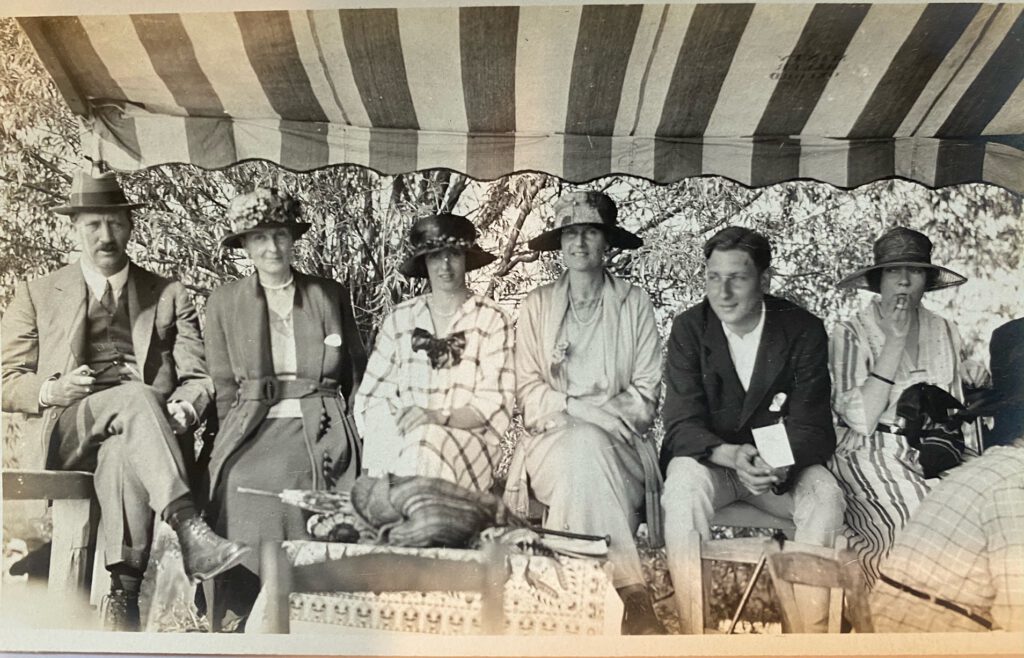
Like with any quality we have, sometimes it's good, sometimes it's bad. I mean, there's always a positive and a negative side for any of our traits. And so, I am reflective. And so, really what triggered this time of reflection for me... I was just going through some old photographs. And by old, I mean really old. As listeners will know, when I was born, my dad was in his late 50s. So, he was actually born in 1901. Yes, that's 1901.

Gary S:
Wow.

Warwick F:
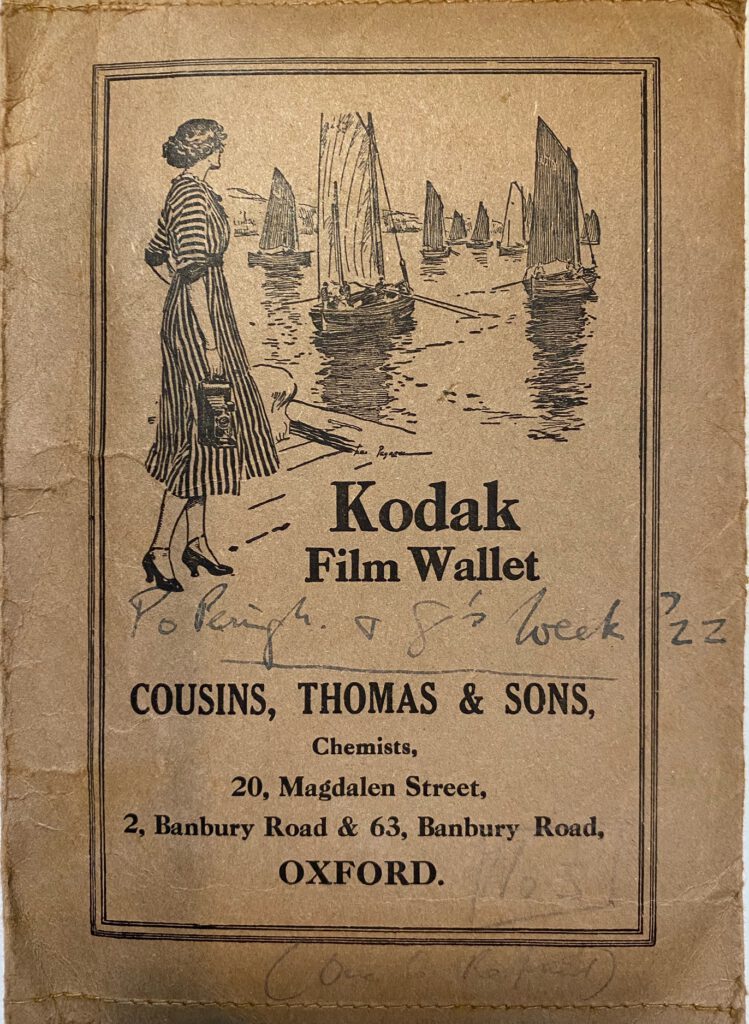
We're talking like 120 years ago, or something. Whatever the math is, it's a long time ago. Obviously, he's passed away a long time ago, both my parents have now passed. And so, I was looking at this photograph. I think it was probably when he was about 20, 21. It was somewhere around 1922. And YouTube, you can see it, maybe we'll put it in the show notes. So, see if I can kind of hold it there. So, for people that can see this on YouTube, my dad is sort of the young guy in the jacket. He is the youngest guy there. His mom is to the right of him. She was pretty tall. And... So, obviously this is very old people are wearing this, the early 20s kind of clothes. And it's funny. This came in this kind of wild... this Kodak film wallet. See if I can hold this up here for people.

Gary S:
Oh wow.

Warwick F:
And this is Kodak. It says... This is from Oxford, where my dad was. On the back, it says, "Kodak film is the best film for Kodaks and Brownies." Brownies was a very old fashioned form of camera. So, this was like...

Gary S:
Back in the days before your phone was your camera.

Warwick F:
Yeah. This is like way way back, before then.

Gary S:
Right.

Warwick F:
So, okay. It's just a photograph. So, it's kind of like, "So what?" And so...

Gary S:
But that photograph... Right? That photograph triggered some reflective emotions in you.

Warwick F:
It did, because here's this guy who... Hold it up again. A pretty good looking guy, seemed to be relaxed, at ease, obviously came from a well-off family. My family has had significant wealth for generations. So anyway, I guess the point is, as I looked at that, it triggered a bunch of emotions. I remember thinking, "Okay. He doesn't know what is to come." But he was to be married three times. While the family seemed pretty happy back then, there were rifts within the family which is... variety of reason... between my cousin, or a cousin of my dad and my dad's eldest son, who was by his first marriage.

Warwick F:
And any time there's divorce, it absolutely affects the kids. I was fortunate because I was from the last marriage of my dad and my mother, who was married before. She married my dad. So, I didn't grow up with... a child of divorced parents. I was fortunate. But it takes an effect. And so, I looked at that, and it was almost sort of wistful. It's like... I knew, obviously, who my dad was and my grandmother. But I have no idea who these other people are. It's too long ago. There's nobody alive who would have a clue who these people are.

Gary S:
Right.

Warwick F:
So, part of it was this wistful sense of, for generations in my family... Certainly, as the listeners know, the founder of the family business, John Fairfax, was a person of great faith. So, it seemed like there were good marriages, no divorce. As far as I know, happy marriages. It was just really close knit family. And then, this is about 1922 or something. Over the decades, somehow, maybe it was more power, more money, more marriages... Somehow, the family... There were rifts within the family. Children of divorced parents, that has an affect. It was a tendency back then, if you were wealthy, to raise your kids with nannies. That would be true in Australia, in the US, in the UK, in that time frame.

Warwick F:
So, I kind of looked at that. I was almost partly wistful, partly it's like... My dad was a good man in a lot of ways. But it's like, "Gosh dad. Did you have to get married three times? Couldn't you have been a bit more thoughtful?" And the devastation in the family, and just... Both my parents have gone. The house where I grew up, in Fairwater, which was a pretty amazing house, that's gone. So, it was a sense of loss of what's no longer here, and a sense of sadness, a little bit of anger at my dad for maybe some decisions that could have been better, and rifts in the family. Not all of them were his fault. But there were some things he did that probably weren't helpful.

Warwick F:
And so, there was mixed emotions of wistfulness, sadness. Why couldn't things have been like they were prior to my father generation? Really a complex set of emotions that kind of almost saddened me, depressed me, a little bit. So, it was a... That one photo set off a flood of emotions and thoughts, as photos often do.

Gary S:
Yeah. And it's not... It's interesting. You described some things about your family. Your great-great grandfather started this media business, and he was a man of faith. And I know what you know, not as intimately as you know it. But I know what you know from reading his biography written by another member of the family that his relationship with his wife was very strong. We say often on the show, when we're talking to guests, that it's amazing how crucible experiences, even though the circumstances of what you're going through may be different, the emotions are the same.

Gary S:
And I think, perhaps in neon lights, what I see here is... No. Not many of our listeners have grown up like you grew up, with a family that had that kind of legacy of influence, and money, and power, and all of the things that come with it. But that legacy of broken relationships, and divorce, and decisions made that have ramifications down through the generations... That is a fairly common, unfortunately, thing in many families. And I think it comes to a sharp focus for us at this time of year. This is... As I said in the beginning, this is the time of year that we're singing about tidings of comfort and joy. But we're not always feeling comfortable and joyous.

Warwick F:
No. Sometimes, it's memories of sadness. Sometimes, it's happy memories that could also cause us to be sad, which sounds strange. But they're times that we've lost like with my parents, who they had their foibles like we all do, but they dearly loved each other, and just memories of growing up at Fairwater on the Sydney Harbor. And Christmas Eve, we would gather around the piano and sing Christmas carols. And he would always be amusing because none of us could really play the piano. And my dad would attempt to play. And I think he probably learned how to play the piano in school 50, 60 years before, but hadn't played much ever since, except at Christmas Eve, once a year.

Warwick F:
He'd play with two hands. And he'd start off playing Hark the Herald Angels. And it would be like, "Hark... hang on, hang on. The... okay, almost got it. Herald..." He tired to do two hands. And then, he would remove the left hand, because it's far easier to play the piano with just one hand. And so, he'd play the piano with one hand and we'd sing a few Christmas carols. But every single year, it would be the same ritual. It would be like, "Dad, give it up. You know you don't play the piano that well. Just go straight to one hand. Why do the two hand ritual?" But, in some strange way, it was this nice memory or... Every family has its own traditions. We'd have a lot of extended family would come over. And we have a huge dining room table, the mahogany kind of deal.

Warwick F:
But we wouldn't open our presents until after lunch. Not only after lunch, after the adults had coffee. And because, in the English/Australian tradition, you eat lunch at 1:00, it could be 2:00, 2:30, or later. And by that point, my cousins and I... There's a lot of kids. It's like, "Seriously? Can you hurry up with the food and the coffee? Let's get on with it." So, you've got some happy amusing memories. But when I think about this sense of reflection about the holidays, yes, you've got the sad and the happy memories in the past which are gone, and mixed emotions. But then, not only do you have the past, you have the present. It's like a Christmas Carol, the ghost of Christmas past, present, and future, all that kind of thing well there's the present.

Warwick F:
And sometimes, that's great. Right now, as I've mentioned and we've discussed with COVID, there aren't too many people that are having a normal Christmas Holiday gathering this year. And sometimes, it can be a sense of joy. Other times, it can be broken relationships with siblings, or cousins. Or maybe we have relatives that made choices in life that we think aren't as helpful for them, but we don't say anything. Or if we have, it doesn't go down well. And we try and love and accept, but we feel sad, sorry, frustrated. Depending on the relationship, it could even be angry. Here we go again. They're going to push my buttons for the 53rd time. And I'm going to try and smile and pretend it didn't affect me. And...

Gary S:
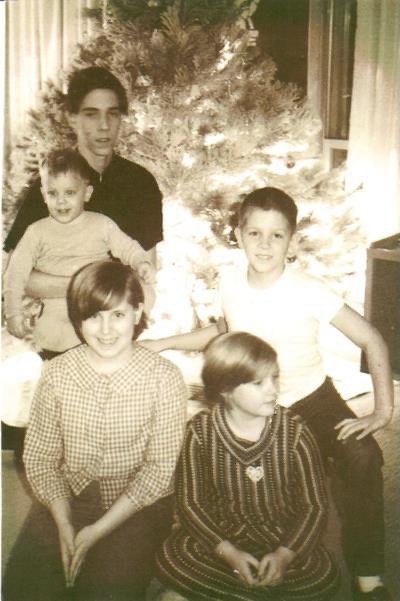
And sometimes, it can be... And I'm going to do... Here's a picture I'm going to hold up. I posted this on Facebook today. This is my family, me and my two brothers and two sisters. And you can see I'm the little guy in the... clearly wearing... I'm the little guy getting held up over there on the far side by my big brother.

Warwick F:
That's awesome.

Gary S:
And we'll show this in the show notes too, so people can see what I'm talking about But there, you see all kids... We were all kids around the Christmas tree. We were all younger than probably... Well, let's see. My brother's 14 years... All younger than 18, most in just early double digits, me in very early single digits. And half of the people in that photograph, or half of my siblings, have passed away, in addition to my mother. I have eulogized half of my family: my mother, my older sister, my older brother, and my stepfather.

Gary S:
And holidays can also bring about the longing for situations like I just showed. Right? There's a lot of people who go through that, people who you've celebrated with before not only aren't there because of COVID, but because of life's... They've left this life. They've departed this life. And that kind of sadness can ring as well at this time. And you can think back on those moments. And you can get reflective about...

Warwick F:
Right. You look at that photo, and you go, "Why couldn't life be like that now? Why couldn't I have my siblings at Christmas, my mom, my stepdad? That was a nice memory. Why does that have to go? Can't we have that again somehow?" And it inevitably, for most people, it triggers those sea of emotions. Yeah. So, it's a time of reflection, a time of frustration. And I guess the challenge with all this is, it's fine to be wistful and maybe remember some of those things, but don't let either the happy emotions or the sad ones pull you down.

Warwick F:
But how can happy emotions pull you down? Well, because they can be a sense of... like that photograph that you showed, a sense of loss. And if it does... It sounds simple to say this. But if it doesn't serve you, remember it, but don't... As one of our guests, Professor Badaracco, Joe Badaracco, said, "Ruminate versus reflect." If it's ruminating, as in, "Gosh, that's unfair. And why did that have to happen?" It's natural but you don't want to dwell on there and just live in it, and let those emotions flood. You're not dishonoring folks by not letting it pull you down. So, treasure those memories. Try to not let the negative ones pull you down. And part of the whole chart your own course is, each of us has our own memories, our own path, our own new beginning, if you will.

Gary S:
Right. And the idea of calling this episode Chart Your Own Course... It's very similar, again, even though circumstances are different from the crucibles that we have on, or the crucible situations that we talk about mostly on the show, or usually on the show, in that you need to "learn the lessons of your crucible." You need to learn the lessons of that wistfulness, of those setbacks, those tragedies, those traumas, those things that we've been discussing that have happened to you. You need to learn those lessons.

Gary S:
And then, it comes... The idea of charting your own course is, how do you move beyond that? It's the same thing that we say about any crucible. You need to learn the lessons. It doesn't happen overnight, in most cases. But once you learn those lessons, then how do you... To go back to a very impactful statement you made in the podcast a few episodes back, how do you take one small step at a time, one small step followed by another small step by another small step, to begin to chart your course beyond the crucible of those holiday woes, depression, sadness, broken relationships, conflicts? How do you do that? And that's what we really want to spend most of our time talking about here.

Warwick F:
Yeah. You said a very interesting thing which was, learn the lessons of your crucible and indeed the crucibles you grew up in, maybe other family member's crucibles. Because we can learn, from our family, things that we admire. And I admired my dad's integrity and doing what he felt was right. But we can also learn from our family's mistakes. Doesn't mean we dishonor them by saying that. But we're going to make our own mistakes. But at least maybe we can hopefully avoid some ones that other family members have made. So, as I mentioned, my dad was married three times.

Warwick F:
And when I was growing up, I was pretty paranoid about that. Because I saw the... Devastation is maybe too strong a word, or maybe it's not... but the impact it caused on my older half siblings. And I didn't want that to be me. I didn't want that to be my kids. So, I was very very paranoid. I wanted... Because I'm a person of faith, I wanted to marry a woman of faith and character. Character was the single most important thing to me. And by, from my perspective, the grace of God, I met a woman of character and faith, wasn't really... didn't care about money or that kind of thing, which, when I met her whilst in the middle of the whole takeover thing, she was American just visiting Australia at the time.

Warwick F:
And we've been married a little over 30 years. And that, as I've maybe mentioned before, is such a blessing. And I loved her very much when we were married. And I love her more now. I loved her a lot back then. So, that... So, I don't take that for granted. Like with any relationship, you've got to be humble and help each other, serve each other, and all of that. But... At least that's a different course than my father had. My kids have not grown up in a broken home. So, that's a big difference.

Gary S:
And part of what is undoubtedly helping you right now work your way through what you described as the frustration, the wistfulness, even the anger a little bit, that you felt when you saw that photograph of your dad and you thought about some of the decisions he made in life. Part of... A huge part of what's helping you through that is focusing on, changing your perspective, getting your gaze off of what went before that you couldn't control, and then putting your gaze on those things that are before you that you're living in right now that are blessings.

Gary S:
And I want to share with listeners, because I think this fits with that. And that's... This isn't the holiday that we're in now. It's passed. It was Thanksgiving. But Abraham Lincoln was the president who established a national day of Thanksgiving. And it's not widely known. It's not talked about every year at Thanksgiving. But he issued his proclamation for Thanksgiving on October 3, 1863. That was just two weeks after more than 34,000 Americans were killed or wounded in the Battle of, I'm going to pronounce it wrong, Chickamauga, in the Civil War. And this is what he wrote in his proclamation. So, as you think about those things behind you, those things that have gone bad, those things that feel hard, think of what Lincoln's saying here, and then what he says in the end.

Gary S:
But this is what he wrote. "The year that is drawing toward it's close has been has been filled with the blessings of fruitful fields and beautiful skies." So, he's already looking ahead. He's seeing things that aren't that terrible devastation of war. "To these bounties which are so constantly enjoyed that we're prone to forget the source from which they come, others have been added which are of so extraordinary in nature, they cannot fail to penetrate and soften even the heart, which is habitually insensible to the ever watchful providence of Almighty God. In the midst of a Civil War of unequal magnitude and severity, peace has been preserved with all nations, order has been maintained, the laws have been respected and obeyed, and harmony has prevailed everywhere, except in the theater of military conflict.

Gary S:
"Needful diversions of wealth and of strength from the fields of peaceful industry to the national defence, have not arrested the plough, the shuttle or the ship; the axe has enlarged the borders of our settlements. And the country, rejoicing in the consciousness of augmented strength and vigor, is permitted to expect continuance of years with large increase of freedom." This is how he ends it. "It has seemed to me fit and proper that these gifts should be solemnly, reverently, and gratefully acknowledged as with one heart and one voice by the whole American People."

Gary S:
That, to me, is just incredible, that at that point in the Civil War, two weeks after one of the bloodiest days in the Civil War, he could see those blessings, those positive things. And I think about that when you say, despite what you've been going through, as you've looked back and you've felt remorse and regret over some things that were in your past, caused by your forebears, you look at your wife and your family, and you see those blessings. You see those things that give you riotous thanksgiving.

Warwick F:
Wow. That's so well said. Just for Lincoln to be thankful amidst the horrors of the Civil War, which at the time was the most horrific war, hundreds of thousands, enormous number of soldiers died. I think it wasn't... War World One, sadly, was worse. But at the time, in the history of humankind, more people died during that war than any other war in history. It was just staggering. So, to be thankful amidst that is... It's just hard to even fathom. But... Yeah. I mean, I think...

Gary S:
And that was... Let me say this. Let me just add this one thing.

Warwick F:
Sure.

Gary S:
That was something from an editorial. I used to be editorial page editor of a newspaper in Palms Spring California. And I wrote an editorial about this on Thanksgiving in 1999. But here's how I ended that, just to bridge to the point you're about to make. I said, "If Lincoln could find such abundant reason to be thankful in the thick of war, how difficult can it really be for us. Take a few minutes today," I urged readers, "after the pumpkin pie and before the football game," it was Thanksgiving, "to look around your life. Even if it seems more battlefield than bountiful right now, you too can permit yourself to expect a continuance of whatever blessings you find there."

Warwick F:
Yeah. That's so well said. Not many of us are going through the kind of crucible that... As divided as the country is now, that's a whole nother level of division that the country was going through in the Civil War. So yeah, we can... Despite our circumstances, we can always be grateful. And kind of as I was mentioning earlier, I tried to learn from, frankly, some of the mistakes of my forebears, and my dad, because of the way he was raised. I think certainly my older two siblings from my father's first marriage, they were raised by nannies to a degree. This is like the 1930s. My dad and his first wife went to England for like a year, and they had small kids that were like, I don't know, 6, 3, somewhere around there.

Warwick F:
It's just unbelievable you would sort of leave small kids alone for so long. But people did that back then, wealthy families. So for us... Yeah, we maybe would have a babysitter once in a while, but we wanted to raise our kids ourselves, which sounds pretty normal, but it's... For wealthy people, which I didn't, you know... I wasn't at the same level as my parents when my kids were small. I just wanted to be around them. I didn't want to be this workaholic dad that was never around.

Gary S:
Right.

Warwick F:
I was there at their soccer games, or dance recitals, whatever. And, as I think I've mentioned before, we do cards, family birthdays, or we say what we most admire about people.

Gary S:
I'm going to steal that idea, by the way. I've loved that ever since you brought it up the first time.

Warwick F:
And what's amazing is my boys, who are more athletic, they got Gale's genes. And my daughter got my genes, which is not quite as athletic. They all say, "Well, thanks dad. You were there at my soccer game, my tennis game, my dance recital." So, we've chartered our own course. And it doesn't mean we haven't made mistakes. But just... My kids didn't grow up in a broken home. We were present parents. We were there. We've tried to encourage them. We try not to tell them what to do. So yeah, I'm sure we've made our own course... made our own mistakes. But we've chartered our own course.

Warwick F:
And so, I'm grateful for a loving wife, loving kids. My kids are all in their 20s. Because of COVID, they're all with us right now. So, that is amazing. And we all get on. That doesn't mean to say there's not the odd speed bump here and there, but I have a lot to be thankful for. We have a beautiful home. My wife has an interior design background, and so... She's a fantastic cook, which doesn't... You're not always a good cook if you're an interior designer, but she's a great cook. But she also knows how to make the house look so wonderful. Her grandfather was born in Norway, so you've got some Norwegian viking little figures around the place. And we've got our own traditions. And I've got so much to be thankful, so much blessing.

Warwick F:
So I think, when you start feeling melancholy... And maybe not everybody is as blessed as, frankly, I am or we are. But focus on, what are you grateful for? What are the things that you feel blessed? And I think don't focus on the negative, especially the negative you can't control, whether it's broke... Yeah. Broken relationships, maybe there are some things you can do. But it's not all way... You can't always solve everything yourself. So, don't get overly melancholy about loss, even if it's the happy memories, the sad memories. Think about the things you're grateful for, the things you have now, that are such a blessing. And reflect on maybe...

Warwick F:
Rather than focusing on the negative. I could focus on the negative decisions: the 2.25 billion dollar takeover, and 150 year old family business going out of the family, and the mistakes I made which caused some rift in the family. I could focus on all of that. But focus on maybe some of the positive things. It sounds a bit too much of ego, but it's okay maybe to be thankful for maybe some of the good decisions you've made. As a person of faith, it's a lot easier for me. Because I can say, "Thank you God." Because I view it as His wisdom and His guidance that have helped me make hopefully a few good decisions. So, I really more turn the thanks back to Him rather than to me. So, gratitude is a huge way of kind of dealing with what can be the crucible experience of the melancholy/wistful feelings of the holidays.

Gary S:
Yeah. And you, in addition to the personal blessings that you've talked about... You've shared, on this show many times, professionally speaking, things... There are those who will look at you still, and say, "My goodness. You could have run a 2.2... a multi billion dollar media empire. It could still be going. And you could be Bill Gates. And you could be all that stuff. And professionally, you could have all this influence." But you've carved out a professional niche that you're quite blessed by, I know.

Warwick F:
Yeah. Part of charting your own course... Obviously, I've talked a bit about family and how my wife and I want to approach that. And fortunately, 80, 90... 95% of the time, on any major decision, we're in agreement, which is an unbelievable blessing, I've got to say. But professionally... Yeah. I could be all kind of, "Oh my gosh. I could have been this powerful media mogul." And we're very very comfortable, but I could have been more than very very comfortable, and had multi millions or billions or something, and I don't know what, the way the uber wealthy are, a house in the south of France, another one in Aspen, and dotted around the place, maybe the Maldives. I don't know. Pick your favorite spot. And some do, and that's fine. But I'm not as well known. I don't have the accolades my forebears... I think I've mentioned in an earlier podcast, my dad was a knight, had the same name as I have. So, he was Sir Warwick. And his dad was Sir James. And then, Sir James Reading. I don't have a knighthood, but okay. So, I could look to the things I don't have, the big family business, the respect and accolades. My Wikipedia entry is not particularly favorable. It's young hot headed kid, could have had it all, doesn't have it.

Warwick F:
So, I could focus on that. But really, what I should be focusing on, which I like to think I do most of the time is... I've moved on from that, from a variety of experiences I've mentioned, through working at an aviation services company, and financial analysis, and business analysis, to being executive coach, to being an elder at my non denominational church and on the... I have been, in the past, been on the board of my kids' school... to now, with Crucible Leadership. I have a book on Crucible Leadership that will come out next year. We have this podcast, Beyond the Crucible, active on social media. I have a blog. And I'm also blessed to have an unbelievable team, obviously, you and I. I'm blessed to have you on the team, the folks at Signal, Keri for the book sales, Steve on the podcast side.

Warwick F:
I'm so blessed. I've charted my own course. I love what I do, helping people think of how crucibles, as you so aptly say at the end of every podcast, how crucibles don't have to be the end of your story, they can be the beginning of an exciting new chapter. I'm really, really blessed, not only personally, but professionally. And I have charted my own course. I love what I do. So really, that's another key is... Hopefully, you have charted your own course. If you haven't, maybe now would be a good time to reflect not just on, hopefully, the happy memories in the past. But reflect on, "Okay. Maybe I've made mistakes. Maybe I've made choices that weren't too good." I've certainly spoken a lot about the choices I've made, certainly professionally, that weren't so good, and that impacted wider family members.

Warwick F:
But now is the time when maybe you can think of, "What do I want my life personally and professionally to be like?" We can't control a lot of things in life. We can't control the COVID pandemic. We can be safe and sane and all that. When the vaccine comes out, that will help. But what we can control is our choices. Every day, we get to make a choice, many choices. Our lives are a whole sum of choices. Our lives, our health, our legacy, is a sum of choices and decisions. We can't change our past choices and our past decisions. But we can change the ones today and tomorrow. So, think about, "What course do I want to chart? How is it in line with my values, and what I believe in, and what I think is important?"

Warwick F:
Today, that's something that we should focus on. Focus on what you can change today. And focus on the future. What do you want your life to be like? What course do you want to chart?

Gary S:
That is almost like you knew I had this book here, and I was going to say this. And you didn't. You didn't know. We haven't talked about this. You were just talking about focus on the future. This is a quote from Bono, the lead singer of U2, and a rock star who probably has a home in the south of France and all that stuff. But here's what Bono said about the future.

Gary S:
"I used to think the future was solid or fixed, something you inherited like an old building that you move into when the previous generation moves out or gets chased out. But it's not. The future is not fixed. It's fluid. You can build your own building, or hut, or condo. The world is more malleable." I love that phrase. "The world is more malleable than you think. And it's waiting for you to hammer it into shape."

Warwick F:
That is such a great quote, and it's right. We cannot change the past. Even some things about the present, we can't necessarily change, certainly can't change other people's decisions and choices in life. But the future, it's... There's a lot about that, that we can change. We can change the decisions we want to make, how we treat people around us, both personally and professionally. We can choose to move in a direction that, as we say on Crucible Leadership, that is in line with our internal wiring. It's in line with our gifting, in line with our values. It's something we're off the charts passionate about. It's a vision that we think will make the world a better place, be it in a small way or maybe even a bigger way.

Warwick F:
The future is something that we maybe can't control, but we can certainly control our choices, our decisions. So really, in the vein of what you mentioned earlier about one's step, is... Over the holiday period, I guess, the question we want to ask ourselves is... Especially for those that maybe aren't following a course, aren't charting a course, that they're really are excited about, that they believe is meaningful, what one decision are you going to make this holiday period, this Christmas season, this New Years season, that will move in a positive direct...

Warwick F:
I'm not a huge believer in New Years resolutions because you make them and then you forget them. But maybe a life resolution or a... What's one small step that will take you in a direction that's positive? Part of moving from the melancholy too, is forgiving past family members. I don't have a lot of angst towards my dad. I deeply respected him. But maybe forgiving him for being young and maybe not making as good a choices as perhaps he could have. But part of it too is forgiving yourself. I really try to work on this. As a reminder, Tommy Breedlove talks a lot about... who we've had on the podcast. He talks a lot about self leadership. Well, part of self leadership is you've got to forgive yourself.

Warwick F:
So, I have to forgive my poor choices, professionally in the family business, and whatever other poor choices I've made, because you can't control it. Learn from it, as I've mentioned. Absolutely, learn from it. Try not to repeat the same mistake over and over again, because history does tend to repeat itself. But forgive yourself. Forgive those around you. And move forward. There's a scripture that talks about... I think it's in Philippians, forgetting what is behind and moving toward what is ahead. That obviously has a faith connotation. But whatever your perspective, focus on, where do you want to move on ahead? What do you want your life to be like personally and professionally? Think of that. Value the good. Let go of the bad memories. Forgive yourself. Forgive others. And move forward, chart your own course. So, that's really probably the key to getting out of the negative wistfulness and melancholy is be grateful for what you have. And chart your own course as you move forward.

Warwick F:
Focus on... Be grateful for the present, the bits that you should be grateful for. But focus on the future. That's your eyes should be ahead. Your eyes should not be on the path that you've walked previously, or at least only as lessons learned, but not ruminating forever. So, don't focus on the past. Don't even focus so much on the present. Be cognizant of it, but have your eyes faced forward, looking to the hills, looking to the mountains, hopefully the rainbows. Just look forward. That's where your focus should be.

Gary S:
That is an excellent point to begin what I often say on the show, as the captain has turned on the fasten seatbelt signs, and it's getting time to land the plane. But because we've talked about Christmas, and this is going to air during the Christmas season, I'm going to say that Santa has indicated to the reindeer that it's about time to land the sleigh. Before we do that, one thing I want to say to you, and to listeners about you, is... You've said many times on this show, Warwick. You've said many times that your Wikipedia entry... And you've always referenced this. It says something along the lines of brash, impetuous young kid, could have had it all.

Warwick F:
Right.

Gary S:
I would argue that, that brash impetuous young kid has grown into a man who does indeed have it all of the things that matter.

Warwick F:
Well, I don't want... If, by saying "well said", it makes it seem like it's arrogant. But I can't think of anything else to say other than "Yeah." The wife, the family, we have the flexibility financially to... not be held back a whole lot, I have to say. Professionally, I love what I do. I have a great team. I go to a great church. I'm so blessed. I am so blessed. Yeah. Logically, I don't have a whole lot of reason to be melancholy, but we're human. But yeah, I feel blessed. And I think maybe others don't have as much reason. I don't know. But I think we can all... There are all... Most of us can think of things that we are blessed by...

Gary S:
Absolutely.

Warwick F:
... and things that we're thankful for. You know? You looked at that photograph of your family. I'm sure you look back at your mom and relatives, and you think, "Okay. Everything wasn't all roses and peaches and cream, but there were things to be thankful for."

Gary S:
Absolutely.

Warwick F:
Obviously, you're thankful for your current life and... You know?

Gary S:
Yeah. And the guy-

Warwick F:
Got kids, a wife... Your life hasn't been perfect, but you've got a lot to be thankful for too. Right?

Gary S:
Absolutely. My big brother, who's 14 years older than me, who was holding me in that photo, he lives now... I'm back in my hometown. He's my best friend. We've grown closer together over the years. He was holding me just because he was the only one that wouldn't drop me in that picture. And now, we're actually... We're closer than brothers. We're as close as brothers and great friends. So, that is entirely true.

Gary S:
As we wrap up, as the sleigh touches down, connect, for listeners, the dots, Warwick to... from the beginning, when you talked about the picture of your dad and the wistfulness that, that sort of brought to you, and the sadness in some senses, and this idea of charting your own course. Bring those two points together as we put the reindeer on the ground.

Warwick F:
Indeed. I think I can look at that photo and be angry, wistful. It's like... Well, short of heaven, where I'm sure that's where John Fairfax is, I'm not going to meet him on this earth. I'm not going to meet these relatives from three or four generations ago. And that's okay. Let it go. Let go of the fact that my dad made some decisions, not all of which were good. Well, I've made some decisions, not all of which were good. Just let it go. Be grateful for the blessings that you have, but just let it go. Just kind of open your arms, open your hands, and just kind of let it go. It's like, whew, let it go, breathe it out. It's okay. Don't obsess over it. Be grateful. So, let go of...

Warwick F:
Even the good and bad memories, if they're pulling you down... That which pulls you down, you need to let go of, even the good, which sounds a bit contradiction in terms. Be grateful for what you have, family, professionally. And then, as we say in Chart You Own Course, think of the future. What do you want your legacy to be on your death bed? We talk a lot about life of significance for a reason. What do you want your life of significance? A life on purpose, dedicated to serving others. How is charting your own course fueling a life of significance that, when you're on your deathbed, and when others are eulogizing you, what are they going to be saying in that eulogy? What do you want them to say? You can influence that today.

Warwick F:
So, focus on the future, focus on a life of significance, focus on a life that you and others around you will be proud of. That should be... The future, and as you chart your own course to a life of significance, that's really where you should devote a bit more energy to than over reflecting about the past, when it doesn't serve you and pulls you down.

Gary S:
And with that, I can see that Rudolph has dimmed his red nose. The sleigh's on the ground. Santa's scrambling out to deliver presents.

Warwick F:
And you need to give a shout out speaking of Rudolph, to the blog you just wrote. Because it will be great if listeners could read that, because you can't mention Rudolph without mentioning the blog.

Gary S:
Yes. There's a blog at crucibleleadership.com, thank you for the plug, Warwick. At crucibleleadership.com, if you click on Blog, you'll see a holiday themed blog which extracts pivotal crucible leadership learnings from the story of Rudolph the Red Nosed Reindeer, and that beloved special that we've all seen, dating back to its premier in 1964. So, hopefully you enjoy that. Hopefully, listener, you've enjoyed this episode of Beyond the Crucible. Thank you as always for spending your time with us. You can learn more about not just the blog, but about Crucible Leadership. We have some very interesting things going on there.

Gary S:
Visit crucibleleadership.com, poke around a little bit. You'll find some resources, including an assessment you can take to see where you are on your journey to move beyond your crucible. You can find out your profile. Are you an imagineer? Where are you at on the road? And then, what is your personality profile as you're traveling that road? So, check that out at crucibleleadership.com.

Gary S:
And, until we're together the next time, do remember the essence of what we've talked about here. And I'm not going to do what I do often and say, "Here's three takeaways." Because I think the key takeaway of this episode is... goes back to Warwick, what he said a couple podcasts ago and he repeated here. And that is, what's the one small step you can take, as you want to move beyond this crucible of some of the tensions and trials and things that can be associated with the holiday season? Take that step. Find your blessings. Take that step. And, as Bono says, "Get out your hammer and start shaping your future."

Gary S:
Because our crucible experiences, as we've talked about here and as we talk about every week, are not the end of your story. If you learn the lessons of them, if you apply the lessons of them, if you recognize the blessings amid them, it's far from the end of your story. It's, in fact, the beginning of a new story which can be the most rewarding story of your life, which can be the story that leads your virtual Wikipedia entry, if you don't have a real Wikipedia entry, to say that you are indeed someone who has it all. And that is because, when you learn the lessons of your crucible and you apply them and you move beyond your crucible, you find your way to a life of significance.
Maybe you think of your favorite Christmas TV specials as inspiring, celebratory fare that set the tone for the season. That’s certainly true – but so is the fact that just about every Yuletide classic we tune in to this time of year features about as many crucible moments as it does presents under the tree.
Frosty the Snowman? Well, the sun was hot that day and he melted. Santa Claus is Comin’ to Town? The Winter Warlock almost does Kris Kringle in. Even The Little Drummer Boy found himself without a gift that was fit to give a king – before he happened upon the idea of pa-rum-pa-pum-pumming for him.
But no Christmas special that has delighted us since our youth features quite the number of crucibles affecting quite so many characters as Rudolph The Red-Nosed Reindeer. The animated treat that premiered in 1964 is built around what would have been a monumental global crucible: the cancellation of Christmas. Santa thinks it might be necessary because the “storm of storms” – as our narrator, Sam the Snowman, tells us — hits the North Pole, aka Christmastown, just as Christmas Eve arrives. Santa fears the wind and snow (and the fog!) will make his annual round-the-world mission to give toys to all the good little girls and boys impossible.
But then … Rudolph’s “beak that blinks like a blinkin’ beacon” restores the hope and happiness of the world.
Getting there, though, proves anything but a bump-free ride. Not just for Rudolph, but for most of the other beloved characters who make the special so special. Each faces their own crucible moment or moments – and only after they learn the lessons of those crucibles are they able to ensure a holly, jolly Christmas.
Put the eggnog down for a moment and drink in these five principles of Crucible Leadership that help save the day – and the season – in Rudolph the Red-Nosed Reindeer. Applied to your crucibles, they’ll help you in ways that some might even say make you glow.
1. You can’t inherit a vision.
Rudolph’s dad, Donner, wants his son to follow in the family hoofsteps – hitch up like all the other reindeer and fly Santa’s sleigh. But the young buck’s shiny nose, which Donner tries to hide with a nosepiece and which prompts teasing and taunting from his schoolmates, leads him to a much different destiny. Similarly, Hermey, the misfit elf, is brow-beaten by his boss because he dreams of being a dentist. “You’re an elf!” the pointy-eared supervisor screams. “And elves make toys!” But Hermey refuses to let his vision die.
2. Authenticity is key to making your vision a reality.
Hermey and Rudolph both learn they can’t thrive if they hide who they truly are – whether it’s covering up their gift of a neon proboscis or their fascination with molars. Their passions and values can’t be squelched as summarily as Rudolph was banned from joining in any reindeer games.
3. It takes a team to get where you want to go.
Rudolph and Hermey run away independently, but fortuitously meet each other as they’re fleeing Christmastown. They form an alliance first with each other because they’re fellow misfits, then with the plucky adventurer Yukon Cornelius, whose mentorship helps them survive the perils of the Abominable Snow Monster, aka, the Bumble, hot on their tails. They stood no chance, and neither did Christmas, if they didn’t join forces
4. Success alone is not a successful pursuit. You must pursue significance.
Yukon Cornelius spends his entire life prospecting for a bounty he never finds (Sam the Snowman thinks it’s silver and gold, but it turns out to be peppermint). Only after he achieves significance by helping Hermey and Rudolph and taming the Bumble does he “strike it rich.” And Hermey? He is allowed to open the North Pole’s first dental office.
5. Perseverance is the only way through your crucible.
The Misfit Toys – a choo-choo with square wheels on its caboose, a water pistol that shoots jelly, a cowboy who rides an ostrich — spend years isolated on the island named after them. But because of the shared vision of significance Rudolph and Hermey hatch, they are at show’s end distributed by Santa to children … so they can fulfill their destiny to be played with and Burl Ives can sing the title song for the rest of us.
What does this all add up to for Rudolph? As we often say at Crucible Leadership, living a life of significance leads to a legacy you can be proud to leave behind. And our red-nosed friend, as we all know by the song’s end, wound up going down in his-tor-eey.
Reflection
Have you ever struggled with authenticity? What are the things you have a hard time revealing about yourself – and how has that impacted you?
Who’s on your team to help you move beyond your crucible? If you don’t have a team yet, who can you enlist to encourage and guide you on your journey?
How would you rate yourself when it comes to perseverance? What one step can you take today to demonstrate your commitment to keep moving forward?
To explore Beyond the Crucible resources, including our free Trials-to-Triumphs Self-Assessment, visit beyondthecrucible.com.
Enjoy the show? Leave a review on your favorite podcast app and leave a comment at our YouTube channel. And be sure subscribe and tell your friends and family about us.
👉 Take the free Trials-to-Triumphs Self-Assessment to discover where you are on your journey of moving beyond your crucible and how to chart your personal course to a life of significance: https://beyondthecrucible.com/assessment/
She set out on a quest to become the first woman to sail solo around Antartica. But 72 days in, when a horrific storm with waves as high as a two-story building caused her mast to topple and nearly sank her boat, Lisa Blair’s journey changed from setting a record to staying alive. In the hours that followed, she called on her months of preparation, all the courage she could muster and her indefatigable spirit to steady her craft — then broke off pursuit of the record to head to port in Cape Town, South Africa, for repairs. But she refused to let the myriad and monumental crucibles she’d endured derail her dream. She launched a second run at the record books that secured her a place in nautical history.
Enjoy the show? Leave a review on your favorite podcast app and leave a comment at our YouTube channel. And be sure subscribe and tell your friends and family about us.
👉 Take the free Trials-to-Triumphs Self-Assessment to discover where you are on your journey of moving beyond your crucible and how to chart your personal course to a life of significance: https://beyondthecrucible.com/assessment/
Transcript
Warwick F:
Welcome to Beyond the Crucible. I'm Warwick Fairfax, the founder of Crucible Leadership.

Lisa B:
So I reached for my life jacket, which was on my bunk right next to me and I was clipping it shot, and I just turned to climb outside the boat, and then I heard the mast come crashing down in this sole minute. And it was this gut-wrenching sound of metal on metal, just twisting and grinding and the entire boat shuddering as all the weight changed on the boat and everything inside the boat was just amplified 1000 times. And I realized in that moment that I had just demasted. And so now that means I'm in a broken boat, 1,000 miles from land.

Lisa B:
If I don't cut the mast free or separate it from the boat fast enough, it will put a hole in the boat and it will sink me. So that set off this whole new challenge. And instead of thinking about Australia, which was a full week sail away on this record that I was currently beating, it was suddenly like, okay, I have to survive tonight. How do I survive tonight? What do I need to do to keep myself alive?

Gary S:
It's hard to imagine a crucible experience getting more harrowing than that, chilled to the bone, whipped about by violent winds and waves, alone in the dark in the middle of the ocean, having to think fast, or you just might die fast. That's what Australian sailor Lisa Blair faced in 2017 when her quest to become the first woman to sail solo around Antarctica literally came crashing down on her. Hi, I'm Gary Schneeberger, the co-host of the show and the communications director for Crucible Leadership.

Gary S:
When we left Lisa's interview with Warwick last week, she had just described what theoretically happens to a sailboat when it loses its mast. On today's episode, the second part of that conversation, she shares in heart pounding detail, what happened to her boat when she endured and open sea demasting. As you'll hear her describe the nautical, meteorological and emotional crucibles that kept crashing into her, you'll understand why Warwick said reading her book about the voyage was like reading a thriller. A can't put it down page turner, he consumed mostly in one sitting. Here's that terrifying, inspiring story as only Lisa can tell it.

Lisa B:
Yeah. So at this point I'd been sailing for 72 days. So I'd gone past South America and Cape Horn and I was just passing in South Africa and I was down at the 45 degree line or 48, 30 South. So I was just over 1,000 nautical miles South of South Africa. And for me, the entire South Atlantic ocean had been effectively one big storm. I don't think I saw any winds less than 30 knots the entire time. So I was in weather that was quite rough. And so it's a six to eight meter wave, that's the height of like a two story building coming down on you. But it was sort of like a normal day at sea, because every other day for that last couple of weeks had been like that. But there was a storm cell passing over me that night that was due to get a bit bigger through the night.

Lisa B:
So the waves were going to get more aggressive and the winds were going to get a bit stronger through that night and it was just coming on dark. So there was that real faint blue tinge left in the sky. And I was having a nano nap in my bunk and I had been down for about 20 minutes when, out of nowhere, I just heard a bang and it was this incredibly loud, just sounded like a gunshot had gone off by my head because it was this metallic after ringing that was going on. And it was just so violent a noise, shocked me completely. And I jumped out of my bunk and I climbed up on my engine box. And my initial thought was that I'd broken a piece of rigging wire at the back of the boat or a piece of rope rigging that we have.

Lisa B:
So the first thing I did was I have this sort of perspex dome on the cabin top. And that allows me when I'm standing on my engine box, to be able to see out of the boat without having to physically climb outside and expose myself to the freezing conditions and get smashed by a wave. So I climbed up on this engine box and I looked to the back of the boat. And the first thing I noticed was that piece of rigging rope was still there and it was fine. And so I looked to the front of the boat and I remember just feeling the blood drain from my face as I looked and my mast is 22 meters long, its aluminum. So it's this giant spear and it was just sticking up in the sky. And now I realized the piece of rigging had snapped and so the entire mast was just sort of like jellying around like a hula girl shaking her hips. And I looked at it and I just remember thinking to myself, tack the boat.

Lisa B:
Now tacking is when we change direction and we change the wind from one side of the boat to the other. So by tacking, I would effectively be able to put the pressure of this storm and these winds from the broken side of the boat onto the other side of the boat that didn't have the broken rigging. And I would effectively potentially have a chance to then drop my sails, run repairs, fix the problem. And as I'm looking, I remember just thinking tack the boat, tack the boat. And so I reached for my life jacket, which was on my bunk right next to me and I was clipping it shut and I just turned to climb outside the boat, and then I heard the mast come crashing down in this sole minute and it was this gut-wrenching sound of metal on metal, just twisting and grinding and the entire boat shuddering as all the weight changed on the boat and everything inside the boat was just amplified 1,000 times.

Lisa B:
And I realized in that moment that I had just demasted. And so now that means I'm in a broken boat, 1,000 miles from land. If I don't cut the mast free or separate it from the boat fast enough, it will put a hole in the boat and it will sink me. So that set off this whole new challenge. And instead of thinking about Australia, which was a full week sail away on this record that I was currently beating, it was suddenly like, okay, I have to survive tonight. How do I survive tonight? What do I need to do to keep myself alive? And it started this whole process of fighting to keep the boat floating.

Warwick F:
And that was a journey in itself. I mean, as sailors would know much better than I, it's unbelievable that you were able to cut it loose and get all those other parts of the masts and cross pieces together and so you start. I mean, talk about when you start heading north towards Cape Town and you've got to cross that 45 degree line. Once that happens, you know you're not going to be in that round Antarctica unassisted no stop record. So when you cross that line, at the risk of asking the obvious question, what was that feeling when you were out of the racetrack and heading towards Cape Town?

Lisa B:
Yeah, it was actually earlier that I had to make that decision. So the next morning after I'd managed to keep the boat alive for the night, I mean, I finished that evening with hypothermia, so I took on a self-treat. I went up on deck the next day, it took me a whole day to sort of patch repairs and clear the debris from the water and clear my rudder and my engine and be able to actually move the boat in any direction. And the storm had broken and it was this crazy blue sky with these enormous waves still coming through. And it was like this completely surreal experience because I knew I had survived, but I was still surviving because I wasn't on land yet. And I was still in a broken boat with no mast. The only thing I'd managed to salvage was my boom, which is this horizontal piece of equipment.

Lisa B:
And so I had to make a decision at 5:00 PM that night, whether I would turn my engine on or not. And I had to analyze whether I thought I could build a new mast and limp my way to Australia and complete the trip without turning to South Africa or void the record, do a smart decision and alter course for South Africa. And that decision I agonized over for hours. And the reason I chose not to continue with the record by building a jury rig was because there was quite a sizable hole in the side of my boat at the deck hull join. And it was at such a structural point that I worried that the structural integrity of the boat was compromised. And if I got between two of these sort of 10 meter waves and lifted, that the whole boat would buckle in the middle and she could snap in half and then game over.

Lisa B:
So I made the smart decision and I made the call to turn on my motor and alter course for South Africa. But I remember just feeling completely heartbroken because this is three and a half years of work. I'd been at sea for 72 days at that point, completely on my own. I was beating the men's record when the mask came down. It was an issue that should never have occurred. It was this extreme case of electrolysis, so it never should have happened. And it just caught gear failure and the rigging came down and I was thankful that I was alive. And I remember just thinking to myself, don't think about the greater goal, just think of the next step. Break it down to, okay, tomorrow I need to do this.

Lisa B:
The next day I need to do that, and just concentrate on getting to land because if I thought about what I was losing or what I'd lost in that moment, as far as the record went and all the work associated with that, I just couldn't stop crying. I was just a mess. So I had to just suppress all of those emotions and not focus on them and just face forward and think, get to land, focus on surviving this next moment, this next day, this next hour, get to land. And then I can think about what's next.

Warwick F:
And that's really important for folks because sometimes you get so caught up in the goal that logic goes out the window. I mean, as listeners would know when I did the $2.25 billion takeover, I was so focused on change management, bringing back the ideals of the founder. There's no breakpoint, failure is not an option that I wasn't thinking as clearly as you were. It's complicated. This is your vision. Mine wasn't really... my vision was more inherited. It's a complex comparison, but you were thinking logically and it's easy in that circumstances to get so bound up with the vision that safety and logic goes out the window. It's funny. We had this historian talk a couple months ago about Ernest Shackleton that you're probably familiar with. And his was a story of the vision and his goal overtaking logic and common sense.

Warwick F:
And he was at in fact... one of the places he ended up coming back to is South Georgia Island, which you passed on your journey, funnily enough. But he hit a point where he was in Argentina about to head off in like 19... I don't know, 15, somewhere around there. And all the experts said the icebergs are further north than they'd been in like decades. Don't go, suicide. He said, no, but I want to do this, this whole pole fever thing that there was in the early 1900s. And he was going to go there and cross Antarctica from one to the other. And he ended up almost losing his whole crew from making a very illogical unwise decision that totally disregarded safety. So I mean, great guy, epic voyage, but wrong decision, as I'm sure he realized later.

Warwick F:
So you made the right decision, you're heading North towards Cape Town. Another not funny, but somewhat amusing in hindsight incident, you put out this not mayday, I guess you call it Pan-Pan, an alert, things aren't looking good and this cargo ship comes up the Far Eastern Mercury or something, and they want to give you some fuel and there's a language barrier and they almost sink your boat. And it's like, I don't want to come up to between the fenders and the boat, that gives us not good, little boat, big boat don't mix. And eventually they got the picture, but that must've been frustrating. It's like, I know you're trying to help me, but you're about to sink my boat.

Lisa B:
Yeah. And I think that that whole experience with that container ship was more traumatizing to me than the demasting. The demasting, I didn't have time. I was just like, you have to fight and survive. Whereas the Far Eastern Mercury the collision that occurred between me and them and that whole horrible situation that occurred, which I'll get into in a second, that was a completely avoidable situation. And it was just unfathomable that they would even expect that. So the Far Eastern Mercury is a 200 meter long container ship. The side of the ships, 30 meters high, they weigh 86,000 tons and I'm a 50 foot yacht and I weigh 10 tons, and the side of my boat is 1.3 meters high. So in comparison, they're a skyscraper and I'm a tiny little dot on the ocean. And when I arrived, so they had diverted at the time of the emergency, under instructions from the rescue coordination center in South Africa.

Lisa B:
And all of this was unknown to me. I had issued a Pan-Pan to put people on alert that the situation could progress to be more disastrous. But given how remote I was, the rescue coordination center, unbeknown to me, upgraded me to a Mayday. And so they said they sent the ship down to help me, but the ship was three days away. So after the emergency, the initial emergency, and when I was limping to land, they asked if they could cancel the ship. And I said, oh, is there any chance they could do a fuel transfer at sea because I only had 200 liters on board and it'd get me close, but not close enough to get all the way to South Africa. If they could do a fuel transfer, that would be a huge help. So the ship agreed and they kept heading south and I kept going north and we rendezvoused three days later.

Lisa B:
Now we were still in 25-knots of wind and six meter swell. So it's still really large swell coming through. And when we arrived, they kept saying, come closer, come closer, we have fenders out. And their fenders were these two tires hanging off the side of the ship at waterline in the middle of the ship, on the starboard side. And basically the ship was rolling so much in this swell that one minute these fenders would be touching the water and the next minute they'd be 10 meters up in the air, and it was just like, they wanted me to tie up, bow and stern line to the side of the ship at these fenders. And if I had been silly enough to say yes, they would have lifted me clean out of the water and buckled the boat, snap me in half and sunk the boat.

Lisa B:
So it was this impossible thing and they were Korean speaking ship and it just ended up in disaster. It was a 12 hour saga of me standing off. It resulted in a collision between me and the ship, which did just as much or more damage than the initial demasting did. Yeah. And it was just this horrible, horrible situation. But yes-

Warwick F:
Yeah. I mean, everybody meant well, but there was a communication issue. You got the fuel-

Lisa B:
Exactly.

Warwick F:
So eventually head up to Cape Town and that's like, what? A couple months of refitting and you had to make a decision, okay, am I going to do this? And you obviously felt, okay, I want to finish. You've got a new mast and you're going to go back onto the race track at the point where you went north to finish. So were you tempted just to say, let's just pack it in, I've achieved something, but what made you want to finish this thing?

Lisa B:
I fell into a pretty heavy depression when it all came crashing down. And that's why I had to kind of keep that focus on next steps, next goal. And it wasn't until it occurred to me that I could go back, that I could restart the trip and do it with one stop that I actually felt like I had any kind of life again, or any energy or enthusiasm or I could smile again. And so that became my driving factor. How do I make it so I go back? How can I restart this voyage? And winter was closing in, so I only had a very short period of time to actually do a refit. I had zero money. I had to figure out how to borrow the money, find sponsors, work out a way to make it possible. And then I found this secondhand mast that had been sitting in a shed in South Africa for 15 years that happened to be okay-ish a fit for my boat, that I was able to pick up for 5,000 Australian.

Lisa B:
So I put that in the boat and it took me two months to get the damage and everything done. But I don't think at any one point I considered not going. I asked my meteorologist to do an extensive research into how bad was it going to be. When I left, it was a couple of weeks into winter. So I was expecting to be sailing into the world's most dangerous ocean through winter. And that in itself is just an unheard of factor. And I had so many people telling me, don't go, it's suicide. And I guess I had my Ernest Shackleton moment and and I was going-

Warwick F:
But I mean, I don't know. I think not to put him down, I think you deserve a bit more credit, but you had a whole team advising you. They were, they said this is dangerous, it's not easy, but it's doable. It wasn't... There's a difference.

Lisa B:
Yeah, and it's also this idea of an unknown risk that we put in our heads, this expected risk compared to the actual risk that was there, the real risk. And the weather patterns and everything that was presenting itself with the historical weather data, all of that, I'd already sailed through, the worst storm I had on the trip that I'd already sailed through, and we sailed through it really well was what every storm was going to be through the Southern ocean in winter. But I'd already done it once, it was possible. And the biggest concern for everyone was how much colder it was going to be. And the ice line was going to be much higher and the Antarctic convergence line was going to be much higher, which is the difference in the warm sea water and the cold sea water coming off Antarctica.

Lisa B:
So that was probably one of the greatest risks, but I had asked everyone who was telling me not to go, where was the historical weather data that said it was impossible. Because I wasn't making this decision willy-nilly, like, yes, I had this driving force that I wanted to do the trip, but I had done my research. I had justifiable reasons for thinking I'm capable of doing it, given what I'd already done and how well my boat had presented through these storms already. I knew it was possible. I just had to figure out what was I in for and prepare myself accordingly. So, yeah, so I left after the biggest storm in winter had hit South Africa in like 35 years or something. So in the back of that storm, I set off and I sailed south and I probably hit what I would consider my biggest crucible moment, my biggest moment of potential failure.

Lisa B:
The biggest thing I did was I got inside my head too much, and I allowed all the voices of all those people that were telling me I wasn't strong enough, I wasn't good enough, I'm just a girl, this a suicide. I let all those build and their voices built on my own rational, logical thinking fade. And it wasn't easy. I was getting my ass handed to me every day out there. And I was living in the eye of the most brutal storms ever to hit land or Australia, the size of hurricanes. And I was going through it every other day. And I was just getting absolutely smashed. And Climate Action Now is getting smashed. And to just give you an example of what that feels like, when you're inside the boat and you're not outside in these storms, because the force of the wave hitting you is just so extreme that it can rip you clean off the deck of the boat.

Lisa B:
And in fact, one square meter of breaking white water is one ton of pressure applied. So at this moment I was getting in the eye of these storms, 15 meter waves. So that's a five story building slamming into the side of the boat and the waves form kind of like mountains, they're not peaks, they're kind of rolling hills almost as they come through. But what happens is you get this rolling hill and the boat lifts up the hill as it's getting lifted by the wave, but the top three or four meters of the wave throws over like a beach break and breaks and ends up with this frothing wall of white water that's about two, three meters high. And so the boat's halfway up this peak of this wave and the white water hits you and it throws you to the bottom of the wave. And it's like slamming into cement. It's like getting hit by a Mack truck. And you come to a juddering halt and everything, like the g-forces. You can't even hold on inside the boat.

Lisa B:
So you've got to take extreme care, moving around the boat. I have body armor built into my base layers. I've got a crash helmet on board. Everything you're doing is trying to protect injury for these moments where you get slammed into the bottom of this wave. And then what happens is the rest of the wave hits. And so it hits you a second time and then it rolls you on your side and then it rolls you upside down. And sometimes all the way upside down, more often than not around 120, 130 degrees over. And then the wave's passed over you and the boat starts righting itself. So just the g-forces associated with it. And the difference this time also was that I had done all the right things again, but I'd done them the first time, but now I had this niggling sense of doubt that I'd done all the right things the first time and my mast still broke, what's going to go wrong this time? Even though I've done all the correct preparation and I've done everything I can possibly do to make it safer.

Warwick F:
It was an amazing moment that you write about where I think your mum sent you an email that somehow, like any mum, she's concerned for your safety, but there's been some critical moments in your journey, in your life where she said these incredibly wise things. So talk about what your mum said that really, it seemed to flip a switch or just, it seemed to really make a huge difference.

Lisa B:
Yeah. So I had been at sea for about five days and I'd only managed to get 200 miles. And I had a head cold, I was exhausted, I'd been seasick. I had all those doubters in my head and I just, I broke and I quit. In my mind I was like, it's impossible. All those people are right. I quit. I can't do it. I'm not strong enough. And I remember calling mum that afternoon, I'd almost been washed off the deck of the boat by this wave. And I literally had three quarters of my body outside the safety rail, getting dragged off the boat. And I managed to one arm about it, round a piece of equipment and keep me attached. And I called her up and I said, I can't do it, I'm just going to die out here. I can't do it.

Lisa B:
And so she said, okay, well, you can't do anything right now. I'm in the middle of this massive storm. She said, just wait till the morning, wait for the storm to break and then call me back. Let's have another chat. And in the meantime, mum had been thinking about, I spoke to her about this afterwards and she said to me, "I just couldn't imagine you would never forgive yourself if you quit in that moment, it would haunt you forever. You just wouldn't live with yourself. And I just remember thinking how much you would hate that later, if you let yourself quit now." And so she sent me this email and she said, "All right, well, just imagine that you're 72 days into your record. You've never demasted. You're one day ahead of the men's record, which I was at the time and Australia is four weeks away. And you're experiencing conditions like this. You're sick like you are at the moment and you're feeling like this. Would those conditions in that moment in time, if you never demasted, never had this stop, would that be enough to make you quit?"

Lisa B:
And I remember thinking about that and thinking, well, no, I would have been on day 72 of my trip, there's no way I'm quitting. And it was this concept that I had started a second trip by leaving South Africa, that I had changed the way I looked at things in my mind and I realized that I wouldn't have quit. And so I worked out a way to carry on and I effectively stalled the boat out through the center of these storms and just kept sort of bashing my way south and eventually was able to push through it and finish the record. But without that advice, I probably would have turned back to South Africa and thrown in the towel and gone, better lucks next time.

Gary S:
And this'll be a good time to say, I've listened to this show, to this interview like a listener and unlike any other guests we've had, Lisa, talk about crucibles. One after the other, after the other, after the other, after the other, after the other, after the other.

Lisa B:
Yeah.

Gary S:
And you say something in your book, you talked a lot about risk in the last little bit here. And you said something early in your book, page seven, I think it was. No, I'm sorry. This is later in your book, page 186, you said this about risk and about the advice you're getting. And I want listeners to hear this because what you're hearing is crucibles lapping like waves into Lisa's life as she's going through this experience, here's her perspective that she brought to this. This is what you wrote in Facing Fear. "I had known from the beginning of this journey that I might face scenarios that I couldn't have prepared for, challenges that could result in my death." Not everyone who has a crucible has that second sentence, but the first sentence, that you might face scenarios that you couldn't have prepared for. You went on. "I'd spoken with my family about this risk."

Gary S:
"They knew I was willing to accept it because I was following my dreams. I didn't want to let my fear of unknown factors stop me. Still, there was a vast difference between thinking about it or discussing it and actually facing it." You're a great example, and I want listeners to grab onto this example of knowing that you've run the plan, you have it set up, you keep hitting crucibles. You don't want fear to lead you to quit, but you also know the difference. You experienced the difference that you have to move forward, one foot in front of the other. Or insert nautical term here, you had to do that minute by minute, as you were going through these crucibles. That's what we all have to do in our own ways, going through our crucibles.

Lisa B:
Yes, most definitely. And it's again, it's that whole concept of, if you don't try you've already failed. And the crucibles or the moments of failure or the moments of self doubt. They're all learning opportunities. They're all chances where I can become stronger, where I can build my own resilience, where I can... And the big thing that I've found with all of this is that when I get past a crucible or a moment of failure, and I'm onto the next challenge, I'm stronger because I know I've already beat that moment. And so I know I can beat it again. And then when a new situation presents itself to me, and if I get past that, then I'm like, okay, well now I can do that as well. So then the next thing can't be as hard. And it's like with my demasting, a lot of people said to me, why would you want to go back?

Lisa B:
And the biggest thing that the demasting gave me, yes, it was like one of my greatest failure moments in time, but I was able to position it and turn it around into a success. But it also, it taught me that I could face those challenges. It gave me enough confidence in my ability to survive in the most extreme situations possible out on the ocean, that I know next time, if I have another situation occur similar to this, I'm capable of overcoming that because I've already done it once. And so it takes the question mark out of these scenarios and allows me to have the confidence or the knowledge that I can push through it because I've done it.

Warwick F:
And that's such an important point, is rather than seeing it as a failure, reframe... or your mother helped you reframe it to say, well, imagine you're still on the journey, you wouldn't quit. You had a whole... You write in the book, a whole team behind you. Obviously your mum was there, you had a meteorologist, some other fellow that was sort of your go-to person that you would say, okay, I've got this problem, I've got that problem, what do I do? Do you have any advice? It's the rigging company or the engine company, whoever it is, it's almost like a mission control for astronauts, right?

Lisa B:
Yes basically.

Warwick F:
You've got a whole mission control there. An army of people, it's like, okay, who's an expert in whatever it is. So you were reframing challenges that could have made you quit saying, okay, I've learned from this, I'll learn... next time, I'll be better equipped. So you get through that, you get back to Albany and talk about how you're entering Albany, going through the heads there. What was that feeling like? Yes, you'd made a stop, but you'd still gone around Antarctic, that was still a win, right? Because there aren't many people who've done that even with one-stop. So what was that feeling like when you entered Albany and five or six months later, including the two month stop in Cape Town? What was that feeling like when you went there, saw your family and your grandfather and they're all there. What was that feeling like?

Lisa B:
I mean, it was an incredible experience and the weather gods are always proving to just throw the last curve ball at you. So coming up to the finish line, the winds just died. I was actually five hours late for my own party because the weather just wanted to be an absolute nuisance to me. And I was so frustrated because all I wanted to do was cross that line and be able to just say, I've done it and it's finished and then I can focus on the future. And that last couple of weeks sailing, I was already planning the next challenge and the next challenge and the next challenge. And I was already creating this whole scenario of things I was going to go and do.

Lisa B:
So I crossed that line and my family... like nobody was there, I was on my own and a flare was let go on the other side of the bay when they could see that I'd crossed the line officially and then like literally a minute or so after I crossed that line and I drifted across the line, because there was not a breadth of wind, the new winds arrived. And it was just like this big challenge where the weather gods wanted to keep you because they were like, no, we're not going to help you across the line, you've got to work for it. And then the minute you cross the line, oh, here's the wind this'll help. So I sailed into the harbor and as I sailed, it was nighttime. So it was about 8:00 PM at night. And I was sailing down and as I was going more and more boats started joining this kind of little welcome flotilla and my family were on a little motorboat nearby and they started shouting and screaming and everyone's waving.

Lisa B:
And it was this whole sense of elation that you get. I don't think I imagined the arrival. I didn't really know what to expect when I got there and because I was so late, I was like, oh yeah, there might be 10 people on the dock, my family and one or two media personnel. I just didn't expect it. And as I sailed into the harbor, someone shouted out from a boat nearby. There was about 12 boats or so out with me, "Look up, look up." And I looked up and there's this lookout overlooking the harbor. And up in the lookout, there was about, I don't know, 20 or 30 cars. Apparently they'd all been sitting out there for five hours waiting for me to arrive, tooting their horns and flashing their car lights and shouting and screaming, and just welcoming me into the town of Albany.

Lisa B:
So that was so special. And then I docked the boat and the whole dock was just chockers, I'm surprised it didn't sink, but it was just chockers with people and media. And I kind of answered a few questions from the deck of the boat and then I was like, "I've got to get off this boat." And so I jumped down onto the dock and my family still went there because they were trying to come in on this other motorboat. And I was like, "Where's my family? Where's my family?" And yeah. And then finally found the family and gave everyone a really big hug and it was chaos, but it was a beautiful form of chaos.

Warwick F:
And just for US audience chockers is short for chockablock, which means really crowded. So-

Gary S:
Thank you. I had no idea.

Warwick F:
I had to do a double translation there, but an epic moment. So that was special. Then you had to get the boat back to Sydney. You pull into Sydney Harbor and into... it's funny, I was reading about Rushcutters Bay, which is funny because I grew up in the Eastern Suburbs of Sydney, Double Bay, which is like two or three minutes away between Double Bay and Rushcutters bay. So like, oh, I know exactly where that is. So you do that, you go on to do 2017 all female crew, Sydney to Hobart. You do around the Australia trip. And at least the end of the book, like about the last line, it's like, yep, I want to go back, as you've mentioned, to do around Antarctica and people would say, well, why would you want to do that?

Warwick F:
But you've obviously... it's like, well, I can do this now. I got this electrolysis thing down. I understand this. So people listening to this would say, well, I'm not Lisa Blair, I'm not this hero. I'm not brave. I can't do this epic thing. I'm just a normal human being. It's funny. I think, I don't know if it's the... I'm trying to think what it is. It might be people in the US that get in the military, the Congressional Medal of Honor, which is in Australia, the equivalent would be the Victoria Cross. And I think the motto of the society of the US Congressional Medal of Honor society is something like ordinary people doing the extraordinary. And it's hard for most of us to think, oh, well, I'm not... who of us could be Victoria Cross people and save your buddy that's near you in war and it's like, oh, that's just...

Warwick F:
But I mean, can you identify that with that in a sense that I'm not saying you're ordinary, you feel like extraordinary, but some people hearing this story say well, I'm not Lisa Blair, I'm not this hero with supernatural perseverance and calm and intelligence in the midst of dire crisis, and I'd go to pieces. And a lot of people might say that to you, you're this super human, superwoman type of person, oh, that's not me because I'm just an average bundle of nerves and fears. And what do you say to those people who say, oh, well, I'm not super human like you, Lisa. How do you answer those people?

Lisa B:
Yeah, it's funny because I had a recent debate with a really good friend of mine like a week ago or so around this topic specifically, because I said to her, anyone can do what I did. There's zero about me that's unique or special. I'm five foot two, I'm not built like an Amazon warrior. I don't have any special skills except that I'm dedicated and focused. And she said to me, "The minute you say that you've lost me." And I was like, "What do you mean?" She's like, "The minute you say that you're not different from me, you've lost me." And I was like, "Well, that's how I feel." And she said the one thing that I should be saying instead of saying that anyone can do it, is that anyone can learn to do it, because it wasn't something that I woke up and one day could do, it was something I learned to do.

Lisa B:
And I think that that's an important distinction that I've now taken on as part of my mentality with it all, because I really struggle when people try and put me on a pedestal or try and make me different because I really honestly don't feel different. I feel like an average, like I've said before, Joe Blow I'm just your normal person. I've done some absolutely extraordinary things, but they're opportunities that opened because people could see my perseverance and they could see my dedication to what I was trying to achieve, but it wasn't like I woke up one day and said, I'm going to sail around Antarctica. I'm going to become this record setting sailor. It was a series of small events and small learnings and moments in time that shaped my values and my beliefs and crucibles and these opportunities. These things that I got past.

Lisa B:
And I remember one of the biggest moments of that was when I did the clipper race around the world, and this is an amateur race. Anyone can sign up to do it. You pay the berth fee, you sign up, you race around the world. And I remember finishing that race and just being amazed that I'd done it, that I had been able to get the funding and gone and raced around the world. And two years earlier, I'd never even thought about crossing an ocean, and here I was a circumnavigator. And I remember asking myself in that moment, well, if I can do this, what else can I do? What else is possible? And it was that attitude that really allowed me to kind of progress and become bigger and try these different challenges. But it didn't start with just one big challenge, it was this growth that I went on.

Lisa B:
And so I think the biggest thing I can give to any of the listeners here today is you can learn to do it. Anyone can learn to do it, but you've got to want to learn, and you can allow your opinions of yourself to dictate your outcome, or you can change your opinion of yourself and go, okay, well, I can't do that yet, but maybe one day I can. And how do I get from here to there? And what are the steps involved and how do I break it down?

Warwick F:
What you're saying, I mean, there's some profound truths that you're saying. I have to confess I'm inclined to agree with you, Lisa, not your friend, nothing against your friend.

Lisa B:
Yes.

Warwick F:
Sorry, friend. But here's why, because anybody can change their thinking. We can't control our height or where we were born. A lot of things we can't control in life, but you change... I don't want to say change, but you have this way of thinking that anything is possible, a sense of perseverance, a sense of learning, taking step by step. I mean, it's not like you wake up... you wouldn't wake up at age 12 and say, great, I know nothing about sailing, hey, let's go sail around Antarctica. That would be dumb.

Lisa B:
Never even thought.

Warwick F:
Because you weren't old enough, didn't have the experience at that point. It was probably never on a boat or certainly never really meaningfully contributed at that age, but it's a step by step. When you took the trip to Hawaii, okay, boy, that's a big voyage. Maybe I can do this around the world, clipper race. Gee, I did that. Okay. Maybe I can do a solo race to New Zealand. The step by step by step. Each goal a bit more challenging than the last, but each goal preparing you for the next. The sense of perseverance, the sense of I'm willing to fail. Most people aren't willing to fail. If I don't get the funding, great, but I'm going to try.

Warwick F:
I'm going to put myself in a position where I'm willing to fall short. I hope I'm not, but I'm going to go for it. I'm going to ask. Everybody can do those things. Step by step, having a dream and saying, it's okay if I fail so long as I've tried my best. So there's certain ways of thinking that you have maybe not everybody wants to go around Antarctica, but whether it's in business, starting a non-profit, helping a neighbor. The thinking that you applied, anybody can use that thinking. I mean, does that make sense?

Lisa B:
Yeah. And I think that's the biggest lesson I try and contribute to people when I share my story is, we can restructure how we think, or we can restructure what our goals are to create the future that we want. And that's coming back to that car ride to uni, that was probably the first moment where I applied some of that thinking. And I saw the success out of it because I became authentically me and I was able to move past that. And so I think anyone has that capability, but it's about you as an individual, identifying that as a skill inside you and then using it as a skill.

Lisa B:
And when you do it once, even in a small way and the smallest thing you could do and go, okay, I've always been hesitant to try this. I'm just going to do this one thing, sign up to a social evening event, whatever it is, and then go, okay, well that wasn't so bad, what can I do next? And it's that constant question that I ask myself, what's next? And I'm always striving and trying to work towards the next big goal. And yeah, so I think that it's an incredible lesson that I can share to people. And I really hope that others listening and who are reading my book can actually find that and take that on board for themselves.

Warwick F:
And that's a good place as we kind of bring to this to a conclusion. People may not be able to identify with Lisa Blair going around Antarctica, but I think a lot of folks, young people who maybe they were bullied in high school, you mentioned you were dyslexic, had a lisp. You were standing up for people that others didn't and protecting people, animals, but you were going to reframe how people saw you when you went to university. For a lot of people, certainly in the US, they go to college. That's not an uncommon thing. And some people don't have a great experience in high school. That's a fairly relatable example you reframed, but that was the first step on your journey to not being defined by other people's views of you, reframing how you would approach things, how you'd be seen. And that step led to many others from Hawaii to around the world clipper race to Antarctica. So they were all steps on the journey.

Lisa B:
The other thing I think that's really important is that if you're looking for opportunity, you'll find opportunities. So if you're not looking for this change, if you're not putting yourself out there and trying to seek these opportunities, you're not going to see them when they're presented to you because you'll be too narrow-minded or to focused on your current goal, that you won't see the opportunity around the corner. And coming back to that trip to Hawaii, I never planned for that to turn into what it did or for me to become a sailor after that, but that was an opportunity I couldn't ignore because it was just such a cool sense of adventure.

Lisa B:
And it was, I could have easily turned around and said, oh no, no, I've got my exams for my education degree coming up soon with the board of education in Australia. And I could have postponed the trip and said no, and gone with this education life very easily and be justifiably able to do that. But instead, I had identified the opportunity and I took it and that's led me on this amazing path. So I think the other thing people need to be aware of is that when opportunities do present themselves, don't say no to those doors that open.

Gary S:
This is the time in the show, and I've been waiting for a long time to say, normally I say at this time in the show, it's getting to be time to land the plane. But I can't say that today, of course, because it's time to dock the boat.

Lisa B:
Yeah.

Gary S:
We're getting to the point that it's time to dock the boat. But before we do that, Lisa, I would be remiss if I did not give you the chance, particularly with Climate Action Now, still doing things, how people can reach you, how they can connect to Climate Action Now, how they can help you in your cause.

Lisa B:
Yeah. Awesome. So I'm still actively collecting post-it note messages. So as Warwick pointed out, I'm planning on going back around Antarctica. So I'm looking to set off at the end of 2021 to do the circumnavigation again. I'm hoping to do citizen science on board the boat as well, taking microplastic samples, water salinity, things like that, so that I can contribute a little bit more back to this message. But if you want to get involved, you can go to my website, which is LisaBlairsailstheworld.com, and you can fill out a form on there under the Climate Action Now tab and make a post-it note. And then your messages will get on the boat for the very next record as a sail around Antarctica. So that's a pretty cool way to get involved in the trip. And the other thing you can do is just share it, talk about it, tell your friends about me. I've got this fabulous book here that you can get.

Gary S:
Look at that.

Warwick F:
Lisa, that is a great cover.

Lisa B:
Yeah.

Warwick F:
So yeah, Facing Fear. I mean, that's pretty relatable, right? Who doesn't have fear in their life? Every human being.

Gary S:
Well, Lisa, you should know I have my sticky notes with me and I'm a big superhero guy. So there I've got Superman there. I will be doing that. Warwick, I'll give you the last word and then I'll close this up with some takeaways.

Warwick F:
Well, Lisa, thanks so much for being here. I mean, your story is so inspirational. I mean, I would read each page and it's like the storms and these preventer lines, which again, obviously I don't know exactly what it is, but reading about jibes and beam reaches and all. I got to put these patches on the sails and the engine keeps going up that gives you electricity to boil water. And every day is like this, you get up and you do it all over again. And I'm like, how does she do this? But it's, you have this dream and it's just one step, one step.

Warwick F:
And it's easy for people to look at this and say, oh, I'm not Lisa Blair, I'm not this unbelievable person, but it's the way of thinking that you have of seeking opportunity, of getting help from your team, of having perseverance, of being willing to fail, being willing to fail means you're willing to succeed. If you're not willing to fail, you'll never succeed at anything. And so it's those key elements of your mindset that I think everybody can learn from. So don't think of, oh, I'm not going to sail around Antarctica, there's nothing for me to learn. Your message in this book can help you face your fears and achieve your dreams. So it's more than just about sailing. It's really a parable, if you will, that I think everybody can learn from.

Gary S:
And in light of that, here from this robust discussion that we've had with Lisa, here's three takeaways I got from the episode. I'm probably very short on takeaways. There are probably many more than three, but here are three takeaways from this discussion between Lisa Blair and Warwick about how to overcome your crucible applied in her life and in her situation, but I think applicable to all of us. Number one, Lisa said very early on in this discussion that you need to ask yourself two deep and meaningful questions. And she didn't phrase it like that, all she said was that she asked herself these two questions and they were, are you happy, and are you doing what you're supposed to do? If not, you can start today to change your answers. You can step into who you are, the authentic you at any time.

Gary S:
And that is the start of a journey you'll not only enjoy taking, but one that you can take that will make a difference, not just for you, but for others, as Lisa's journey has done. The second takeaway point. We've talked about this a lot, reframe failure. It's not falling short, it's failing to try. I'll say it again. It's not falling short, it's failing to try. Not a single goal was ever achieved by giving up, by giving into the fear of falling short. Dreams always die every single time when they aren't even attempted, but when you give it a go, anything is possible. And the third point I would leave you with listener, from this conversation is this, humans think plans are a good thing. Guess what? Crucibles don't agree. They are no respecter of the things we do in pursuit of a goal, in service to our vision. When a crisis hits, getting through it often requires altering your plans.

Gary S:
That was certainly what Lisa had to do. If you adjust to your circumstances, you'll have a better chance of succeeding than if you try to outrun your circumstances. Doing so not only preserved Lisa's journey, it may have just saved her life. So thank you listener, for joining us on Beyond the Crucible. We have a couple of favors to ask you, Warwick, and I do. One would be to tell your friends if you've enjoyed the show, especially this conversation with Lisa, tell your friends about it. And secondly, hit subscribe on the podcast app in which you're listening to the show right now. What that'll do is help us reach more folks with stories like this, with inspiration like this, with hope and healing like this, as well as allow us to reach even more folks who are out there.

Gary S:
So until the next time we're together, listener, thank you for spending time with us and do remember this truth, unpacked so vividly in the story of Lisa Blair, that our crucibles can come in bundles and they are very painful. Sometimes they can feel unrelenting, sometimes they can feel like... they can make us feel like we're done, we want to give up. But if you persevere, if you push through, if you learn the lessons of them, they're not only survivable, they are, if I can make up a word, thrivable, you can thrive beyond them. And the great thing about them is your crucibles, as you learn the lessons of them, are not the end of your story. They are, in fact, as they have been for Lisa, the beginning of a new story, a better story, because that story leads to a life of significance.
She’s known internationally as the first woman to sail solo around Antartica, a celebrated explorer who fought through unimaginable trials en route to setting her world record. But before she ever stepped foot off dry land, Lisa Blair was a shy, reserved Australian girl bullied at school. She headed off to university determined to shed the mask she wore in high school, and later learned the importance of viewing failure not as falling short, but not trying at all. She found her life’s calling when a sailing journey with a friend led her to fall in love with the sea … and the beauty and adventure it offers.
Enjoy the show? Leave a review on your favorite podcast app and leave a comment at our YouTube channel. And be sure subscribe and tell your friends and family about us.
👉 Take the free Trials-to-Triumphs Self-Assessment to discover where you are on your journey of moving beyond your crucible and how to chart your personal course to a life of significance: https://beyondthecrucible.com/assessment/
Transcript
Warwick F:
Welcome to Beyond the Crucible. I'm Warwick Fairfax, the founder of Crucible Leadership.

Lisa B:
So I left and I remember casting of the lines. And there was this moment of complete panic, because I hadn't.. I'd been visualizing leaving, and I'd been visualizing all the things that could possibly go wrong out there. And the Southern Ocean is well known as the world's most dangerous ocean. And that's because, effectively, there's no landmass down there to break up the storms. So as a storm rolls around the bottom of the ocean, it goes the entire way around the planet.

Lisa B:
And it just gets bigger and bigger and bigger and more aggressive as it goes. And it creates this unique swell, where you can have waves the size of houses or more, just on a daily basis. That's your average swell. So it's this incredibly dangerous place to be in. And as part of my preparation process, I've been visualizing all these scenarios that could occur from knockdowns to rollovers to breaking masts to hitting an iceberg to hitting a sunken container to flooding the boat to losing the keel to getting myself injured.

Lisa B:
And so I was thinking about all these possible scenarios. And when I finally left, it just kind of crashed into me that, you know, "Hang on, I'm now having to do this. It's no longer this thing I'm visualizing. It's not this thing I'm imagining. It's something I'm actively going out and doing right now." And I then had to remind myself that I had done the preparation because I was terrified. I started shaking, I started hyperventilating, I was choking on my air, and I just was freaking out completely. And I had to take a couple of calming breaths and remind myself that I prepared for this, that I'd worked really hard for this and that I could do it.

Gary S:
Indeed, she could do it. A quest so monumental, that it's going to take us two episodes, to tell you all about its twists and turns and triumphs. Hi I'm Gary Schneeberger, the co-host of the show and the Communications Director for Crucible Leadership.

Gary S:
Today's guest is Lisa Blair, who in 2017 became the first woman to sail solo around Antarctica. You'll discover as she discusses every harrowing and heroic moment of that record setting adventure that even with all her planning and training, Mother Nature had a few surprises for her, like storms so bad that her sailboat lost its mast and Lisa could have lost her life.

Gary S:
Many of the details of her circumnavigation of Antarctica will come in part two of the interview next week. Today's show focuses on the crucibles Lisa faced before she ever left dry land, being bullied in school for being shy and reserved, and how she refused to live a life defined by others opinions of her. That's when she discovered she tells us her love of sailing. By redefining failure not, as falling short of a goal but failing to try; this self described ordinary woman has accomplished extraordinary things. She documents them in her new book Facing Fear. And in this conversation with Warwick that covers it all. From stem to stern.

Warwick F:
Well, Lisa it is so exciting to have you. When I got the book, it was like reading a thriller. I've read it in pretty much one sitting. I knew because you were coming on the podcast that you made it, so that was obviously good. And I think as you've mentioned that wouldn't be a book if you hadn't made it. So thankfully, it's hard to believe that actually happened. But it's obviously it did. It was so compelling, so exciting. And you have a lot of sailing terminology and I'm one of those people that knows pretty much nothing about sailing.

Warwick F:
So I'm like, okay, this... I get jibing and tacking, some vague idea. Preventer lines, not totally clear about that, but obviously, I'm sure we'll get into it. But sadly, I get seasick just looking at water. I'm just one of these landlubbers, but just a little Australian history here. Obviously, as most Australians know my family were involved in newspaper business, Sydney Morning Herald and all for generations. Well, I had a great grandfather that was Commodore of the Royal Sydney Yacht Squadron. And supposedly he had some great big steam yacht and I don't know if that's even possible, probably 1890's, 1900's. Some big thing with a crew. Anyway, but kind of the genes didn't carry on to me.

Warwick F:
So in fact, I get so seasick if I get seasick that it takes me days to recover. So it's probably not an adventure I'll be seeking. But all that being said, obviously love to hear about your whole Antarctic journey. But I'd like to hear some of the backstory. You talk a bit about in your book about growing up with your parents and, school being tough, being bullied a bit. Just talk about what life was like for you growing up and the pre-sailing Lisa Blair, if you will.

Lisa B:
Well firstly, I just want to say thanks so much for having me on the show. It's going to be a great chat today. I'm so happy that you love the book. And hopefully other people can get out and have a read of it too at some point. As far as my childhood goes, I was landlocked. So I grew up on the Sunshine Coast in Queensland, Australia. So we had this property that was about 30 minutes from the beach, but it was a little bush property, it was all solar powered. And we would pump the water up from the creek and we would have a selection of either rainwater or creek water, which we aptly dubbed, given that we're Aussie platypus piss or leaf stew, so you would choose between the two different types of water.

Warwick F:
It was great.

Lisa B:
It's very Aussie right? So that was kind of my childhood. We didn't have TV really, we were allowed a movie a week, which was a family night, and we would run the generator so that we could run the washing machine. And we would have a movie at that time. And occasionally would be allowed, like half an hour of TV in the evening. But I think the best thing about that childhood whilst as a kid, it did set me on the outs as far as not being cool enough, not having seen the latest TV shows, and not fitting in as much with schools. It did allow me really to create a sense of imagination and a sense of dreaming and build capabilities, I think that have served me really well through life by having that slightly more unusual childhood.

Lisa B:
So I definitely thank you to my parents for having that. And yeah, and then that's led me on the path to challenges and adventures, which eventually led me to discover sailing when I was 22, and I've just randomly got a job in the Whitsundays.

Warwick F:
So before we get to, I think one of the things you mentioned is, as you're going to uni, I think it was Southern Cross University which probably it more of northern New South Wales. While before then school wasn't easy, and just how kids treated you. But it felt like you made a purposeful decision, then that you were going to, I don't know about big different, approach it differently. So talk about, because that was sort of a mini decision that, obviously it helps us as we get on in life. So talk about what was that decision you made as you were going to uni?

Lisa B:
Yes. So it was a four hour drive from where we grew up to where I was going to uni. So I was driving down in the car with mum. And just in the car, I just remember thinking about where I was at that moment in time, as far as who I was, and was I happy and was I doing what I wanted to do. And I remember feeling like, high school, everyone knows who you are. So if you're the girl that was bullied, you're always going to be the girl that was bullied. Getting out of that is really hard to do.

Lisa B:
And so when I was going to uni, the last thing I wanted to do was to continue being that girl, that person that was sort of more reserved, hiding in the art studio, not quite being who I wanted to be, a bit of a loner, not many friends. And then the friends I did have weren't even in my age range. So I made a conscious decision as we drove down in the car and I remember thinking, Well, this isn't a life I envisioned for myself and that's the life I was leading. But because I'm changing states, and because I'm changing locations, I have this really unique opportunity to project myself or position myself in a different way. Because in my mind, nobody down there actually knew who I was.

Lisa B:
So they didn't have this preconceived opinion of me being the girl that was always bullied, or the loner that was the outcast. So when I drove down, I decided that I wanted to be this bubbly, outspoken, outgoing, fun loving person. And it was a pretty terrifying decision to make, but it was a conscious decision. And so when I actually arrived, the first thing I did, I walked right up to my new flatmates in the share accommodation I said, "Hi, I'm Lisa," and just started projecting this kind of person that I always felt I was, but hadn't really had the chance to show people yet.

Lisa B:
And the four years or five years that I was at uni, it was really a huge growth for me as a person. And I was really fortunate with my friendship circle down there that they really allowed me and pushed me to expand out of that preconceived idea of the girl that was always isolated or lonely, or the girl who was bullied. So it really set me up for future careers.

Warwick F:
It's funny, I think one of the things we often find on Beyond the Crucible is, it's this early life stories that can be such, I won't say it's an origin story as they say in movies. It can be like little clues to who Lisa Blair became later. I know obviously we grew up very differently. I grew up in about as wealthy upbringing as it's possible in Australia, but because my family, we're in this big family media business deal, the other kids, the other boys went to a boys school. They weren't like me and so I was like, "Oh, you know, because Australians are very much into egalitarian tall poppy syndrome," which basically means if you stick your head up, it gets cut off, unless you... If you're good at sports, it's okay. But if you're good at any other area, somehow, you must be arrogant by definition.

Warwick F:
So, a little bit like you in the sense, I was a bit of a loner, but I think it's okay if that means being who you are, and not just going with the crowd and doing what everybody else does. That's not wrong, it's just you got to figure out your own path and what that means to you. So I think there are lessons for a lot of people about how you handled that saying, Okay, I'm not going to go with, I want to be not quite so isolated, but I'm not going to just be who everybody wants me to be.

Lisa B:
Yeah.

Warwick F:
I dream, I have thoughts, I have ambitions, and that's okay. I'm not going to just be some hanger on of some group, just because-

Lisa B:
And I think also at that age you have some really strong principles, and it's very easy to get swept up in what everyone else is doing and not live by your principles. And I remember a lot of the bullying started when I would stand up for people teasing animals or picking on other people and things like that. And so it was from me being as true to myself that the bullying actually started. So I think that that's really important. And I think for anyone out there that might have gone through that or is going through that, you can create your own circumstances. So if people are bullying you, you can let that beat you or you can position it differently and actually allow that to make you stronger and allow that to allow you to then go out and help other people and come a better person from it.

Gary S:
I was gonna jump in and say, just to pull together what Warwick just said and what you just said Lisa. And it's a key principle of Crucible leadership, and that is authenticity. Being the authentic you. It took Warwick, it took you to go through the failure of the takeover of the family business to step out of the vision that was cast that you inherited, that was passed on to you. And that's where you found your stride and found yourself and it sounds Lisa like you, the same thing happened.

Gary S:
You were not living authentically, you stepped into that. You made a decision one day, I'm going to be who I've always felt I was inside, but I never felt I really could express all that well.

Lisa B:
Yeah.

Gary S:
And you began to do that and it changed. And for listeners who hear that, that's an important thing to remember. Authenticity can often be a key first step to moving beyond and getting through a crucible.

Warwick F:
Absolutely and staying true to your values, which is exactly what Lisa did, which is so impressive at such a young age. So I want to talk a bit about speaking of origin stories, the sailing origin story. You mentioned, I don't know if it's while I was at uni or maybe afterwards, you had experience of the Whitsunday Islands. But there was this epic trip that you did with a friend and maybe her parents that was Australia to Hawaii, which is, and it's got to be hundreds and hundreds of miles. It's not a short trip. But was that one of those early key moments in which you found "This is something that I love to do, that I was born to sail." Was that part of one of those early steps?

Lisa B:
Yeah, most definitely. So I randomly got a job in the Whitsunday Islands just for a summer holiday job as the cook and the cleaner on a charter yacht. And that really was my first key discovery into sailing. I had been on boats as a kid and my mom's partner John, he had a boat when I was growing up, but it was never something I did. It was always something they did, and it was this external thing to me.

Lisa B:
And so I had been working on these charter yachts for about a year and I was just loving it. And I never visioned or envisioned that sailing would be more than just a summer holiday or a fun thing to do on the odd occasion. Like I really had absolutely no plans to do anything with sailing at this point. And I was studying visual arts and education at uni with the plan of becoming an art teacher. It was just so left field from anything that I had envisioned.

Lisa B:
And then I had to go back and finish two weeks of uni. And so I finished the last two weeks of university, graduated. And then a week after I finished, I got this phone call out of the blue and it was a friend of mine from uni and she was sailing to Hawaii with her father on their boat. And they had a crew member had to leave in Samoa. And so they called me up and said, "Hey, do you think you can get here in a week? We're sailing to Hawaii. Are you interested?" And me being me, jumped on the opportunity, and said, "Yes."

Lisa B:
I had only ever left the country once before, and so I had to figure out how to make it possible in a week and then jumped on a plane and flew to Samoa, and then we sailed to Hawaii. And that trip really shaped my love of ocean sailing. I remember one of the first nights at sea, we were just sailing out. And I've never done night watch, I've never stood a watch in the darker and I think like that, and there was just this magic moment on deck keeping watch everyone else is sleeping. It was the middle of the night, crystal clear skies, and this couple of whales just popped up around the boat.

Lisa B:
And it was a dark night you couldn't see them. But you could just hear them breathing and coasting through the waters. For me, it was this really incredible moment of just peace. And I realized through sailing, well through our normal lives, we're so rush, rush, rush. Everything's busy. We've got a billion things going on. We're always contactable on our phones, we've got have them close. It's just this constant rush. And I just felt the minute I got out to sea, it was this simplified, almost basic lifestyle kind of camping on the water where your entire world revolves around, eat, sleep and sail. And what's the weather pattern going to do. And for me, I've just loved it. And there's so much beauty out there. So, yeah. It definitely shaped my wanting to do more with sailing.

Warwick F:
At that point, it sounds like you fell in love with sailing and, "I was made to do this. I was made to sail." Was there that kind of feeling that this is, I think you said it was your happy place. But it's some there's something about that really, I don't know. It was like a song that sung to your soul or something. I can't think of the exact metaphor, but did it feel like this is your place, this is your element?

Lisa B:
Yeah, it definitely did. But it also like sailing is still hard. Every day is a challenge because you've got to breathe and live and survive in this environment we're not designed for. So I think I also really relish the challenge of having to get from country to country, just harnessing the power of the wind and how do you do that and what's the process that makes that possible? And, we had engine issues, how do you fix an engine at sea where you've got no spare parts? I think the owner of the boat made a muffler out of a tin can at one point. And it was just this huge adventure and I relished in that opportunity, but I also just found a bit of my soul.

Gary S:
And one of the things I love that you write in your book Lisa, about that experience, and this is a perfect time to bring it in. Because you're talking about these extraordinary adventures. And you write about reading the stories of other folks who have had adventures on the seas. And you wrote why you became fascinated with it. And I want listeners to hear why the adventures you read were fascinating to you. "I became fascinated by these adventures, and I realized how relatable these people were. There was actually nothing special about them. They just found their dream, set themselves a goal and worked very hard to achieve it. It just so happened, that their goals were extraordinary."

Gary S:
That can apply to anybody listening to this show right now. You have done extraordinary things, but from the beginning, you have not viewed yourself as necessarily extraordinary. You're just someone who has a dream, is working hard at it.

Lisa B:
Yeah, and I honestly feel like that's applicable to all areas of your life as well. It doesn't have to be a record, it doesn't have to be this. It could be a business goal. It could be a family oriented goal, it could be the goal of buying your first house. Like that mentality is really applicable to anything that people achieve in their life or that they want to achieve in their life. And the one thing I do really try and highlight is that, I don't feel different from anybody else because of my achievements. I feel like your average Joe Blow and I still can't spell to save my life. I still, get me trying to add math and I'm going to fail.

Lisa B:
I don't have this special set of skills, but what I have is passion and focus and determination and sticking power. And so when things do get hard and when those crucible moments come through, I stick to it until I can push myself through it. And I guess that's my real superpower the fact that I'm stubborn.

Warwick F:
What I mean, you have dreams, and you were willing to go from, you were willing to risk failure, you were willing to try. I mean, one great example sort of next step on the journey perhaps is the 2011/12 Round the World Clipper Yacht Race. I think one of the things you write is that you, it was... I forget how much was. It was 60,000. I forget how much money, it was a massive amount of money and you only had half the amount to do the training part. And your mum said, "well, you can at least do that. And then maybe you'll figure out how to raise the rest." I mean, it's this sense of I'm not quitting just because I'm halfway there. So talk about because, that's a microcosm of something a lot of us can learn as you weren't willing to quit, just because it was hard to get into this round the world race.

Lisa B:
Yeah, and I think one of the biggest things I did to myself or one of the biggest benefits I gave myself was that, I reframed failure in my mind. And failure was the not going for the goal. That was the failure, because if you didn't start something, then you've already failed. Whereas if I go for the goal and I put 100% of my effort in, and I've literally tried everything I can think of to make it successful and to make it work. And I've explored every avenue and possibility, and I still fail, then that's just a lesson, that's just a learning curve. And from there, you can move on.

Lisa B:
But if you don't even try, then that's to me like the real failure. So in that book, I do talk about breaking down in tears to my mum telling her how much I failed. And how that I haven't got enough money and that I should just pull out now and it's never going to work. And I had this kind of intense moment of doubt, and self fear and mum has always been a really incredible moral compass for me, and she's been able to reef point me back in the right direction or she takes the emotion out of it so I can think logically about where I am and the situation.

Lisa B:
And my ultimate goals for signing up for that yacht race was to get experience to learn how to sail properly, and to get enough experience to one day want to try solo sailing. So by going and doing the training, at least I'm getting that knowledge. And then it's just that whole well who knows, I still had a few months, and I wasn't sure what was going to happen, but at least I continued to try and you know, it worked out in the end.

Warwick F:
Yeah. And what you're saying is so profound, is reframing failure, I think failure is not trying if you try and give it 100%, that's not failing. I mean, I haven't heard a whole lot of people define or redefine failure that way. It gives you the freedom to try, because if you try, it's not so much failing you've given it your all, it's just a brilliant way of putting it. So that gave you some experience and money came in for you to, as you met some folks probably in England, just amazing things happen when you put yourself out there. And I really believe miracles happen. And you've had your share of miracles, or people the last moment coming across and saying, "Here Lisa," it's unbelievable. But you write about it's obviously true.

Lisa B:
Yeah, and it's also one of those things that people often say, "Oh, you're so lucky." And I'm like, "It's not luck, you create your own luck." If you put yourself out enough times, someone's going to see that and someone's going to step up and help you and support you, and try and help get you to the next step. People want others to succeed, people want those around them to succeed. They don't want them to fail, and so everyone is there to help you. It's how much you try, that actually creates that help and opens those doors and opens those opportunities.

Lisa B:
No much is given for free in life, but you can create those opportunities by trying. And that was the real lesson that I got out of the Clipper Race was that, when people really started to see me put the effort in and I had sacrificed so much of my time and my energy and every cent I had earned in the last 12 months to go into this event. And people saw that, and the dedication and the drive to succeed. They then turned around and helped and I was able to get that money and then set off and did this incredible adventure.

Warwick F:
Again, another profound point you made your own luck by putting yourself out there, people do actually want to help other people. Somebody that has a goal and a dream is willing to work hard. Whether it's Dick Smith or a number of others, it's kind of a coincidence. We had another Aussie on the podcast a little bit ago, Ryan Campbell, who probably you heard of, flew around the world solo youngest at 23. And he was at a young and didn't really know what you weren't supposed to do. So he also went to Dick Smith and got some funding. And amazingly for US audience, Dick Smith has founded this massive electronics business. It's a bit like Best Buy here.

Warwick F:
And so when I read that, it's like "Oh, Dick Smith, I know another guy that obviously supports a lot of adventures. So let's move ahead a bit, because I want to get to the Antarctic journey. So there was a couple lead ups to that. The Trans-Tasman deal going solo from Australia to New Zealand and back. That was obviously not easy. It seems like there aren't too many oceans that are calm all the time, like none. Maybe it wasn't Antarctica, but it wasn't like a milk pond, it was pretty tough. And then from there you do the 2015 Sydney to Hobart race, which people might not realize here, but it starts in Sydney Harbour and you get a great view near the heads and goes to Hobart, you got to cross the Bass Strait.

Warwick F:
That's, not every boat makes it. There are some boats that have been lost and it's not an easy thing. So all of that's preparing you for this epic Antarctic journey. So, solo sailing is one thing. So you preparing yourself with the Trans-Tasman deal and the Sydney to Hobart. Why sail around Antarctica? Why not do a solo race through the Pacific or somewhere where it's warm? I don't know. Why antarctica?

Lisa B:
You know, you're not the first person to say that. A lot of people would actually tell me, "Why don't you sail around Australia first? Do that trip, that's got to be easier, right?" And I always thought sailing solo around Australia was actually 10 times harder than sailing solo around Antarctica, because you're close to land the entire time. Remember you're on your own. You've got to keep a lookout for all the ships, all the reefs, rocks, changing weather patterns, all the traffic that's out there.

Lisa B:
The worst is the little guys who go out on their fishing tinny in this fiberglass fishing boat with no radar reflector and no AIS and you just can't see them till you're almost on top of them. So sailing around Australia solo, you can't sleep more than 20 minutes at a time for the entire trip. So it is more dangerous than it is more difficult. Whereas Antarctica, it was actually a guy I was trying to convince to lend me his boat to sail to New Zealand for the Trans-Tasman Yacht race because I didn't own a boat. And he had this racing 40 foot yacht that I was trying to charter off him or borrow or beg borrow or steal.

Lisa B:
And he threw out the idea that maybe if I combine this Trans-Tasman Yacht race with a bigger project and combine the two together, I might have a shot at getting sponsorship for it. And then I could look at buying his boat which is suitable for this other trip rather than chartering it. So I looked into it and he said, "Oh, there's this record I was looking at doing before I had a family and it's this Antarctica record, you should look it up, Fyodor Konyukhov."

Lisa B:
And so I looked it up, and there's this crazy Russian sailor in 2008, who sailed solo nonstop and unassisted around Antarctica, from Albany to Albany, which is located in the bottom tip of Western Australia. And he sailed directly south to 45 degrees south and then completed the whole circumnavigation between the latitudes of 45 south and 60 south in the Southern Ocean. And this guy who was trying to convince me to buy his boat was telling me to go and challenge this record.

Lisa B:
And at this stage, I'd sailed around the world with The Clipper Round The World Yacht Race. So I had sailed 40,000 nautical miles and a fair stint of that is in the Southern Ocean. And we did have some fairly decent storms coming through in the Southern Ocean. So I had a really healthy respect for how dangerous that ocean can be. And this guy was saying, "Oh, yeah. No, you haven't sailed solo yet. But look at sailing solo around Antarctica, this would be a great trip." And so my instant reaction was "Absolutely no way. It's madness and it would be suicide. And why would I want to challenge a trip like that's just not possible."

Lisa B:
And I kind of put it out of my mind and I went back to work, and I was skippering yachts at the time. So I was just out at sea sailing boats. And I couldn't shake this idea that there's this Antarctica trip. And I was like, I really wanted a project that's unique enough for me to get sponsorship that's challenging enough that I want to do it and interesting enough, and it kind of ticked all those boxes. But there was this huge unknown factor with how dangerous it could be down there.

Lisa B:
And it was months of kind of thinking and dreaming and visualizing, and wondering and doing a lot of research on the historical weather data. And I slowly as the time went by, I started to think more and more, maybe it's possible. Maybe it's something someone could do, and then I had to think, "Well maybe it's something I could do." And then working towards this idea of, "Yeah, okay. I'm going to do it."

Lisa B:
And it was about four months that time period of thinking and dreaming and I remember calling my mum. And I hadn't done the Trans-Tasman Yacht race yet. So I hadn't actually sailed solo before at this point and I called mum, and I said, "So mum, I've got this Trans-Tasman what about combining it with this other trip? What if I sail solo around Antarctica?" And she instantly was like, "No, not a chance. You're not doing it."

Lisa B:
And then, so I put it to bed and sort of left it on a shelf and went and did the solo Trans-Tasman Yacht race, and I finished that race and I said to mum, it's like "So, what about this Antarctica idea?" And she was like, "Oh, I suppose you've proven that you can sail solo now and you did really well with that last race. Okay, but you got to make sure it's safe." And so that started the process, and it was three and a half years till I actually was able to make it happen.

Warwick F:
It's funny how you know, mums and dads always want the kids to be safe. It's sort of a funny thing, but you must be hardwired so not quite in the same thing that you're talking about. But I have two sons and a daughter, a daughter in the middle and they're all in their '20s. And my daughter is the particularly adventurous one, and the boys get seasick like me. My daughter doesn't get seasick at all, so she inherited her mother's genes.

Lisa B:
I like her already.

Warwick F:
Yeah. Same height as you funnily enough, I know you write about that in the book, but anyway she's very mission oriented. And so she said to me, "Mom, dad, I'm thinking I'd like to go to the Congo with this relief agency." And it's really dangerous place. So initially it's ""You're kidding? Forget about it." But when you're over 21, you can say forget about it, but it doesn't have too much weight. And then after that it was, "Well I think I'd like to go South Sudan," but the same place. I mean, both are really, really dangerous places. She was with a very well run outfit that took care of her. But yeah, so a different orbit. But it's one thing for mom and dad to say "No, you're not doing that."

Warwick F:
But at a certain point it's your life and you say, "Well, I appreciate your perspective. But no, we're doing it." But anyway, your mum came around. But as we lead up to this epic voyage, so you got this boat, I guess from a fellow that the Funnel-Web, which you then renamed Climate Action Now and redid the whole thing and had all these watertight compartments. And I love the whole thing you did with, obviously, you have a perspective, I know I wrote it down somewhere here about climate change, which can be such a huge issue like how can we make a difference.

Warwick F:
And I think you said something like, "All it takes is one small step or action when you have millions of people taking these positive actions, you have real impact." So it can be easy to think how can we make a difference, all this pollution in the ocean and climate change, but and then you put post-it notes on your boat Climate Action. So to talk about that, because that's a very fun thing. So talk about that whole vision, getting the boat and the post-it notes and leading up to setting off.

Lisa B:
Yeah, awesome. So for me, I've always been very climate minded obviously with my childhood and being exposed to nature at a young age and growing up in the bush and I have a healthy respect for our environment. And the one thing I've witnessed or felt was that, when you mentioned the words climate change or climate action, anything to do with that message, so to speak, it becomes political and people also feel it's too big of a problem that their little piece doesn't make a difference. And so they don't do anything, because they feel like they're insignificant to creating a difference or making a difference.

Lisa B:
So for me the goal was to inspire a positive message to empower people, to forget about the negatives associated with the words and how can we positively influence people to create a nice change in their life. And so what I did was I went out to community members all around Australia, every talk or event that I did, every time I had the boat on display before the record, and I collected post-it note messages. And each post-it note was a message from someone in the public who was doing something for our environment. And I would just say "Just pop something on the message. And I think you're doing it or maybe you don't use water bottles, and you have a reusable water bottle, maybe you pick rubbish up, when you're walking down the street, maybe your kids have a plastic free lunch box."

Lisa B:
Whatever these little actions were, and then we collected them all up, and then turn them into this big vinyl wrap that we actually wrapped the whole hull of my boat in. And it really changed my goals with the record because it was less now about just a single girl sailing solo around Antarctica, and it was more about me carrying these thousands and thousands of messages. And the amount of people that come up to me and say that they've submitted another message through the website, or they've been down to the Marina and they've read all the messages on the hull of their boat, or they've had their six year old kid reading the messages, and they've decided to go plastic free at school. So there is this really positive effect that comes from it.

Lisa B:
And one thing I've also learned is that if you start with one thing, maybe you say no to straws, or maybe you say no to single use plastic bags, then suddenly you start becoming a little more aware of your actions. And we do have to take some responsibility for us as consumers with how much we're consuming and how we're consuming things. And so people start to think differently, maybe at the supermarket, I won't grab that packet of veggies wrapped in plastic, I'll grab the packet of veggies loose and I'll put them in my own bag.

Lisa B:
Small things like that can all make a really massive difference when one person is influenced, and they start talking about it, they start explaining to their friends. So they're out shopping and their kids ask why they're doing it that way and it creates this roll on effect, I feel like it's a bit contagious. And so that positivity and those positive actions can actually expand from that one person, that one opportunity and my goal is to show people that as an individual, you have the power to create change. It just starts with one thing.

Warwick F:
That's such an important message because it can be easy to think all the pollution in the ocean that you write about is just one part of it is just heartbreaking and what that does to animals and dolphins. All it takes is one person doing one thing and it does it's huge. So let's talk about Antarctica, so you have to buy the boat, refit it, you got all these partners who are helping you out. Obviously still raising money was it's like when earlier endeavors wasn't easy. And down to the wire it always seems to be that way. It's never easy, right?

Lisa B:
Yes.

Warwick F:
Yeah six months to go, got 110% of funding. That doesn't seem to be your life and anybody's life, but so you got to get the boat to Albany, West Australia. And for US listeners, Australia is about the same size as the continental US. So going from Sydney to Albany is like a long, long way and not an easy voyage. So you finally get to Albany and you get yourself together in January 2017, you launch out on this epic voyage. So talk a bit about that because you talk about the race track and having to be below 45 degree parallel and if you go above it, you know you lost before you began or it's over.

Warwick F:
So talk about that whole challenge and what it was like day-to-day. I'm not a sailing person but reading about changing sails and jibs and then tacking and the preventer line continually busting and you know? I mean my gosh, you had to be not just an avid mechanic professional. I mean, every day was just so hard, what do they say? I think the US Seals when they're asked they have some mantra like the only easy day is yesterday. It sounds a bit like your life. The only easy day was yesterday, which wasn't that easy, right? So just talk about the whole race track 45 degrees and the day-to-day life on this epic voyage.

Lisa B:
Perfect. So basically, because I was challenging Fyodor Konyukhov's record, he was the second person to upsell solo around Antarctica. So I was trying or aiming to be the third person to do the trip, solo, nonstop and unassisted. And because I was challenging his record the World Sailing Speed Record Council, which is the governing body of sailing records, they basically said to me, in order to be eligible, I would have to start and finish from the same place he did, which was Albany in Western Australia. And I would need to keep between the same parallels that he was sailing on.

Lisa B:
So when Fyodor Konyukhov did it, he did it as part of this race called the Antarctica Cup Ocean Race. So he was effectively on this race track, which was that parallel between 45 and 60 south. And if you went outside of those lines at any point, he voided his record. So because I was challenging his record, I had the same rules, even though I wasn't actually racing on the racetrack or had the committee behind me the race committee behind me. So I set off from Albany I had to go directly south for about 700 miles, until I entered into a formal racetrack, and then I could turn left under 45 degrees south and start heading over towards Tasmania, and I effectively went clockwise around the bottom of the planet.

Lisa B:
And I remember the day I left it was this, I was just so tired, because as you said, you never get the sponsorship or the money until right at the end when people know you're going and you're making it happen. And then you've got like a year's worth of work, you got to cram into a few months. And so it's just this intensity that you have that I don't think I've ever done a trip that doesn't have me up all night, the night before I leave. And I think I managed about two hours sleep the night before I left.

Lisa B:
And in fact that first week at sea, I feel like I got more sleep than I did in the weeks leading up to the departure of the voyage, which is unusual considering I'm sleeping in cat naps. And so I left and I remember casting off the lines. And there was this moment of complete panic, because I hadn't been visualizing leaving. And I've been visualizing all the things that could possibly go wrong out there.

Lisa B:
And the Southern Ocean is well known as the world's most dangerous ocean and that's because, effectively there's no landmass down there to break up the storms. So as a storm rolls around the bottom of the ocean, it goes the entire way around the planet. And it just gets bigger and bigger and bigger and more aggressive as it goes. And it creates this unique swell where you can have waves the size of houses or more, just on a daily basis. That's your average swell. So it's this incredibly dangerous place to be in.

Lisa B:
And as part of my preparation process, I've been visualizing all these scenarios that could occur from knockdowns, to rollovers, to breaking masts, to hitting an iceberg, to hitting a sunken container, to flooding the boat, to losing the keel, to getting myself injured. And so I was thinking about all these possible scenarios. And when I finally left, it just crashed into me that, "Hang on, I'm now having to do this. It's no longer this thing I'm visualizing, it's not this thing I'm imagining. It's something I'm actively going out and doing right now."

Lisa B:
And I then had to remind myself that I had done the preparation because I was terrified, I started shaking, I started hyperventilating. I was like, choking on my air, and I just was freaking out completely. And I had to take a couple of calming breaths and remind myself that I'd prepared for this, that I'd worked really hard for this and that I could do it. And when I left, I then just settled in, but there was this sort of ominous feeling as a sailed, south to that line, because the further south I went, the grayer the skies would get and the bigger the swell was and the colder it was, and just how much more isolated and alone you feel.

Lisa B:
And there's this idea of how bad is bad going to be, because you never quite know. You can always think about it, but you never 100%. You just don't know how bad is bad. But I went off, I used the first couple of weeks of the voyage just to settling into life at sea, I was going to be on board for an estimated three months. So I was planning to be isolated for that length of time. So I really wanted to pace myself and I wanted to pace the boat as well.

Lisa B:
So I took the approach of having a really fast boat, and sailing it slowly. And by having a light fast boat, it meant I didn't have to change my sails for every weather pattern or every weather change that came through. And if I was a little under canvassed with the sails, that's okay, because I was still making pretty decent speeds, even with the less sail up. So that really allowed me to take the pressure off me by having that approach. And my greatest goal of the whole trip whilst I was challenging Fyodor's record, and whilst I was trying to become the first woman to do it, my biggest goal was just do the loop and come home alive, because then I would have succeeded.

Lisa B:
Everything else was just extras, actually just coming back to that point of talking about success or failure in those moments in time. The other thing I really did was because the challenge of getting to the start line was so big, I actually said to myself, "Well, as long as I can leave, as long as I get on the boat and I leave regardless of what happens next, I've succeeded." Because I've got the goal, I've got the boat, I've got the trip off the ground, and I left. And everything else was this kind of thing that I couldn't really control because weather and factors are around that. But as long as I left, I knew I had already succeeded. So that really took that pressure off.

Warwick F:
And that's really an important point is reframing the big goal of going round Antarctica into mini goals. Okay, first goal was to leave, second goal was to get on the race track or maybe there was a goal before that, but just mini goals, waypoints is I guess they call them in boating. But reading that book and anybody that's read it or I think there's a documentary, it's just hard to fathom how you could carry on each day because each day was unbelievably hard. So talk about an average day. You're sailing below the 45th parallel, what was an average day? Help the listeners understand what you did on an average day when there's storms and gales going all over the place?

Lisa B:
Yeah, so an average day is really, like I said, it strips you back to that eat sleep sail mentality because you don't have room for anything else. Your whole world is how do I survive in this storm? And so every decision you make is around that. So generally, my body clock got completely out of whack and the weather patterns affected when I could sleep or when I couldn't sleep. And more often than not, there was a weather shift in the morning around 6:00 a.m. so I'd be up on deck trimming sales and changing the angle of the sails. Then I'd get below, freezing cold. It's all about two degrees, three degrees, so it's icy cold and I try warm myself up-

Warwick F:
So that's two or three degrees Celsius which is-

Lisa B:
Celsius, yes.

Warwick F:
Not quite sure it's still probably. Well-

Gary S:
It's still cold.

Warwick F:
Yeah. It's probably in the 30's. I don't know what it is. Probably it is terrible. Anyway, go ahead.

Lisa B:
And then I would send a text message to my shore team to tell them what happened over the night and let them know that I'm safe and I'm alive still and that's all going okay. I would either eat something if I was hungry, which I'd normally wasn't at that point or I would get a couple more hours sleep and I would then bounce out of bed again or crawl out of bed should I say, at about 12 o'clock after having four or five little nano naps, I call them.

Lisa B:
So they're generally 20 minutes. The further I got from risks, I could increase those sleeps up to 40 minutes. And I think the longest single sleep I got in the whole record was about an hour and a half. So it's lots of little baby sleeps, so you're never really sleeping, so you're always operating on this intense level of fatigue and sleep deprivation. And I would have to alter my priorities when my sleep deprivation would get so bad that I couldn't function very well or my emotions were out of whack and change it so that I wasn't optimizing the sails anymore, I was just trying to get some sleep, but I still couldn't sleep more than that 20 to 40 minute block at a time, before the boat would need some attention.

Lisa B:
I would then get up, I would have to do some daily maintenance. So I'd walk around and I would, check the bilges for water, I would go on deck and do a deck walk and I would just check that things are looking okay, I'll get a weather forecast, communicate with my shore team, send a blog home, those sorts of things. And by about eight or nine at night, I'd be trying to have some dinner, which was always a really basic, we call it freeze dried food. It's like what the astronauts ate, which is like a patch of dried goods and you add a cup of boiling water to it. And it's all kind of the same texture, all kind of tastes the same. But you get on with it and then so have my dinner.

Lisa B:
And then I would always be aiming to get to bed before midnight. It almost never happened, and so I'd be getting ready for bed at like 10, 11 o'clock at night. And when I say bed, I mean, I would be in bed for four or five hours. But I'm still doing all those little naps in that period of time. And then inevitably around midnight, there would be a sail change required. And I would either have to put a reef in because the winds have increased, shake a reef out because the winds have decreased, or they've changed direction on me and I'd have to be on deck doing something with the sails.

Lisa B:
So that would then cause me to get completely soaked head to toe by icy cold water which wakes you up, which makes it impossible to try and get 20 minute naps. And then I would have to come back down below after an hour or two of fighting with the sails on deck and getting smashed by waves and just generally having a really fun time of it. And then I would try and get a couple more nano naps. So it was just this constant... Your priorities are secondary to the boat's priorities in that environment and the boat's requirements generally outpaced what your requirements are.

Lisa B:
So you forego things like sleep or food on occasion, because the boat needs attention or the boat needs work. And I generally operated, I would try and do something that I called sleep banking. And that is where I never know when the next emergency is going to occur. I never know when I might have to be up for two days at a time or when the next storm is around the corner, something could go wrong. And it causes me to be awake for a long period of time.

Lisa B:
And because you're already operating at these extreme fatigue measures, I would bank my sleep. So that meant anytime I wasn't trimming sails or eating, I was trying to rest in my bunk. And even if I couldn't sleep, I would at least be laying down in bed, whether I was reading a book in bed or not, just so that my body is getting some rest. Because the rest of the time, it feels like you've run a marathon, and you've got another five marathons to go and you just got to suck it up and find the energy from somewhere.

Warwick F:
And what's amazing is every day was like what you just described as I read the book. Sail changes, 20 minute nano naps, and then you've got this alarm thing saying change sail, you're off course, do something. It keeps blaring away. Then the team approaching "Yep, it's not looking good," because it seems like it's the Southern Ocean. So obviously, a key moment is you're somewhere probably seven, 800 miles south of Cape Town somewhere. And you're in another big storm and somehow the mast breaks, you talk about electrolysis and lines and you figure some of that out later. But that was when your whole journey changed. Talk about what happened when the mask broke and that was a huge, crucible, if you will in this journey.

Gary S:
And can we stop one second for listeners who may not have a great grasp of of sailing. When a mast breaks, let's explain what that means. To me, that means you don't have a sail anymore. Is that right?

Lisa B:
Yeah, so you don't have any means of propulsion anymore. So the mast is the pointing out bit that all your sails fly off. So when it snaps, all your sails are gone as well. And what also occurs is that your mast can become a weapon. And it's this thing that's still attached to the boat through ropes and riggings. But it's now getting pushed and shoved by all the swell and the waves that are out there. And more often than not, it can get driven by a wave through the hull of your boat effectively sinking you.

Lisa B:
So a mast breaking is an incredibly dangerous thing to have occur. It's snapping, ripping ropes, it's just tons of force of pressure getting applied to everything. And, in fact since I've been back from this trip, I've had numerous people come up to me and say, "I survived a de-masting with a crew of 15 and I was terrified. I don't know how you did it, on your own in the middle of those oceans." So it's certainly one of the bigger risks should I say that sailors face out to say yes, it definitely not a good thing to have happen.

Gary S:
So as Warwick said, enormous crucible, what was it like for you when that happened to you? That, friends, is what those of us in the communications business call a cliffhanger. How indeed did Lisa Blair move on after she lost her mast, after she lost her power of propulsion, while circumnavigating Antarctica? You'll find out all about that in some extraordinarily interesting detail in next week's episode of Beyond the Crucible.

Gary S:
Until that time, until we're together again, please remember as Lisa's story up to this point has proven and will definitely prove in the second half next week, that crucibles are painful, emotionally painful, physically painful, circumstantially painful, they upset the applecart of our lives. They can knock us off course, they can change the trajectory of where we're going, but they're not the end of our stories.

Gary S:
In fact, as we examine, on Beyond The Crucible in offering hope and healing to folks who have been through crucibles just like you, just like Lisa Blair, that crucible experiences if we learn the lessons from them, aren't the end of our stories. They in fact can be the beginning of new and exciting and rewarding stories, because they lead after we've learned those lessons and applied them, those new stories lead to a life of significance.
In more than 20 years of playing football, as an amateur and in the NFL, Jeff Kemp was only once earmarked as his team’s starting quarterback before the season began. His career never did match that of his legendary dad, AFL standout Jack Kemp — whose shadow loomed even larger thanks to a distinguished career in politics and public service after he retired from the game. But while Jeff got knocked down a few times, he always got back up. He learned his life had a greater purpose than just achieving, and he’s crafted a post-gridiron career helping others huddle up to build stronger marriages, more faith-filled lives, and deeper relationships at home and at the office.
For more information about Jeff Kemp and his book, Facing the Blitz: Three Strategies for Turning Trials into Triumphs, visit www.jeffkempteam.com
Enjoy the show? Leave a review on your favorite podcast app and leave a comment at our YouTube channel. And be sure subscribe and tell your friends and family about us.
👉 Take the free Trials-to-Triumphs Self-Assessment to discover where you are on your journey of moving beyond your crucible and how to chart your personal course to a life of significance: https://beyondthecrucible.com/assessment/
Transcript
Warwick F:
Welcome to Beyond the Crucible. I'm Warwick Fairfax, the founder of Crucible Leadership.

Jeff K:
The toughest things I've gone through in pro football and the fact that I didn't get to be Joe Montana, Super Bowl champion, or Jack Kemp Jr., basically, those things crushed me to seek a better answer for who I am and a better purpose for the outcomes and circumstances in my life than just achieving.

Gary S:
A better purpose than just achieving. That's the goal we exhort listeners to every week on this show, as we offer insight and inspiration for you to lead a life of significance. It's not an easy journey, and it can be particularly difficult when you grow up feeling like you've got really, really big shoes to fill.

Gary S:
Hi, I'm Gary Schneeberger, the co-host of the show and the communications director for Crucible Leadership. Today's guest is someone who knows the reality of what I just described really well. Jeff Kemp is the son of American Football League champion and MVP, Jack Kemp, the American Football League is the old AFL. And Jack Kemp didn't just leave a legacy on the football field, he left one in public service and in politics too, as a cabinet secretary, presidential candidate, and vice presidential nominee. His son, Jeff's, achievements on the gridiron were no match for his dad's. In his more than a decade in the NFL, Jeff Kemp was rarely a starter, and more than once released, traded, passed over. But as he explains in this conversation with Warwick, he weathered the blitzes on and off the field to find his true purpose, helping others huddle up to build stronger marriages, more faith filled lives, and deeper relationships at home and at the office.

Warwick F:
Well, Jeff, thank you so much for being here. I loved reading your book, Facing the Blitz. Definitely found some common themes, a different language, in terms of as we talk about bouncing back from crucibles, and as you talk about just overcoming blitzes, thinking differently. So, I love that whole theme. It's funny, typically, when we have a guest on, we often ask them, "Tell us about your family." Well, you've got one impressive family. Obviously, you and Stacy and your three boys, but just you have a very famous dad, Jack Kemp, who, even in Australia, I mean, I'd heard of him there and I've lived in the US since the early '90s.

Warwick F:
And as I was refreshing my memory about your dad, I could relate because I come from a prominent family in Australia, five generations of very prominent people, of which I'm not in their league at all of any of the five that came before me, which we can talk about in a bit if it's helpful, but I'd just love to hear your perspective because a lot of people will know about Jack Kemp, but just to refresh people's memory kind of looking it up here. Obviously, I knew a lot of this, but your dad, as you know, played 13 seasons in pro football, AFC quarterback of the winning team in '64, '65, I guess before the merger happened, and Super Bowl, represented Buffalo for nine terms in Congress, Housing Secretary under President George H.W. Bush, Bob Dole's running mate for vice president in '96. Ran for republican nomination in '88. That's some huge shoes to fill.

Warwick F:
So, talk about growing up as the son of Jack Kemp, when you're trying to find your own way in life and identity. Everybody loved Jack Kemp, everybody admired him, irrespective of what side of the aisle they're on, so talk a bit about how it was like growing up in that kind of family.

Jeff K:
I'm actually looking through my phone to find a picture, since there may be some folks who don't remember Jack, but I'll get a picture. I just found some. Here's one of dad and me after a Rams game.

Gary S:
Oh wow.

Jeff K:
Came to all my games in California. I never would have made it in pro football without his encouragement. I was a starter one time out of 20 years at the beginning of the season, in my whole life. Okay, one time out of 20 seasons. I was a backup most of the time, but I still made it 11 years in the NFL because I had this voice in my head saying, "You are a Kemp, be a leader, you are a Kemp, be a leader. Your day is going to come. I believe in you. It's going to happen. God has a plan. You're in the right place. Hey, you played great today." "Dad, I didn't even get in the game." "Oh, I know. I saw you warming up. You're really doing well." That's the kind of dad I had.

Jeff K:
Let me show you another picture. Here's me on the airplane, the Buffalo Bills team flight with my dad, sitting in his lap.

Warwick F:
How old are you there? Like about four or something? You look pretty young?

Jeff K:
Yeah, four or five. We didn't get to go on the flights normally. I might have just jumped on the plane, gotten to sit down and take off, I don't know. But we really were blessed in a huge way. Here's a picture of me as the little toe head, and my dad. Do you know that other guy in the picture with him?

Warwick F:
Yeah. Ronald Reagan. Wow, my gosh. Your dad looks young there. Was that before Reagan was president?

Jeff K:
Oh, yeah. He was governor. My dad worked for Reagan in California in....

Warwick F:
Right, when he was governor of California. Okay.

Jeff K:
1967 off season, we moved out there for three months. Let me give you the family thing, because you wisely and graciously opened this interview by asking me the question about who am I and who am I related to? And I think you and I both know quite well from experience, from families of achievement, we are not our pedigree, we are not our performance, we are not our bank account, we are not our title, we aren't our job, we aren't all the stuff we accomplish. We are amazing, beloved creatures of God who he created, and we have the opportunity for a relationship, or we can skip out on that, which many people in the world do, and secondly, we're the son or daughter of a man and woman. We're the sister or brother of people. Relationships are what shape us. Today I'm the husband of Stacy, I'm the father of four sons, not three, and I have four daughters-in-law and five grandkids.

Jeff K:
So, my identity is related to family, both spiritual family, which is way better than performing, because I promise you, football players get cut and then they would lose their identity if they were football players. And I don't lose my identity as Stacy's husband, I don't lose my identity as a son that God loves, or ever will I lose my identity as Jack and Joanne's son.

Jeff K:
The interesting thing about that is, as good as my dad was at encouraging, and loving unconditionally, and not making it about me being first string or anything like that, I put my own pressure on myself that I was going to be a great leader like my dad told me I would be, and I figured a great leader must be an all pro quarterback in the NFL, and win championships, and then become a great speaker, and then become a statesman, and run for president by the time you're 50 years old. That's kind of hard to live up to all that. And he didn't put all that on me, Warwick, Gary, he didn't put pressure on me for that, but we humans are insecure, and we're driven to feel good about ourselves, and we want to be popular. And so I put my own pressure on myself that I got to really rise and achieve a lot.

Jeff K:
And I didn't get to go to University of Southern California or Stanford or Notre Dame. Best college I could go to for football was Dartmouth. Now, it happened to be great for academics, so it opened two pathways. But my mom was the really encouraging, personal, relational, faith expressing force in the family.

Jeff K:
My dad was the hyper encouraging, best encourager I've ever known in the world, visionary, a championing, vision casting, optimistic, big picture faith, but he didn't really have the transparency, and vulnerability, and honesty, and sharing his weaknesses and stuff like that, so I didn't really pick that up from my dad as much as from my mom, and mostly, I picked up that from my relationship with God during the years I played pro football, and my wife, who she's got a fabulous, cool, committed relationship to God and she helps me be a better person, although she's kind of like sandpaper. She keeps rubbing off the spots of me that are a little bit obnoxious.

Jeff K:
So, I have two sisters, and a little brother, younger than me. I was the oldest. I married Stacy. I met her my first summer in California as a free agent with the Rams, and then we got married right after our second season. She's the only girl I dated out there. We knew God brought us together. We have incredibly different personalities in every single way except dominant leadership. She's a 99 dominant leader and I'm a 97, which bugs me because I'm competitive, and she beat me. So, we got two totally different people, this introvert, organized, disciplined, black and white, right and wrong, sequential person, and then there's me, the opposite of all that. And I'm the feeler and she's the thinker. It's kind like I'm the girl in the equation and she's the guy, but we're dominant leaders, so our marriage has had a lot of friction, but great commitment.

Jeff K:
And that has reshaped us both. It's made us turn to God because we needed some help to keep us glued together that we couldn't have done on our own. And we've turned to mentors, coaching, conferences, classes, books, and then we ended up helping other couples because we needed so much help. So, that's the journey. A great family, a dad with a big pedigree, and I finally figured out that I don't need to be a famous success, I just need to be faithful.

Warwick F:
Right. You don't need to be Jack Kemp.

Jeff K:
I don't need be Jack Kemp, I have to be Jeff.

Warwick F:
Being Jeff Kemp is fine. It's interesting, it sounds like your dad had a great heart, and wasn't trying to push you into anything, but as you say, when he's saying, "Being a Kemp means being a leader. I know you can do it. You did great. You can be all that you want to be."

Jeff K:
Exactly.

Warwick F:
He might not have meant that, but you could interpret that as being, "Okay, so if I'm not a starting quarterback, and win a Super Bowl, at least be a member of Congress, maybe a Senator, I'm not being a Kemp. I'm not being a leader." So, it probably wasn't what he intended-

Jeff K:
I think you read it right. I filled in all the blanks and I exaggerated it and created a higher expectation for myself, even than he set out. But it was natural that I did so because he was so hyper encouraging and leadership to him was, "Let's work with Reagan to cut the tax rate and energize the whole world economy. Let's win two championships in a row with the Buffalo Bills." That was the benchmark.

Warwick F:
Right. It's funny. Do you ever think of saying, "Dad, I love your encouraging. Can you dial it down a little bit?"

Jeff K:
No. I didn't, because back then, I loved it, and I didn't know the performance mentality that I would assign to it that would make the weakest parts of me show up. The weakest parts of me is my vanity, my pride, my ego, my comparison to others, my impatience. But at the same time, that journey of seeing all that stuff and ending up a backup quarterback usually, getting traded, getting cut, getting booed in my big opportunity with the Seahawks in 1988 when I thought my career was going to flourish and take off, and it happened exactly the opposite, all of those things, the Crucible, okay? I don't think you understand, Warwick, but the real word is blitz. You're supposed to call those things blitzes. I don't know where you came up with this melting the gold and silver Crucible

Warwick F:
Yeah, blitzes. Yeah...

Jeff K:
Listen, blitzes, they are not just danger, they are... What are they?

Warwick F:
They're blitzes.

Jeff K:
They're not danger. They're also what? Opportunity.

Warwick F:
Painful. Opportunity. Right, right, right. Sorry, I hear what you're saying.

Jeff K:
That's what a crisis is.

Warwick F:
Right. And I love that. Just parenthetically, one of the things you have in your book is the two Chinese characters, saying the Chinese character, that crisis combines danger and opportunity.

Jeff K:
Yeah, show us the picture. Gary, can you show us the picture.

Warwick F:
That's fascinating that a crisis can be birth. I love that.

Jeff K:
Do you have the picture right there? Can you show it?

Warwick F:
Yeah, I'll try.

Jeff K:
If you can.

Warwick F:
See if I can-

Jeff K:
There it is. It's simple.

Warwick F:
Do people see that? Okay. So, it's two Chinese symbols.

Jeff K:
Got it. That is the way, in Chinese, they represent the word and concept crisis. And the Crucible is a crisis, the blitz is a crisis. It's not just dangerous, it's also opportunity.

Jeff K:
What I was saying was the toughest things I've gone through in pro football, and the fact that I didn't get to be Joe Montana, Super Bowl champion, or Jack Kemp Jr. basically, those things crushed me to seek a better answer for who I am and a better purpose for the outcomes and circumstances of my life than just achieving.

Warwick F:
Yeah. I want to focus here in a second on sort of one key crucible you talk about, I think it was the '88, 49ers, Seahawks game, but some listeners will know, but I think it's helpful, I couldn't have grown up in a more different background. I'm not particularly athletic, I'm not terrible, but in Australia, at least in Sydney, we play rugby, and most of the rest of the country, they play Aussie Rules, which they call footy there, which you've kind of got to be basically the size of a basketball player but maybe with the strength of a football player.

Jeff K:
Yeah, it's a great sport.

Warwick F:
It's strange, and you got to be very fast. But yeah, I mean, as listeners will know, I grew up in a large family media business. I was the fifth generation that was started by a very strong person of faith, as strong a businessman for Christ is I think I've ever heard of. He founded a great business. Wonderful husband, great dad, his employees loved him, elder at church. Every aspect of his life was done well. So, the benchmark there is really high. And then succeeding generations, faith wasn't quite as important, but by way of comparison, my dad was knighted. He had the same name as I do. He was Sir Warwick Fairfax, that were three knighthoods in a row, and this kind of knighthood you have to earn it.

Warwick F:
So, it's not quite like being three Super Bowl champion in a row, but it's a little bit like somebody that's achieved greatness and prominence three in a row. Obviously, I wasn't knighted, they don't do that anymore. It's a bit too English royal family these days, and I wouldn't have earned it, but they were all greatly admired and respected by the community. My dad oversaw a company going from one newspaper, or a few newspapers, to TV, radio, magazines, to a huge company, and what did I do? I was the Fairfax that kind of destroyed 150 years of family history. So, my Wikipedia entry, and I do have one, it's the young hot headed kid that could have had it all and blew it. It is kind of like, through the game, losing interception in the big game, that's what you're forever remembered for.

Warwick F:
So, yeah, I get the whole, for me and my identity, can't just being a Fairfax, because I can't compete with the legacy of five generations of great, great men. So, I kind of get it on one level, even though we're very different. But talk a bit about one of the key points in your career was that 49ers, Seahawks game when you were playing for the Seahawks. I love that incident in the book. I mean, you throw into your buddy, Steve Largent, and somehow he drops the pass.

Jeff K:
Yeah, I'll set it up this way. I had five years at the Rams as a free agent, wasn't even supposed to make it. Started for them in '84, took us to the playoffs. They wanted someone more flashy and pedigreed, maybe taller, and so they got someone new. And then I got traded to the 9ers, and that looked like a dead end. You stuck behind Joe Montana your whole career, but he got hurt right away, and I got coached by Bill Walsh and Mike Holmgren, got to throw to Jerry Rice, and had the best season of my life in '86, and we went to the playoffs. But I was hurt, Montana got better. They brought in Steve Young, and somehow I didn't beat out those two Hall of Famers. Anyway, so they traded me. They said, "Thanks, Jeff. You helped us get to the playoffs, but we don't need you." Traded me to Seattle. So, I was on the rise. I was getting good in my career.

Jeff K:
And I spent a year on the bench backing up David Krieg, and then I had the chance to start, after an injury of his, in '88, and we were playing the 9ers in Seattle. And I had prepared so well, I was so hyper disciplined on that week, to know my game plan, to throw extra passes after practice, and I was very confident. I was spiritually really plugged in to make sure that I gave God everything so he might bless me. He doesn't work like that. He's not a... But I was covering all my bases.

Jeff K:
And I walked out in the pregame meal on Sunday morning, four hours before the game, and a coach put his arm around me an offensive coach... and this is kind of rare, this level of encouragement, and he said, "Jeff, I just want to let you know," looking me in the eyes, "I've been waiting for the day that you would be the Seahawks quarterback. This is going to be awesome." That was as big an encouragement as my dad had given me, right? And I felt so validated, so valued, so encouraged, so pumped, I was ready to have the world's best game, lead us to victory, take us to the playoffs, win a Super Bowl, and really launch my career. It wasn't pure ambition, but it was adrenaline to be the best you can be, and this was the moment, it was coming.

Jeff K:
Anyway, the game started, and the first pass of the game was to Steve Largent. I hit him perfectly between two defenders on a slant route, and he dropped it. Steve Largent, Hall of Fame, unbelievable. The guy's perfect. He drops the ball on my first pass to him of our big game, and I'm-

Warwick F:
And he's a good friend of yours.

Jeff K:
He's a really good friend of mine. Yeah, we're super close. And after that, Steve didn't make any mistakes, but the game did not go well for the Seahawks. We were getting beat on defense and on offense. I was playing very, very poorly. Nothing was really open. Nothing was working. And gosh, I had only four completions in the first half, and three of them were to the 49ers, not my team.

Warwick F:
Oh, no.

Jeff K:
Two corner routes were intercepted and a hail Mary at the end of the half that was intercepted, and I walked off the field expecting to get benched, because this is pro football and not Pop Warner, and they pay you to play well, and I wasn't, but I had a clear idea of one of the reasons for the interceptions, was they were stymying our tight end, he wasn't getting down the middle. They were killing him at the line of scrimmage, blocking him. And so I was going to talk to that encouraging coach who put his arm around me, and I was going to say, "Coach, why don't we move the tight end in emotion, got them off the line freely, he could split the two safeties, and we'd keep him honest on those corner routes that I've been messing up on."

Jeff K:
Well, I walked up to him two feet away, and Gary, I looked at him and I said, "Coach," and he turned his back 180 degrees, and he walked over and got another quarterback, put his hand on his shoulder and was going to put him in the game. This made sense. I understood benching Jeff, and I kind of expected it. I didn't want it. I knew I could play way, way, way better than that, and that's not the real me.

Jeff K:
I have the Jack Kemp, never give in, never give in, never give in Churchill attitude, but I didn't get to say a word to that coach for the rest of the game. Other than to call plays to a new quarterback, Kelly, and encourage him, that coach didn't say a word to me during the game, after the game, Monday in films, he critiqued me as he should, but he didn't say a word personally to me.

Jeff K:
For a month, we were out of relationship. I'd say, "Hi," and he'd kind of veer around me and not even look at me anymore. Basically, he's not a jerk, and I'm not telling this story because he's a jerk. Basically, we live in a conditional performance-based world, and the epitome of it is the NFL. The acronym NFL might stand for, not for long. If you don't perform, you won't be here for very long. Okay? What have you done for me lately?

Jeff K:
So, this coach thought he could motivate me with a real personal, almost loving encouragement, and I feel like he probably meant a lot of it, but the minute I didn't perform and let him down, he was on to the next hope, and he was feeling that same conditionality, that same performance basis from his head coach who'd get rid of him just as quick if he did as badly as I, and he feels it from the owner, and he feels it from Madison Avenue and Wall Street. And this conditional performance-based value system that I got caught up in and benched from first-string to third-string in one half, my big shot with the Seahawks was gone. I hardly got in the field for a number of years until 1991, my last season, when I got to play again. All this was gone in a matter of seconds because of-

Warwick F:
Did this feel like a turning point, that game?

Jeff K:
It was a turning point in my career in Seattle for the negative. There'd been a lot of expectations and hope and I had a lot of confidence, and all sudden now I'm just a good, solid, dependable backup who's played in the league, and we can count on him. We'll try to replace him with some other guys, but we haven't found anyone better, but he can still be a backup, but he's not our starter. That's how my career went in Seattle. And I handled that, Warwick, by persevering, still preparing, hoping I get to play, but I also put a lot of effort into being the best teammate I could.

Jeff K:
And I helped as many guys on the team as I could be good athletes, and I helped them be better husbands, and better men, and better dads. Steve Largent and I, and Eugene Robinson led the team chapel and the Bible study. My wife and I invited couples over to our house, dating couples and married couples, to learn about marriage and relationships, because we were learning about it. And then I'd use the off seasons to invest in the community to make the world better, the way you talk about using Crucibles to get other centered purpose to make the world better. I started doing that kind of thing, and that's what set me up for post football, having a mission to strengthen fatherhood, marriage and families. So yeah, it was a turning point.

Warwick F:
Yeah. How did you deal with the whole identity issue? Because obviously, as you said, your dad was sort of, amongst other things, Hall of Fame quarterback, that people think of you as a good solid backup. You had this shining moment, well, potential, and it didn't work out too well. How did you deal with the whole identity of my life isn't going the way I had hoped it would? It seemed like you've handled it as well as you could in the sense of helping others, mentoring. I mean, you weren't just sulking and sitting at home. I mean, to the outside world it was like, Jeff Kemp's handling this amazingly. So, what was going on inside?

Jeff K:
It's funny. The Seattle newspaper did an interview with me several weeks after I'd been benched from first-string to third, and they were asking how am I doing? How am I handling it? And they checked with some teammates and saw that I wasn't hanging my head, and I wasn't going out to the bar and drinking myself silly, I wasn't down talking the other quarterback. I was a help. And so we had this long interview, and I answered all this reporter's questions, and she wrote a really long and mostly nice article, and it was very complimentary of me, but it finished with this line... And I share, basically, a lot about my identity isn't in football, it's in my relationship with God, being a husband and a dad, and that anchors me. So anyway, she ends up writing, "Jeff Kemp will survive. He's a survivor because of his great faith, faith in himself and faith in his abilities."

Jeff K:
She completely missed the point. I do not have faith in myself. My character is flawed. I wanted to be the starter. I was pissed. I wasn't happy. I had a couple of nights where I cried on my apartment carpet floor, not bawling but kind of sniffling male cry with my wife as I explained to her how much it hurt to be benched and forgotten and rejected. And I even told her, "One thing that bothers me most is not only that I'm benched but that it bothers me so much." I thought I was a stronger person of faith than this.

Gary S:
Right. I want to jump in here and say to the listener, you're probably not an NFL quarterback, you probably weren't an NFL quarterback, you probably weren't the fifth generation heir to a multi-billion dollar media dynasty, but what Jeff just described, the emotions of a crucible, the emotions of a blitz, of getting sacked, of getting knocked off balance, those emotions are legit and the same in what you're going through right now. And Warwick, I know you've talked before... I mean, having editorial cartoons done about you after the takeover failed, that was an emotionally trying time, and that's a real thing for anybody who goes through any crucible of any stripe.

Warwick F:
Absolutely. It's funny.

Jeff K:
Thanks, Gary, for saying that.

Warwick F:
I mean, obviously, Jeff, you wouldn't be familiar with it, but you never want to have editorial cartoons done on you. I mean, there was one that says, "How do you start a small business? Give Warwick Fairfax a big one?" I mean, another one had me looking like sort of Genghis Khan, so this Mongol kind of raiders, "And here's young Warwick destroying what took 150 years to build," and it was pretty brutal.

Warwick F:
So yeah, for me, yeah, I had become a believer before this whole takeover thing, but feeling like I've let down my dad, and my great-great-grandfather, John Fairfax, who founded it, and caused turmoil for a few thousand employees. Some family members who are unhappy with me, it was like I was pretty down for most of the '90s, like, "How could I have been so stupid?" I have an Oxford degree and also have a Harvard MBA. In theory, I shouldn't be that dumb in business.

Jeff K:
That's your problem. You went to Harvard instead of Dartmouth.

Warwick F:
There you go.

Jeff K:
It all traces back to that huge mistake.

Warwick F:
If I'd gone to Dartmouth Tuck School of Business, life would have been better, absolutely.

Jeff K:
Hey, let me say this right now. Gary, you teed it up, Warwick, you felt it, and every person out there has been blitzed. They've been cut, they've been rejected. They went to junior high, they know what it's like to be on the losing end of that conditional performance-based value system, making fun of your pimples, or your size, or your voice, or whatever. Everyone goes through crucibles.

Jeff K:
I want to remind people, you want to remind people, Gary wants to remind people, you are not alone, others have been in it before, and the worst thing you can do is hide your emotions from other people. Hide your pain, drown it and self medicate it or pretend it didn't happen, but the worst thing you can do is say, "I'm a victim. It's all about other people." Because you'll never grow if you don't look at what your part in it was, which wasn't, "I'm the worst guy in the world. I deserved to be benched, or I deserved to have cartoons against me." No, but you know what, there's lessons that I learned, and you have to accept your own personal responsibility. Maybe it was a divorce you went through, you can think it was 90% her. Your math is probably off. Okay? Maybe you were cut, or sacked, or benched, or fired by some company and you think that was the worst manager or CEO ever. Maybe they weren't that perfect, but there might be something you can learn.

Warwick F:
Absolutely.

Jeff K:
All I'm saying is, embrace the crucible, embrace the blitz, get honest with God and honest with other people about it, and learn everything you can about yourself and what life is truly about, because your life is not about your win-loss record, your statistics, your bank account, the applause of the world, how many Twitter followers you have. That is pretty much a bunch of BS and it'll take you down a wrong road, you'll lose your identity. Living for image and living to gain and earn your identity is a very losing equation. I'd say explore everything you can learn about the blitz you've gone through, the crucible you're in, share openly with a few trusted mentors and people, and then find out if there's a possible solution, by a relationship with God, who loves you unconditionally, and actually uses blitz and crucibles to turn bad things to good.

Jeff K:
In fact, all of history, Warwick, I think hinges on one date, the date that God came to earth in the person of a man, and he told everyone, "I am going to die on a cross, and I'll be buried and gone for three days, but then I'm going to raise from the dead." And 500 people saw him because he actually did it. There's no religious leader or person in history who's done this. And then he went back to his father in heaven, and said, "I will return again." Well, basically, no one had a career that looked as good as Jesus's and turned out as bad as his. His number one guy, the treasurer betrayed him. Okay? His new number one guy, Peter, he denied him three times. Every one of the guys scattered. They couldn't even stay awake with him and pray with him in that garden the night before he's going to get killed. They all left. They all left. The world mocked him.

Jeff K:
The Jewish leaders, he practiced Judaism better than them, but they said he was a fraud. He was the actual answer that they were supposed to believe in. And I love Jewish people, I love Israel, I love the Jewish faith. My Christian faith is stemming from Judaism. It's the same God. I just believe the Messiah has come. And that is kind of God's plan, was to take a blitz in Jesus, make it look terrible, and then turn it around for good. That's God's formula. Look at all the Bible stories. That guy Joseph, man. There was a dude named Lazarus who Jesus was supposed to heal, but he let him die and stay in the tomb four days so that he could actually prove that he gives life instead of just heal sicknesses. So, blitz is God's way. I'd say, turn to God, be honest, and let your blitz become God's blessing.

Warwick F:
Yeah. I want to shift to LIFT here in a moment, which we'll unpack, well, you'll unpack. But I just want listeners to hear what Jeff is saying. He said a number of profound things, is take responsibility for what happened in your blitz or your crucible. And, yeah, I spent a lot of years, in fact, a lot of the book that will come out next year on Crucible Leadership talks about that, thinking I was on this crusade, restore the company to the ideals of the founder, have it be well-run, I was so convinced in the mission, even though it was more an inherited one, that I wasn't really listening to advice. It was very biblical, actually. I had good advisors and bad advisors. I listened to the bad ones and ignored the good ones.

Warwick F:
In fact, there's a Bible story, Rehoboam, who was the son of Solomon, and he could have listened to his dad's advisors, Solomon was meant to be the wisest person that ever lived, he ignored his dad's advisors and he went with his buddies, these young guys. He said, "Yeah, persecute people, do whatever it takes," and it led to the split of Israel and bad things happened from there, so absolutely.

Jeff K:
You know what, that principle is, even though you are well educated and you had noble goals, at the root, wouldn't you say the problem probably was that the hinge point between pride and humility?

Warwick F:
Well, yeah, and it was also, as I talked about, I was living not even my dad's vision, the founder's vision. In your world, it'd be like trying to be Jack Kemp. Well, I was trying to be John Fairfax, the founder. But taking responsibility, and then as you put it, I mean, similar for me, even though I was a believer, I had to learn that God loved me unconditionally. He didn't need Fairfax Media and all of that. If he'd wanted it to work out, he would have, despite my mistakes, so that sense of God's unconditional love was the key point of me coming back.

Warwick F:
But I want to transition here a bit because I want to make sure I get to some of these key principles in your book. I love this phrase, LIFT, that life is for transformation, that I think you mentioned that your dad modeled and preached, then you've got these three, I guess, pillars in your book, of take a long term view, be willing to change, reach out to others. So, talk about just those three concepts and how it's sort of anchored in this whole concept of LIFT, of life is for transformation.

Jeff K:
Yeah. So, Bill Bennett, who worked with dad in the cabinet for President Bush, the first President Bush, described dad, after he passed away, as LIFT. Wherever he went, whatever the issue, whatever the audience, no matter the situation, Jack Kemp brought LIFT, a sunny, optimistic disposition that we can make the world better, we can turn bad to good. That's the way it was with me.

Jeff K:
But I agree with that sentiment, and I love the word LIFT, kind of like the aerodynamics of a wing that takes a plane up in the air when it's moving, but not when it's not moving. Secondly, there's an acronym, life is for transformation. Transformation from less good to better, from proud to humble, from selfish to unselfish, from me to us, from racist to we're all equal, from a lack of opportunity to more opportunity, from immaturity to maturity, okay? Obviously, it's for growth. Everyone's trying to grow and improve. That's the purpose of life. God made himself creative and he made us creative, but that means we should transform things to be better.

Jeff K:
Well, blitzes and crucibles are great examples of things that need to transform from not so good... COVID, I didn't want it to go this way. I didn't want to lose all my speeches and not have any men's conferences for this whole last seven months. I didn't want that. But guess what, there are other opportunities that I found in the midst of it that had been improvements in my life, in my marriage, in my relationship with God, in my content creating, in my coaching of leaders. I've started coaching CEOs, and they might reach many people versus the audience I wanted to.

Jeff K:
So, here's three strategies for facing your crucibles, and facing your blitzes, your troubles, and trials, and problems, and unexpected stuff you didn't want to happen. The first, take a long term view, not a short term view. Now, you and I have been changed and have found a lifelong centering relationship with God through the person of Jesus, and so our long term is eternity, right? This life is pretty cool, there's a lot of good stuff, but we know it's jacked up and imperfect. There's a paradise coming forever and ever and ever and ever and ever. That sounds pretty cool. That's God's kingdom. If you take that long term view, you're really going to make good decisions.

Jeff K:
If you just take a 10 or 20 year future vision, you might not yell at your wife quite so much, go have an affair, and say, "Screw this marriage," and blow up your family, because you're thinking, "I think grandma and grandpa together would be better for our grandkids than splitting up." Long term view. "Begin with the end in mind," Stephen Covey.

Jeff K:
Number two, you got to humble yourself instead of being proud, and you have to be willing to change. That's strategy two. You got to be willing to change. Football players always change the play in the blitz. We don't run the same play because it's not going to work. We site adjust, we adapt, we might call an audible, but we got to change. And many times you have to sacrifice. That's how we beat blitzes. Quarterback get hit in the jaw, but they deliver the ball to a receiver who changes his route, while all the linemen and running backs are diving in front of 300 pound defenders to sacrifice so the team can win, and the quarterback is on his back when he finds out that the touchdown pass just occurred, turning the blitz into the greatest play in the game and we win.

Jeff K:
You got to be willing to change, call different play, become more humble. If you talk all the time, shut up and listen. If you never talk, speak up. If you spend all your money and there's nothing left for the kids' college, start saving. Change your character. Maybe your faith is what needs to change. Maybe you say you believe in God, you go to church occasionally, you're religious. Why don't you try something different? Just try a relationship with God instead of religion. Well, why don't you try trusting him instead of just saying I believe? That might change some things. Why don't you try reading the Bible and seeing if the greatest book in history of the world can actually change you like it has me? So, that's number two, be willing to change.

Jeff K:
Number three. Stop playing the victim and focusing on yourself, and very simply, focus on others, bless others, turn outward. That's your vision. I've heard it in your crucible leadership. Here's my analogy for it my friend. It's to be an investor, especially in relationships. In the summertime, they teach the quarterbacks like Drew Brees, "Your responsibility is to throw the football to a one foot diameter of accuracy to the wide receiver, not anywhere close." I was in practice one day, Joe Montana threw a pass to Jerry Rice, it hit him right here in the shoulder, Jerry turned the ball to the front, kept running scored a touchdown, and the quarterback coach, Mike Holmgren said, "Good throw, Joe."

Jeff K:
And our Hall of Fame coach, Bill Walsh, turned to Mike and said, "No, it's not. That's not a good throw. That's not good enough. That hit him on his back shoulder. That could bounce off his pads, it might slow him down. He might not get the score. Mike, that ball's got to be right here, one foot diameter of accuracy in front of him so we can keep running." Meanwhile, they're teaching the wide receivers in the summer in the training camp, in their own meeting room, their responsibility is if they can touch the ball, wherever it is, they got to catch it. "Go up, get hit in the ribs, be out for eight weeks, we'll see in the playoffs. We need that catch." Can you hear the mentality? Expect much of yourself and little from others and give your best to make them successful, make it easy for them.

Jeff K:
Boy, what if husbands were like that with their wife? What if wives were like that with their husband? All husbands really need is a little bit of respect. Deep down, we're little boys that are just crying out to know, do we have what it takes? Do we measure up? Are we a man? Are we a good man? And we can handle correction and all sorts of things, but we can't handle it when we don't feel respected.

Warwick F:
It's so true.

Jeff K:
Meanwhile, poor wives. We husbands, we work our butt off, we buy a nice house, we get them the car they want, we get the kids into the school they want, we mow the lawn, we do all this stuff, we tell them we provide for them, but guess what? We don't talk to them, we don't share our feelings, we don't open up, we don't ask them questions, we don't stop and pray for them, we don't take them on dates anymore. We take them for granted. We don't cherish them, we don't tell them they're beautiful anymore, we don't apologize to them when we hurt their feelings. Basically, we're not loving them. And I'll tell you what, a woman, her currency is love, and a man's currency is respect.

Jeff K:
So, I'm talking about being a relationship investor. In football, you have to picture quarterbacks serving receivers, receivers serving quarterbacks, in marriage, husbands serving wives, wives serving husbands, in business, CEOs serving the team and the team serving one another, and then serving clients. If we had this invest in others... There's a great message that is in the Bible, the book of Philippians, which is a letter Paul wrote to a small church in the city of Philippi said, "Don't do anything out of selfish ambition, or vain conceit." That basically means don't do anything out of selfishness or pride. Well, now that rules a lot of things out for you and me, doesn't it?

Warwick F:
It does.

Jeff K:
But in humility, an attitude of humility, consider other people more important than yourself, and don't just look out for your interest, look out for their interests. It's basically saying, don't be a consumer, always worried about yourself, be an investor. Bless them, encourage them, give them the truth, be kind, prefer their preference over your own, apologize first, forgive first. This is investing. This is relationship investing. And so those three strategies, they'll change your life and they'll change the world. One, take a long term view. And I recommend you include God in it because he started you, and it's just not wise to ignore someone who is unbelievably perfect, loving and good, even though this world is jacked up. The reason it's jacked up is because we ran away from God.

Jeff K:
Number two. Be willing to change because you're humble enough to learn and grow and try something different. And number three. Why don't you try copying the greatest man that ever lived, Jesus, who didn't come to be served, but to serve. And be an investor in your spouse, your son, your rebellious teenage daughter, your estranged brother, your boss, who's a jerk, tough. Invest in him and the relationship, your employees, your team.

Warwick F:
Well, there's so many profound things there I want to talk for a minute about what you're doing now, but just in terms of transitioning to that, I want the listeners to hear there're so many profound things you said, this concept of being an investor and not a consumer. And that's a great analogy with, say, with a quarterback running to this one foot window, and receivers, if he can touch it, probably if he can kind of smell it, hear it.

Jeff K:
If anyone's close, you got to get it.

Warwick F:
Right. If it's within a 10 yard radius or something, at the risk of hyperbole, that idea of just investing in others and being willing to change. So true. Just as we transition to what you're doing now, obviously, growing up, you had one model of what it is to be a great person, your dad, politics, reaching across the aisle to people of all backgrounds, all races, all pro quarterback, incredible human being.

Jeff K:
And my mom. My mom is the unsung hero in the family. Joanne Kemp, if we show the tombstone for her, it just says, "The power of the personal." She was always personal. Relationships meant everything to her. Go ahead. I didn't mean to cut your...

Warwick F:
No, no, it's all good. But you obviously had to be willing to change. There was a point in your life, you said, "Okay, I'm probably not going to be an all pro quarterback, maybe I don't want to be a politician, or a senator, or president." Somehow you had to be willing to change from not just living your father's vision, or in my case, John Fairfax's vision, the founder. So, talk about how did you shift from kind of the football, living up to your dad's vision, to finding your own vision? Because a lot of people are trying to live other people's visions and not their own, in fact, their God given vision, from our perspective. How did you make that shift and how did that lead you to what you're doing now?

Jeff K:
Boy, I'll give a little bit of story, but the principle that I'd like people to go away with is, you know what, if you really want your ideal purpose, and vision, and mission, and calling, and role, go consult the owner's manual and talk to God, let him define it for you. The culture is jacked up, your ego is jacked up, sometimes your advisors are jacked up, as you found out. So, go on a journey spiritually and ask the Father, your Father, what he thinks.

Jeff K:
But here's how it happened for me. The off seasons had a fair amount of open time because I wasn't getting invited to all the most high profile celebrity golf tournaments like the starting quarterbacks, so I wanted to use the off season to serve in the community. And I was on a board of directors of something called Pro Athletes Outreach. I learned how to be on an executive committee, how to be on a board, I learned about budgets, I learned about strategy, I cared about ministry. We gave money to Christian charities and we learned about some of the work that they did, Focus On The Family was one of them, Family Life was another. And we did stuff in our home to help others. Okay?

Jeff K:
So, all of that gave me a vision for helping others, and I loved working in the inner city with kids. And I realized that I can't save the world, and I can't even save that many kids, but maybe I can impact the family that will impact the kid. So, that's kind of why I had a vision to go upstream and strengthen marriage and fatherhood, because that can touch a lot of kids. And I'd like to prevent problems more so than just being the band aid, which is not a fair way to say what loving kids is all about. That's not just a band aid, but you know what I mean? You got to prevent the breakup of the family, not just trying to pick up the pieces. So, that was in my head.

Jeff K:
But in '92, right after my really good year with the Eagles, and I signed a big contract, thought I was going to extend my career for a few years. I was the last guy cut, came home, no one signed me around the league for four weeks, and I was pretty upset. My prayers weren't being answered, that I get a new team. And when the Seahawks had a quarterback get hurt, and I called the coach to say, "I'm in town, please sign me." I was sure this was the answer to my prayer, he left a message and said, "Sorry, we're going to sign someone else. Good luck." Click.

Jeff K:
And I went out to the front door, and despite all this faith and maturity that I've been telling you about, I slammed the door, sat on my front step on my nice home in America, Redmond, Washington, and I started having a pity party. And I said, "This isn't fair. This isn't right. God, this stinks. I'm not going to pray. I'm just going to sit here and feel the stinking pain." And I did, I started feeling the pain. "This isn't fair. Why am I getting rejected, cut, after I've served well and been a good teammate? I just want to finish positively."

Jeff K:
Well, my wife came out, Stacy, and we'd been married 10 years by that point, and she said, "Oh, Jeff, I can't imagine how much this hurts. And I just want to encourage you, we've been through tough things, and God's always been there, he's always cared for us, he's always had a good purpose come out of it." She kind of articulated this principle. And I said, "I know that," looking up at her. "I know that. Don't tell me that. I just want to finish football with some dignity." In her head, she thought maybe he needs some tough love, not the soft stuff. So, she very gently said, "As I recall, when Jesus Christ walked this earth and he left, he didn't get any dignity. Maybe you need to let go that desire." Wow, that was like a barb into my heart.

Warwick F:
Oh, my gosh.

Jeff K:
And I looked at her in all my marriage conference speaking maturity as a husband, and I said, "Maybe you need to go inside." She went inside, left me alone. And then I think it was God that started speaking to me, and I had the worst moment of my life... This is prior to my dad's cancer and losing him, prior to a nonprofit that I ran, getting so behind in money that I had to fire myself, those two things hurt. But this was the worst crisis blitz I'd ever had, losing my career at age 32, and having the bottom dropout, realizing more of my identity was wrapped up in it than I'd ever thought.

Jeff K:
So, in a matter of seconds, I thought about what she said about Jesus, and I started realize, "Oh my gosh, what unbelievable, unconditional, courageous love he's shown for me. He forgave all my sin, he adopted me, he said I can go to heaven paradise forever, and he's given me this great wife, except for what she just said, and these three healthy kids. 11 years of pro football, I didn't deserve any of this. I was a free agent out of Dartmouth, I was a 50 to one odds guy. I am whining, wanting more? What a schmuck I am. Most of all, God loves me, and I'm his son." And I started to cry tears of gratitude and joy, and the worst moment of my life became the best spiritual moment.

Jeff K:
And here's what I get to the answer to your question. I heard, in my thoughts, in my heart, these words that were penned somewhere by the Apostle Paul, "Forget what lies behind and press onto what lies ahead."

Warwick F:
One of my favorite verses.

Jeff K:
And right there, "Oh, my gosh, football was great. It was a gift, use it as a platform, but step out of that and go into strengthening fatherhood, marriage, and families." And that's when I began my career search. I thought about corporate speaking, motivational training, a couple different things, but it was pretty clear that this calling to strengthen families was key in my life, and that's what I started doing right away. And it's only morphed into focusing more and more on men, and husbands, and then leaders who can shape the team and the culture as a way to reach the next generation, because that's kind of where my stories fit well, with leaders and with men. And then my wife and I do marriage conferences.

Warwick F:
That's awesome. Well, you have a very clear vision, a clear mission. I know your dad's been gone quite a long time now. Let's assume he's up in heaven, I think we both believe he is.

Jeff K:
Yeah. Well, you know what, he got cancer late in life, and cancer had a blessing in that it finally brought him to his knees and slowed him down and made him realize that the forgiveness of Jesus and the grace of Jesus can cover anything you ever do wrong. And I don't think he ever really understood that before. It was more metaphysical, more of a belief.

Warwick F:
I understand.

Jeff K:
More of a church thing. He could say it but he didn't feel it in his heart, and I think cancer was used by God as a blitz, to draw my dad into that personal relationship. So, I know that he's with God, with Jesus, in heaven.

Warwick F:
As he's looking down at you and your life of what you've done and what you're doing now for marriages, and men, and kids, what do you think he would say about your vision and how you're seeking to live his construct of LIFT, of life is for transformation? What do you think he would say about the man you are now and what you're doing in your ministry and all?

Jeff K:
Well, my dad did a good job with Jennifer, and Judith, and Jimmy and I of showing his pride, showing his love, kissing us, affection, hugs, approval, he bragged about us and tell all sorts of stories in his speeches about his kids, but I know that he was particularly pleased at our faith, and particularly pleased at my marriage and my fathering, and I think he was really proud.

Jeff K:
And he was a financial investor in our nonprofit work to strengthen families, and so he believed in it, but I think, with all the new insight he has up in heaven, he'd probably say, "You were a really good Kemp, but way more importantly, I think you understood that you were a child and a son of the king, and the perfect father, and you've really been a good ambassador for him. And I'm proud of that, and more importantly, God's proud of that. And I really am thankful for the fact that you let God get a hold of your life, and you let him use you to show others that God is love, that family is important, that marriage matters, and that men should be humble servants, not cocky performers."

Jeff K:
So, dad would be very happy, very proud, very complimentary. We've had our little debates and stuff, sometimes he thinks I'm too intense, which is funny, because he was pretty intense.

Warwick F:
Now, that's funny.

Jeff K:
Yeah, it was funny. But I can't wait to be with my dad again. That's going to be awesome.

Warwick F:
Well, that's great. I mean, and as we kind of wrap up here, for me, my dad was a bit more... I have more of an evangelical faith, his faith was a bit more ecumenical. But when I look at him, certainly, the founder of the company, John Fairfax, I didn't do the whole newspaper business deal, it wasn't my vision, but in terms of how he lead his life as a father, as a husband, the way he treated other people, those elements, yeah, I mean, to the degree I can, I want to emulate that, and I know you're the same way.

Warwick F:
So, we don't have to copy the vision of our fathers or ancestors, but those who are believers, there are certain things we can copy, how they treat people, how they treat their wives, and kids, and that's really what it's all about, not how much you achieve, or your bank account, or how many books you sell, or how many people listen to your speeches. I mean, that's all like dust compared to what's really important. So yeah, it's always good to remember.

Jeff K:
Mother Teresa said that her definition of success is being faithful.

Warwick F:
Yeah, absolutely.

Jeff K:
Faithful means you take the gifts that God gives you and you steward them as if they belong to him and you're just taking great care of them. And sometimes we're supposed to multiply them and let things get really big, but we're never supposed to do it in a way that skips over the relationship of the soul and person you're talking to at the moment. So, if your business is pulling you away from your marriage and your kids, you're not being faithful. And if your ministry, Mr. Pastor or Mr. Churchy Guy, is taking you away from humility, and loving your wife and your kids, or your spouse, that isn't necessarily being faithful. So, I don't need to be a superstar.

Warwick F:
No. It comes back to what you said earlier is, is where is your identity? Is it in how many touchdowns you're scoring, or where you are in your career, your bank account, or even in the world of church, how big your church is? Is it in what you believe for us, our faith in Christ or others that maybe some other belief system but is your identity and what you hold most dear in life, or is it about achievement? Success and achievement is okay, but you don't want to worship it.

Jeff K:
Oh, that's the point. Yeah. Don't let anything, even good things, get in the way of loving God. And I like the phrase, let's live from our identity, which we receive from God and relationships, rather than living for our identity to try to earn it. That's a losing equation. We can look at all Hollywood, and athlete, and famous business people, celebrities, it doesn't worked out for them.

Warwick F:
That's the path to misery, not happiness. We don't want to go there.

Gary S:
This is the time in the show that I normally say it's time to land the plane. I've been waiting all episode to say, "No, it's not time to land the plane, it's the two minute warning." And I will be guilty of throwing an interception before the two minute warning, Jeff, if I did not give you the chance to tell our listeners how they can find out more about you and about the Jeff Kemp Group.

Jeff K:
Okay, thanks. First, let me say thank you to you, Gary, great job, and Warwick, and this concept of Crucible Leadership, I agree with it 100%, we're on the same page, and you're using your story and humility, and you're lifting others, and I'm a believer.

Jeff K:
Jeff Kemp Team is my platform for public speaking, men speaking, particularly conferences and retreats, where I bring faith and identity and purpose in relationships, front and foremost, and then I do CEO soul coaching. I call it soul coaching, it's not just executive coaching, it's not just mentoring, it'll touch on strategy, it'll touch on team building, it may go very deep in those areas, and I have some experience to draw upon, but it's going to start with your identity, your soul, your relationships, both vertical relationships and horizontal relationships. And then it's going to address how do you receive guidance when everyone's saying you're the boss? Are you humble enough to get guidance from God and from others? Do you have friends? Are you protected or have you moved too far to where you're isolated like many leaders become?

Jeff K:
Isolation has been America's problem, and in some cases, COVID has made it worse. So, Jeff Kemp Team is basically speaking, messaging, conferences, I put in some of my own men's retreats, but the real core is the CEO soul coaching.

Gary S:
And how do they find you online?

Jeff K:
Just go to the website, jeffkempteam.com, jeffkempteam.com, and there's a book site called facingtheblitz.com. That's really the place. My phone number is even on there. I believe in relationship. If someone needs to get a hold of me, they can give me a call or send me an email.

Gary S:
Awesome. Well, Warwick, any final question for Jeff?

Warwick F:
Maybe observation. I just love what you're doing, Jeff, Facing The Blitz. I mean, we may use different terms, but there was something that you wrote here that was... it says similar to what we talked about on Crucible Leadership. You write, "The blitz is not the end of the story, it's only the catalyst to a greater one." I mean, we use almost the same words. "The crucible is not the end of the story," as Gary will probably say here in a bit. Exactly. So, wait a minute or two, and you'll hear it, but now I just love how you forged your own path coming from a famous father, and you've got your own mission, your own vision that's yours, and you've got your identity and a higher purpose, a higher cause in the Lord.

Warwick F:
And so, yeah, I just love what you do, and your book and so much of what you wrote resonated just humbly talking about it. So many things in there makes so much sense. But you're right, as you're humble and vulnerable about what you've been through, you allow other people, and especially men who seem to have a particularly difficult time about being vulnerable and perhaps humble, you allow them to walk into that space, so you lead by example, which is what leaders do. So, I love your book and what your ministry is doing, and so yeah, it's just an honor just to chat with you and hear about it. So, thank you.

Jeff K:
My exhortation to all our listeners, women and men, and men particularly is, friendship is a wonderful thing. Don't get too busy for friendship. Secondly. You know shouldn't go along, but few of us build a team to go through life as a team. You cannot beat blitzes alone, you can't get through the crucible alone. So, you got to build your team ahead of time. I call it a huddle, Warwick. I have two best friends, and we meet every week, and we drop our guard, disclose what's going on in our life, talk about the most important thing, we admit and confess the areas where we blew it, our mistakes, our weaknesses, our sins, and then we're set free from that. And then we pray for each other, and we support each other, and we champion each other.

Jeff K:
I actually have two groups like that, one that does it by Zoom with some guys across the country, and one that does it right here in Little Rock where I live. And I enjoy friendship, and I enjoy the huddle, and I enjoy teamwork. And I would encourage everyone, build a team in your life. Maybe get a mentor, but get two or three closest friends who you can drop your guard and be real with and process your crucible, process your blitz with them and you'll be set free from the isolation, secrecy, and the shame that a lot of people live in.

Gary S:
Well, I have been in the communications business long enough to know that the clock now reads 000. That was the last word right there. Let me end, though, for the listener with three takeaways, I think, that this discussion between Jeff and Warwick has brought. Number one, is your identity is not in your accomplishments, it is not in your job title, it's not in your family history. And we've talked here today to men whose fathers were known as Mr. Secretary and Sir Warwick. It's not in your popularity or your image either, your identity. Learn the lessons of your crucible, be honest and humble enough to acknowledge where you may have gone wrong, then get up from your blitz and press on. That's point one.

Gary S:
Point two. Think of life as an opportunity to LIFT. Life is for transformation, from proud to humble, as Jeff said, from selfish to humble, from immaturity to maturity, from not so good to better. Lean into the LIFT.

Gary S:
And finally, number three. Focus on others, bless them, be an investor in relationships. Live life on purpose with your eyes, not on yourself. That is, let's mash up the language of both our host and our guest today by that is a playbook that leads to significance. Thank you for spending time with us on Beyond The Crucible, listener. Warwick and I have a little favor to ask you. Please do click subscribe on the podcast app on which you're listening right now. That will ensure that you don't miss any episodes like this fascinating conversation we had with Jeff Kemp today, it will also help us make sure that other people get access to interviews like this.

Gary S:
And until the next time we're together, do remember what we've talked about for the last hour. Do remember this truth, that your crucible is not the end of your story, your blitz is not something you can't get up from. They both can be the starting point to a new chapter in your life, to a better chapter in your life, to a more fulfilling chapter in your life, because bouncing back from your crucible and getting up and moving beyond your blitz is a path that leads to a life of significance.